Dental rehabilitation in the geriatric population requires addressing advanced tooth loss alongside physiological bone remodeling and underlying systemic health considerations. While conventional complete acrylic dentures have historically functioned as the default therapy for edentulism, their reliance on residual alveolar ridge suction frequently results in tissue irritation, chewing impairment, and accelerated bone resorption. In modern restorative prosthodontics, dental implants for seniors provide a functionally stable, anatomically grounded alternative that restores masticatory efficiency and preserves skeletal architecture. By anchoring biocompatible titanium or zirconia posts directly within basal bone, these fixtures replicate natural tooth roots and re-establish physiological biting forces. Chronological age in itself does not serve as a clinical contraindication to surgical implantology; clinical candidacy is determined by patient-specific systemic stability, bone density, and meticulous surgical execution. This clinical overview details the biological principles of osseointegration, diagnostic protocols, bone augmentation methodologies, full-arch reconstruction strategies, and maintenance requirements necessary to achieve predictable outcomes in aging patients.
Why Are Dental Implants For Seniors A Life-Changing Functional Solution?
Transitioning from failing natural dentition to conventional removable dentures introduces functional and psychological complications for older adults. Removable prostheses rest on mucosal surfaces, causing localized mucosal sores, soft-tissue inflammation, and limited stability during mastication. Consequently, bite forces are reduced to approximately twenty percent of natural chewing capacity. This mechanical limitation restricts food selection, forcing seniors onto soft, processed carbohydrates and limiting intake of fibrous proteins, raw vegetables, and fruits essential for geriatric health.
By securing fixed restorations directly to osseointegrated titanium fixtures, patients regain substantial masticatory force comparable to natural dentition. This mechanical stability eliminates denture shifting during speech and dining, preventing accidental dislodgement. Furthermore, delivering direct axial forces to the basal bone stimulates osteocytes, counteracting disuse atrophy. Restoring chewing ability enhances nutritional absorption, supports gastrointestinal health, and improves overall physical stamina.
How Does Biological Age Impact the Osseointegration Process?
Cellular Dynamics and Bone Turnover
Although osteoblast activity and mesenchymal stem cell recruitment slow with age, vascularized trabecular bone in healthy older adults maintains sufficient metabolic capacity to achieve solid titanium osseointegration.
Primary Mechanical Stability Factors
Achieving high initial insertion torque in type III or type IV trabecular bone depends on bicortical engagement and specialized undersized osteotomy protocols rather than chronological age alone.
Influence of Systemic Health Over Age
Controlled clinical trials demonstrate that implant failure rates among healthy octogenarians align closely with younger cohorts, confirming that systemic biological stability outweighs chronological age.
Can Severe Alveolar Bone Resorption Compromise Dental Implants For Seniors?
Long-standing edentulism and continuous pressure from poorly fitting removable dentures trigger alveolar ridge resorption. Osteoclasts resorb bone lacking periodontal ligament tension, producing knife-edge ridges, diminished vertical height, and pneumatized maxillary sinuses. Placing fixtures in severely resorbed bone without prior augmentation risks devascularization, cortical perforation, and biomechanical failure.
Preoperative assessment requires three-dimensional Cone Beam Computed Tomography (CBCT) to measure cortical thickness, bone density in Hounsfield units, and spatial proximity to vital anatomical landmarks, including the inferior alveolar nerve and maxillary sinus floors. If remaining bone dimensions prove inadequate, guided bone regeneration, autogenous or allogenic block grafting, and lateral or crestal sinus floor elevations re-establish appropriate height and width prior to or concurrent with fixture placement.
How Do Controlled Systemic Conditions Influence Surgical Success?
- Diabetes Mellitus Management: Uncontrolled hyperglycemia impairs neutrophil migration, suppresses collagen synthesis, and increases peri-implantitis risks; patients must demonstrate stable HbA1c levels below seven percent prior to surgical intervention.
- Osteoporosis and Antiresorptive Medications: Low bone mineral density requires modified drilling protocols; individuals on long-term intravenous bisphosphonates or RANKL inhibitors require careful screening to mitigate medication-related osteonecrosis of the jaw (MRONJ).
- Cardiovascular and Anticoagulant Considerations: Chronic hypertension and coronary artery disease necessitate atraumatic surgical techniques, while anticoagulant regimens require careful management with the patient's physician to balance surgical hemostasis against thrombotic risks.
- Immunocompromising Conditions: Autoimmune pathologies and corticosteroid therapies suppress immune responses, requiring targeted prophylactic antibiotic coverage and extended, non-submerged healing periods.
How Do Maintenance Protocols Protect Peri-Implant Tissue Health?

Titanium and zirconia components are impervious to dental caries, but the peri-implant biological seal remains vulnerable to bacterial inflammation. In the absence of a natural periodontal ligament, peri-implant tissues rely on a parallel hemidesmosomal attachment with reduced vascularity. Colonization by anaerobic gram-negative pathogens can trigger peri-implant mucositis, which, if untreated, progresses to irreversible peri-implantitis and marginal bone loss.
Long-term maintenance requires meticulous daily biofilm disruption. Seniors managing full-arch hybrid restorations or overdentures should use low-abrasive dentifrices, soft-bristled electric toothbrushes, calibrated interdental brushes, and oral irrigators to cleanse under pontics and around abutments. Routine supportive periodontal therapy at six-month intervals—including subgingival airflow debridement using glycine or erythritol powders—removes pathogenic biofilms without scratching polished prosthetic collars.
What Are the Warning Signs of Restorative and Biological Complications?
- Micro-mobility or rotational looseness observed at the prosthetic crown, trans-mucosal abutment, or underlying titanium fixture during normal mastication.
- Persistent bleeding upon gentle probing, spontaneous hemorrhage, or suppuration emerging from the peri-implant gingival sulcus.
- Erythema, hyperplastic edema, and localized tenderness in the marginal mucosal cuff surrounding the implant collar.
- Progressive marginal bone loss visible on periapical radiographs exceeding 0.2 millimeters annually following the first year of functional loading.
- Localized neurosensory deficits, persistent paresthesia, or dysesthesia along the lower lip and chin, indicating mechanical encroachment on the mental or inferior alveolar nerve.
Comparative Cost Breakdown: Turkey vs. US, UK, and European Markets
Rehabilitating edentulous jaws with dental implants for seniors involves technical considerations and variable financial investments. Regional differences in clinical overhead, laboratory expenses, and surgeon fee structures lead many international patients to evaluate cross-border dental destinations. The table below outlines average costs across key medical regions, comparing standard treatments to pricing in Turkey:
|
Implant Treatment Type |
United States (USD) |
United Kingdom (GBP) |
Europe (EUR) |
Turkey (USD) |
|
Single Tooth Titanium Implant (Complete) |
$3,000 – $4,500 |
£2,000 – £3,200 |
€2,200 – €3,500 |
$600 – $1,000 |
|
All-on-4 Full Arch Rehabilitation |
$20,000 – $30,000 |
£10,000 – £15,000 |
€11,000 – €16,000 |
$3,500 – $5,500 |
|
All-on-6 Full Arch Rehabilitation |
$24,000 – $35,000 |
£12,000 – £18,000 |
€13,000 – €19,000 |
$4,500 – $7,000 |
|
Sinus Lifting & Bone Augmentation |
$2,000 – $4,000 |
£1,200 – £2,500 |
€1,400 – €2,800 |
$500 – $1,000 |
Evaluating the Four-Implant Full-Arch Restorative Protocol
For fully edentulous arches presenting moderate to severe horizontal and vertical ridge atrophy, the four-implant system provides an efficient, biomechanically validated reconstructive approach. Investigating overall all-on-four implant cost parameters reveals that this modality optimizes resource allocation by utilizing precisely four strategically positioned fixtures to anchor an entire fixed full-arch prosthesis.
Two anterior fixtures are placed axially in dense symphyseal or premaxillary bone, while two posterior implants are angled up to forty-five degrees distally. This posterior angulation avoids critical neurovascular structures, prevents sinus cavity penetration, increases the anteroposterior spread, and shortens prosthetic cantilever length. Minimizing the need for extensive bone grafting shortens treatment duration and accelerates post-surgical healing in senior patients.
When Is the Six-Implant Structural Protocol Clinically Indicated?
While four fixtures offer predictable stability in narrow residual ridges, patients with adequate bone volume benefit from the increased mechanical load distribution of six fixtures. Assessing overall all on six implant cost structures highlights that adding two fixtures distributes masticatory loads across a broader polygon of support.
Placing six fixtures distributes force vectors evenly across anterior, premolar, and molar regions, shielding individual abutment interfaces from excessive bending moments. This configuration allows technicians to construct monolithic zirconia bridges that extend into first-molar occlusal contacts, optimizing chewing function. This load distribution reduces mechanical screw loosening, acrylic chipping, and prosthetic framework fracture over decades of masticatory loading.
How Does Computer-Guided Surgical Navigation Optimize Implant Placement?
Integration of CBCT and Intraoral Digital Surface Scans
Superimposing volumetric DICOM files with digital STL surface scans generates a three-dimensional virtual model of the patient's dental anatomy, bone volume, and proposed prosthetic contours.
Digital Prosthetic-Driven Trajectory Planning
Surgeons plan depth, angulation, and implant dimensions in specialized software, ensuring screw access channels emerge palatally or lingually, preserving facial ceramic aesthetics.
Stereolithographic Surgical Guides
Precision 3D-printed resin guides rest on stable mucosal or bony landmarks, directing physical drills through metal sleeves to translate digital plans into surgical reality with sub-millimeter precision.
What Are the Clinical Advantages of Flapless Surgical Placement?
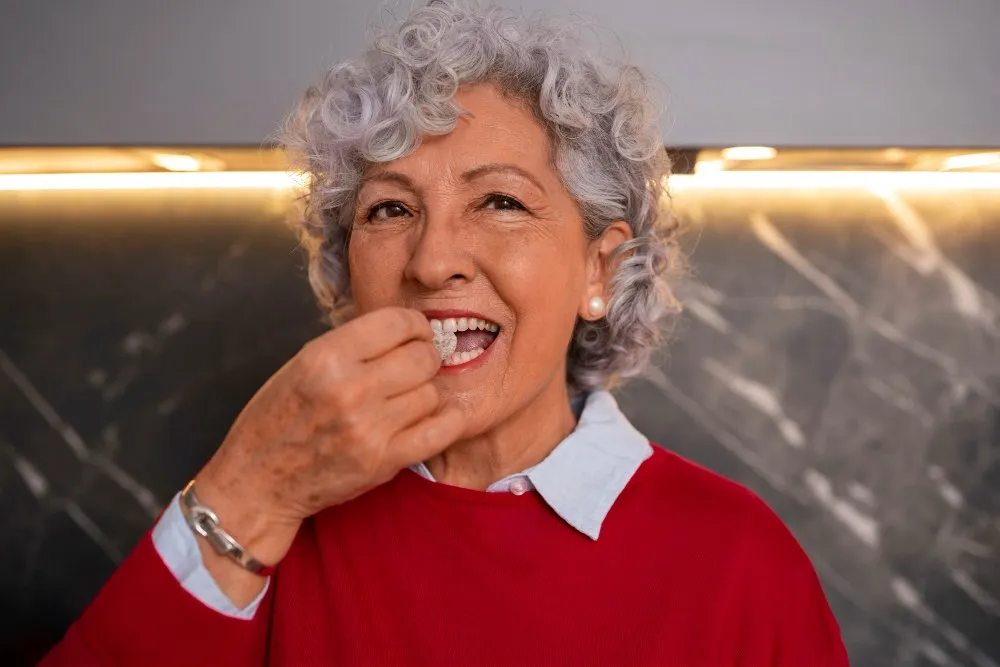
In older adults with controlled systemic conditions or minor tissue healing delays, flapless implant surgery provides a minimally invasive alternative to traditional full-thickness mucoperiosteal flaps. Rather than incising the ridge crest and stripping periosteum from cortical plates, surgeons use circular mucosal punches aligned with digital guides to access bone directly.
Preserving the supraperiosteal vascular plexus accelerates soft-tissue healing and minimizes peri-implant marginal bone loss. Patients experience reduced intraoperative bleeding, minimal post-surgical edema, and lower analgesic requirements. This conservative surgical access reduces systemic physiological stress, making it an advantageous approach for medically complex senior candidates.
When Is Immediate Loading with Same-Day Provisionalization Feasible?
Immediate functional or non-functional loading of full-arch restorations eliminates extended healing periods with loose removable prostheses. Eligibility relies on primary mechanical stability. Each fixture must achieve an insertion torque exceeding 35 to 45 Ncm, with Implant Stability Quotient (ISQ) values surpassing 70, confirmed by resonance frequency analysis.
Cross-arch stabilization through a rigid provisional titanium- or PMMA-reinforced bridge unites the implants, limiting micromotion below the critical 100-micron threshold during dynamic bone remodeling. This prevents fibrous encapsulation and supports continuous osteoblast apposition. Patients leave the surgical suite with a non-removable, esthetic provisional prosthesis, preserving psychological confidence and basic masticatory function during the three-to-six-month healing phase.
How Do Dental Implants For Seniors Improve Speech Articulation?
Ill-fitting removable prostheses frequently disrupt phonetic speech production. Bulky acrylic palate plates in upper dentures cover palatal rugae, obstructing tongue placement required for linguopalatal consonants such as /t/, /d/, and /s/. Additionally, denture shifting during speech leads to compensatory mumbling and articulatory fatigue.
Implant-supported prostheses mimic the natural dentoalveolar profile, exposing the hard palate and optimizing oral volume for normal lingual articulation. Rigid screw retention eliminates mechanical dislodgement during speech, allowing seniors to pronounce complex syllables clearly and communicate with confidence in social settings.
What Dietary Protocols Are Recommended During Healing?
- Soft-Food Diet (Months 1–3): Consume pureed vegetables, soft-cooked eggs, ground poultry, and medical nutritional shakes, avoiding hard, fibrous foods to protect the implant interface.
- Thermal Moderation: Avoid extremely hot liquids or foods during the first post-surgical week to prevent local vasodilation and surgical site bleeding.
- Avoiding Parafunctional Habits: Avoid chewing on hard objects, pens, or ice cubes to prevent mechanical stress on unintegrated fixtures.
- Adequate Hydration: Maintain consistent water intake throughout the day to support salivary flow, promote natural mucosal cleansing, and prevent xerostomia.
Navigating the Overall Treatment Cost and Restorative Alternatives
Financial considerations remain an important factor when planning comprehensive full-mouth restorations. Reviewing the overall dental implant cost structure involves accounting for surgical phases, bone grafting materials, multi-unit abutments, and final prosthetic frameworks like monolithic zirconia or hybrid composite resin.
For patients facing severe clinical limitations, conservative alternatives such as locator-retained overdentures offer stable, removable solutions anchored by two to four implants. Comprehensive dental clinics conduct thorough diagnostic assessments to help seniors select functional, predictable treatment plans that align with their personal anatomical needs and restorative goals.
Doctor Profile
Author and Medical Review
Dr. Melike KENTKURANOral and Maxillofacial Surgery Specialist
View ProfileThis content has been evaluated in accordance with Hospitadent Medical Publication Board standards for medical accuracy, currency and patient information.
Our Awards
See All ›2019 – 2020
Health Tourism Champion
Since its founding, Hospitadent has provided oral and dental care to patients travelling from every continent for health tourism. In the Service Exporters' Association research of 2019 and 2020, we ranked first in the Dental Health Services category. Within the same report we placed 15th among all healthcare institutions in 2019 and moved up to 10th in 2020. With uncompromising customer satisfaction, Hospitadent remains the healthcare institution that treats the highest number of international oral and dental patients.
2013
TEMOS International Quality Certificate
Guided by dedicated international departments, Hospitadent welcomes patients from abroad without any language barriers, offering assistance with accommodation, city and Bosphorus tours, concierge guidance, treatment logistics and medication support to keep satisfaction at its peak. With the goal of carrying the same quality standards to both Turkish and foreign patients, we received the TEMOS "International Quality in Dental Care" certificate in 2013—an accreditation granted by the organization that evaluates and certifies worldwide patient service quality based on the "Made in Germany" quality seal.
2020
Turquality Brand Support Program
For 16 years, the Turquality Brand Support Program has helped Turkish products build and promote their image abroad. Dental Group Hospitadent earned the right to join this initiative, taking an important step on its branding journey. Being the first dental healthcare group in a program that includes only five hospitals from the healthcare sector proves not only the quality image we project, but also the high standards we uphold.
2018
Stevie Awards – Most Innovative Customer Service
The Stevie Awards, recognized worldwide for honoring outstanding organizations and leaders, is the only international business awards program. In 2018, Hospitadent became the first hospital in Turkey to win a Stevie Award by receiving the "Most Innovative Customer Service of the Year" prize. Signature experiences such as Smiling Center, Digital Smile Design and Dental SPA played a decisive role in earning this accolade.
2019 – 2020
Service Exporters Association Award
Serving dental tourists from all over the world since its foundation, Hospitadent was honored by the Service Exporters' Association in the Champions of Service Exports program, which celebrates the rising value of Turkey's service industries. Thanks to its contribution to the national economy, Hospitadent received a certificate of achievement and ranked 15th among general healthcare institutions in 2019 and 10th in 2020, continuing to lead oral and dental treatments with an unwavering focus on patient satisfaction.
2021
Great Place To Work® Certified
Based on the employee experience and satisfaction survey completed by our teams, GPTW Turkey evaluated Hospitadent and awarded us the "Great Place To Work® Certified" distinction. As the first and only dental hospital holding this leading workplace culture certificate, Hospitadent continues its journey toward many more achievements.