Dental Implants Turkey: An Overview of Implant Treatment
Explore dental implants in Turkey, including treatment stages, techniques, eligibility, recovery, costs and tips for choosing a trusted dental clinic.
Losing one or more teeth doesn't have to mean a lifetime of removable dentures. Dental implant clinics in Turkey have become a leading choice for patients worldwide who want a permanent, natural-looking solution without the hassle of traditional dentures. As one of the most trusted destinations for Turkey dental implants, the country combines experienced dental teams, modern technology, and cost-effective care — making high-quality dental implant treatment accessible to more patients than ever.
Every year, tens of thousands of international patients choose Turkey dental implants over treatment in their home countries, drawn by the combination of skilled implantologists, JCI-accredited hospitals, and prices that are often a fraction of what the same procedure would cost in the UK, US, or Western Europe. Whether you need a single tooth replaced or a full-arch restoration—such as advanced All-on-4 or All-on-6 treatment—Turkey dental implants clinics are equipped to handle simple and complex cases alike, often within a single trip.
In this guide, we'll walk through how implants work, the techniques used, what to expect at your first visit, and everything you need to know before booking treatment at a dental implant clinic in Turkey. We'll also cover why Turkey dental implants have become such a popular choice internationally, what the patient journey looks like from consultation to recovery, and how to choose a clinic you can trust.
What Are Dental Implants and How Do They Work?
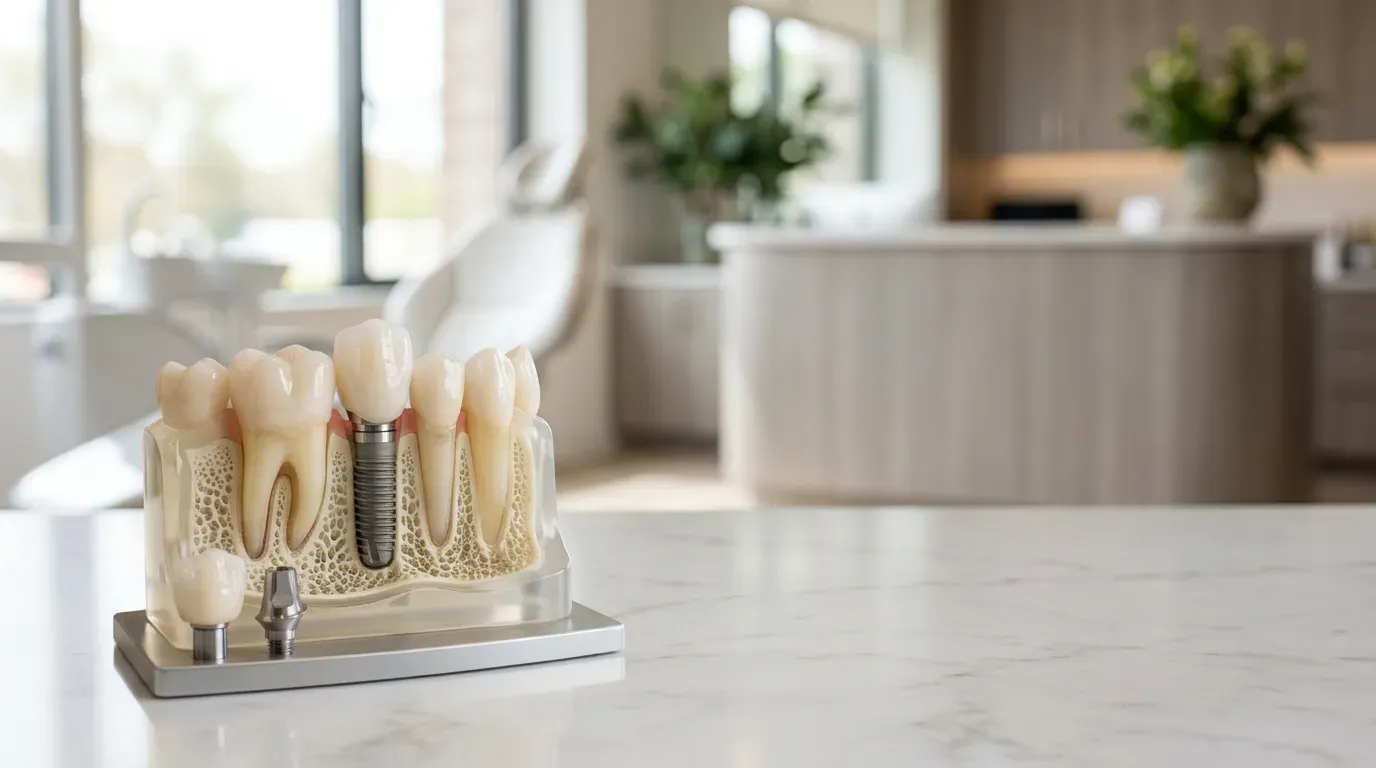
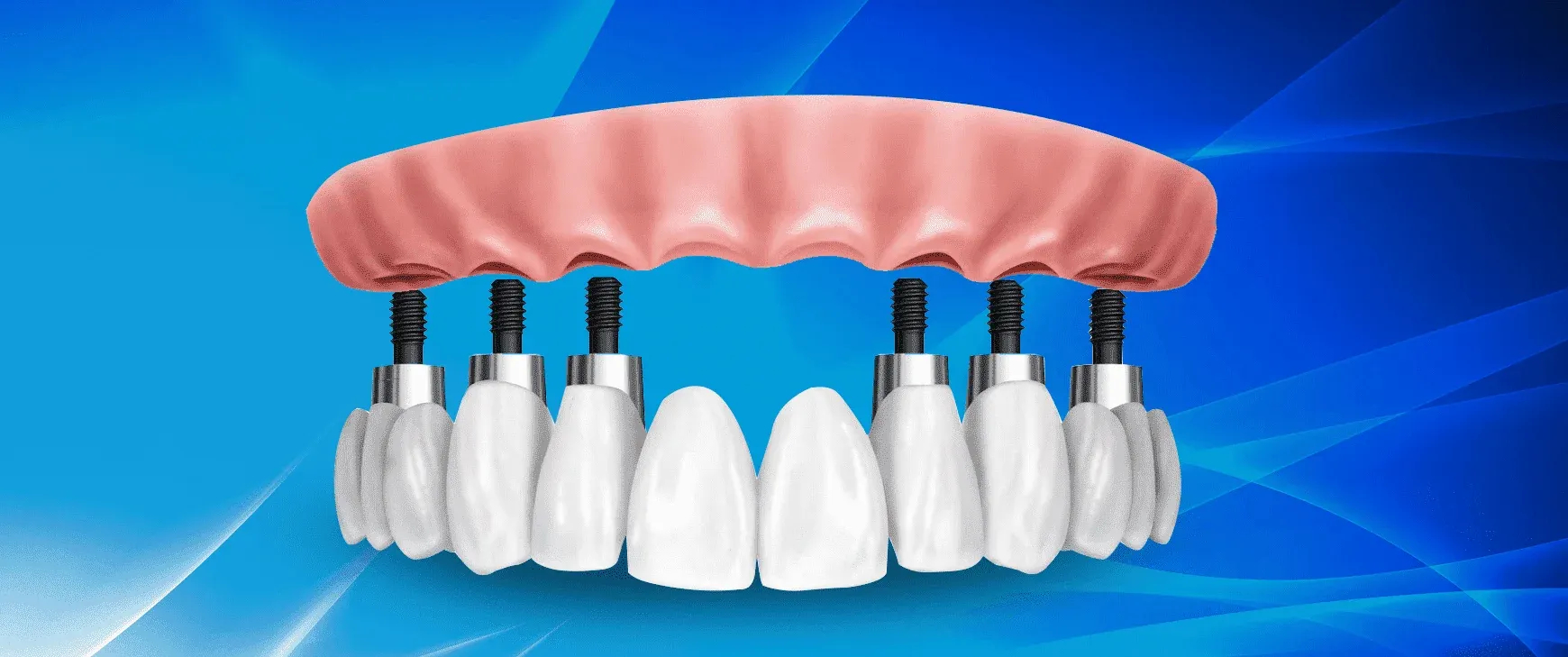
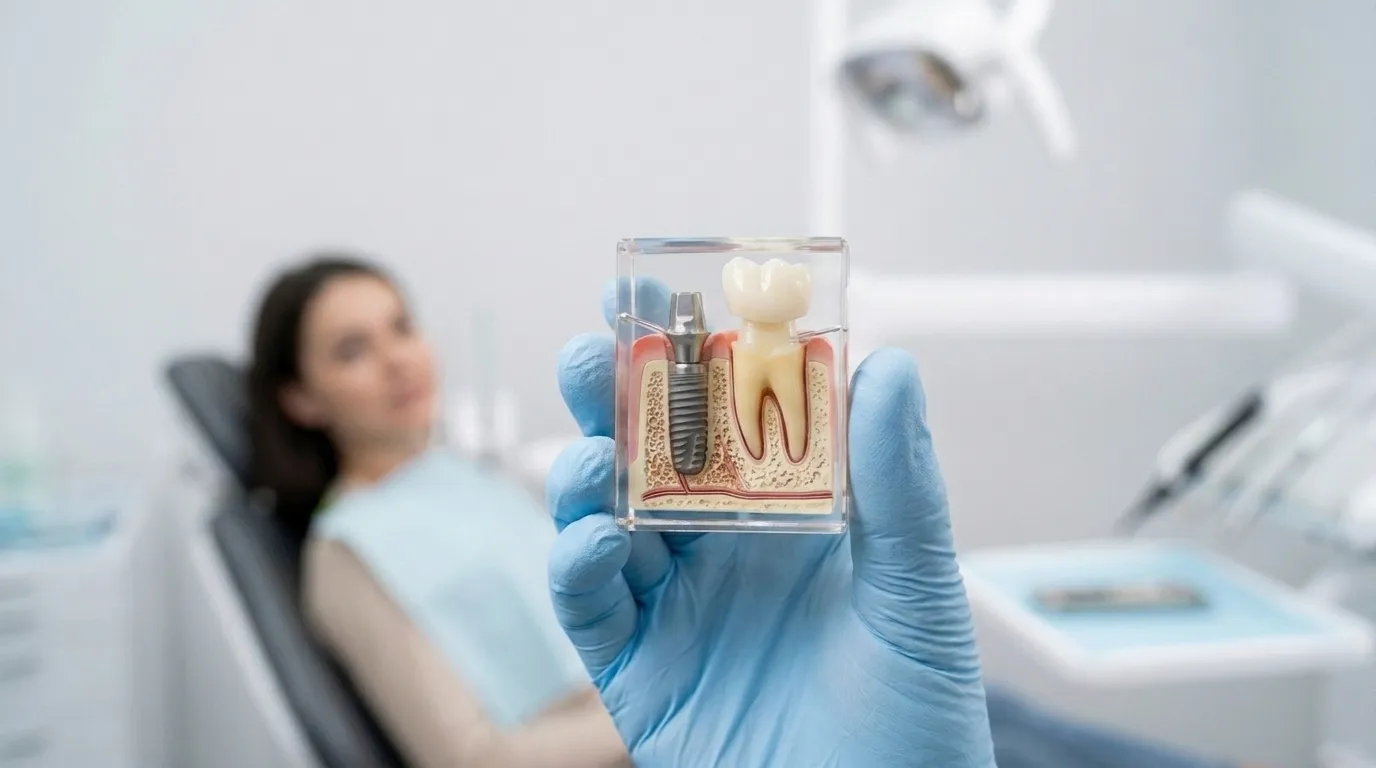
A dental implant is a titanium, screw-shaped structure placed directly into the jawbone to replace the root of a missing tooth. Once the implant integrates with the bone, a custom-made prosthetic tooth is attached on top, restoring both function and appearance.
Because titanium is biocompatible, it fuses naturally with bone tissue over time — a process called osseointegration. This is what makes implants far more stable than removable dentures, and why so many patients choose Turkey dental implants as a long-term investment in their oral health.
Why International Patients Choose Turkey Dental Implants
Turkey has grown into one of the world's largest hubs for dental tourism, and Turkey dental implants are consistently among the most requested procedures by visiting patients. Several factors explain this trend:
- Highly experienced implantologists – Many dentists in Turkey perform hundreds of implant procedures every year, giving them deep, hands-on expertise across simple and complex cases.
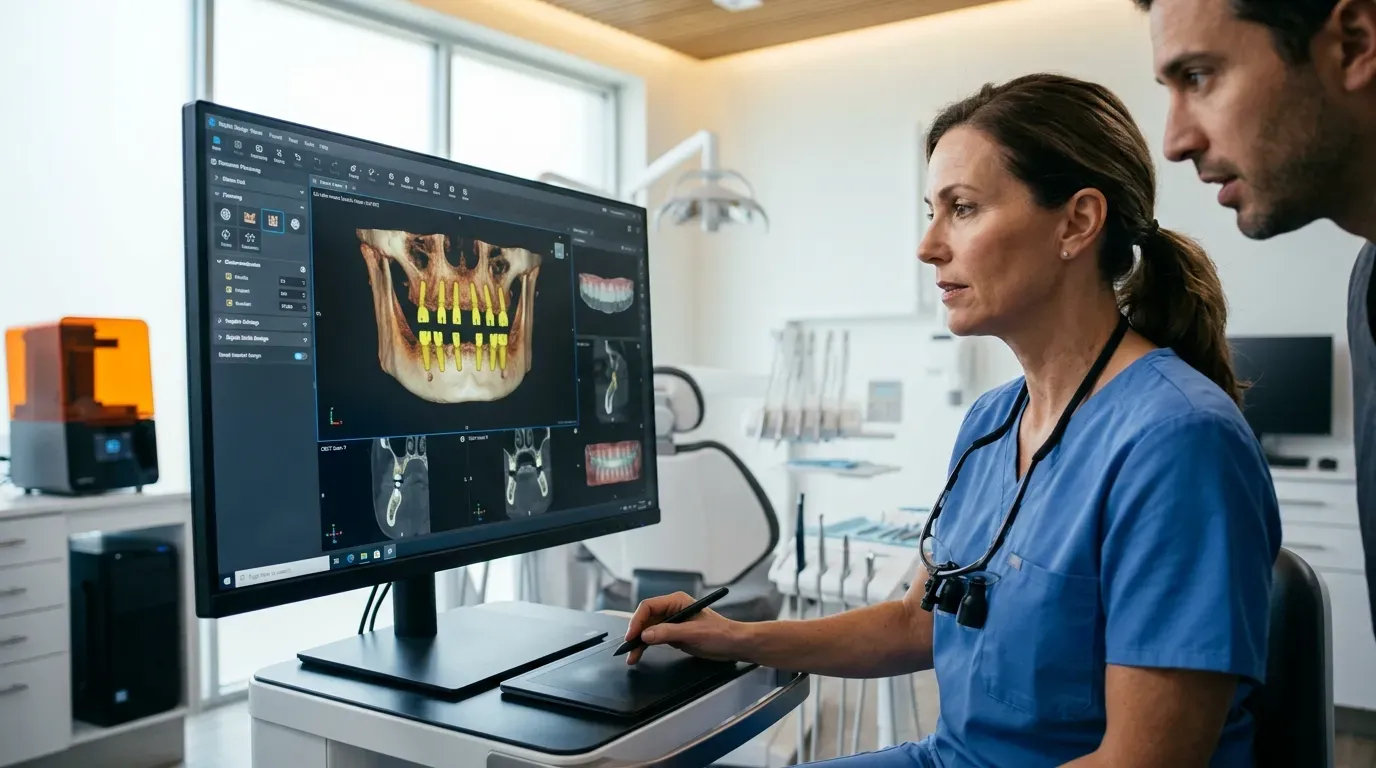
- Modern equipment and technology – Leading clinics offering Turkey dental implants invest in 3D imaging, digital smile design, and laser-guided flapless surgery to improve precision and reduce recovery time.
- Significant cost savings – Patients typically save 50–70% compared to equivalent treatment in the UK, US, or Germany, without compromising on implant brand or material quality.
- All-inclusive treatment packages – Many Turkey dental implants clinics bundle the procedure with airport transfers, accommodation, and translator services, simplifying the entire process for international patients.
- Fast turnaround – Thanks to techniques like immediate placement and flapless surgery, many cases of Turkey dental implants can be completed in a single visit lasting just a few days.
For patients comparing options abroad, Turkey dental implants offer a rare combination of affordability, speed, and clinical quality that is difficult to match elsewhere.
What Should International Patients Check Before Choosing a Clinic?
Before choosing a dental implant clinic in Turkey, international patients should compare more than price alone. Important points to review include:
- The dentist’s qualifications and experience in implant surgery
- The implant brand and whether original components are used
- Whether 3D imaging and detailed treatment planning are included
- What is included in the quoted price
- Whether temporary teeth, abutments and final crowns are included
- The expected number of visits and healing period
- Written warranty and follow-up conditions
- How complications are managed after the patient returns home
A trustworthy clinic should provide a written treatment plan and explain possible additional procedures, such as bone grafting or sinus lifting, before the patient travels whenever possible.
Dental Implant Techniques Used in Turkey
Not every patient receives the same type of treatment. Dentists at a modern dental implant clinic in Turkey select the most suitable technique based on bone quality, the number of missing teeth, and the patient's overall oral health.
- Immediate implant placement – The implant is placed into the socket right after a tooth extraction, often without the need for incisions or stitches.
- Flapless (laser-guided) implant surgery – A small opening is created using laser technology, avoiding a surgical flap entirely. This requires ideal bone density but allows treatment to be completed in a single session with faster healing.
- Mini implants – Placed directly through the mucosa; used less frequently and only when bone conditions are favorable.
- Traditional surgical implants – The most common method for older patients or those needing bone grafting. A small cavity is prepared in the jawbone, the implant is placed, and the prosthetic tooth is attached after a healing period.
If bone density is insufficient for any of these methods, bone grafting can rebuild the jaw structure so implants can still be placed successfully.
Dental Implant Techniques Compared
|
Technique |
Incision/Stitches |
Ideal For |
Bone Density Required |
Sessions |
|
Immediate placement |
Usually none |
Patients extracting a non-restorable tooth |
Moderate to high |
1 |
|
Flapless (laser-guided) |
None |
Patients wanting minimal downtime |
High |
1 |
|
Mini implants |
Minimal |
Narrow ridges, smaller restorations |
High |
1 |
|
Traditional surgical |
Yes |
Older patients, cases needing bone grafting |
Low to moderate (grafting available) |
1–2 (plus healing period) |
Your First Consultation for Dental Implant Treatment
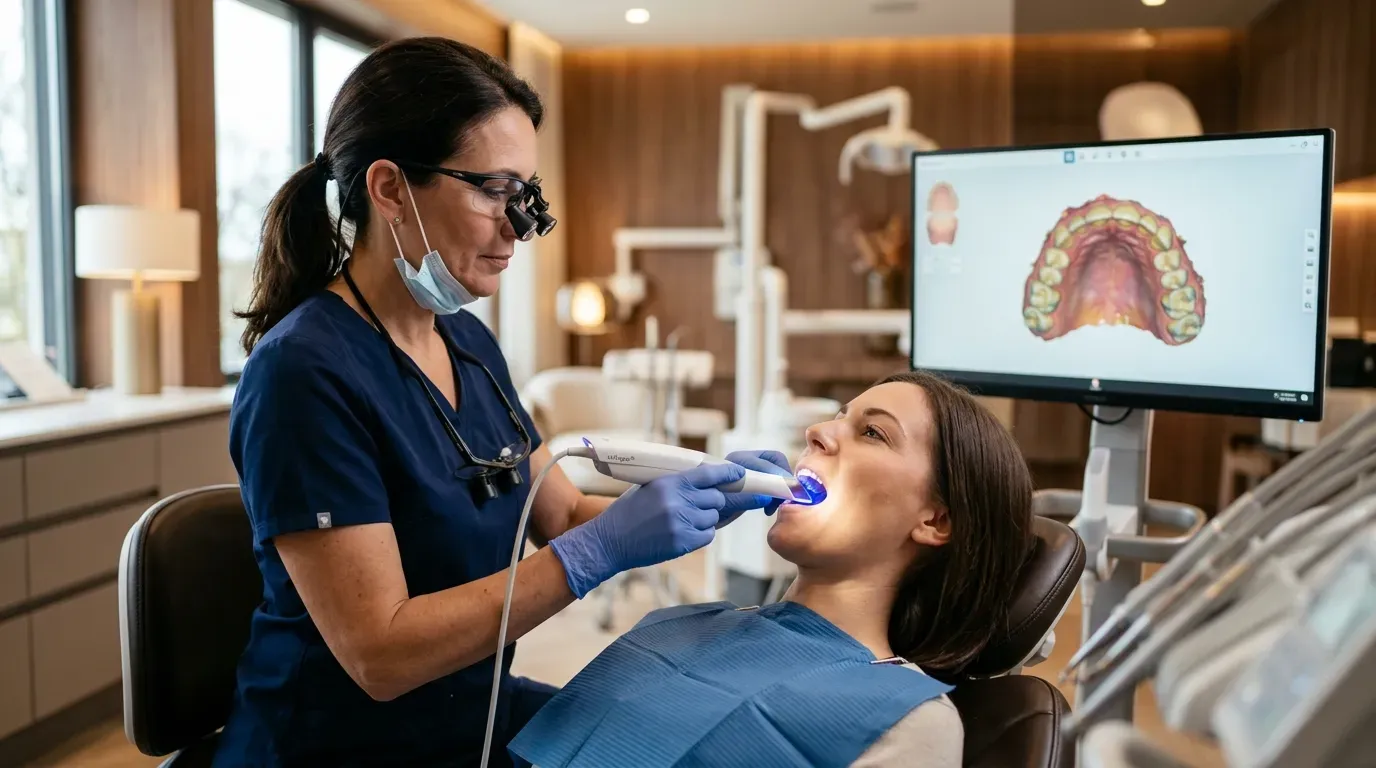
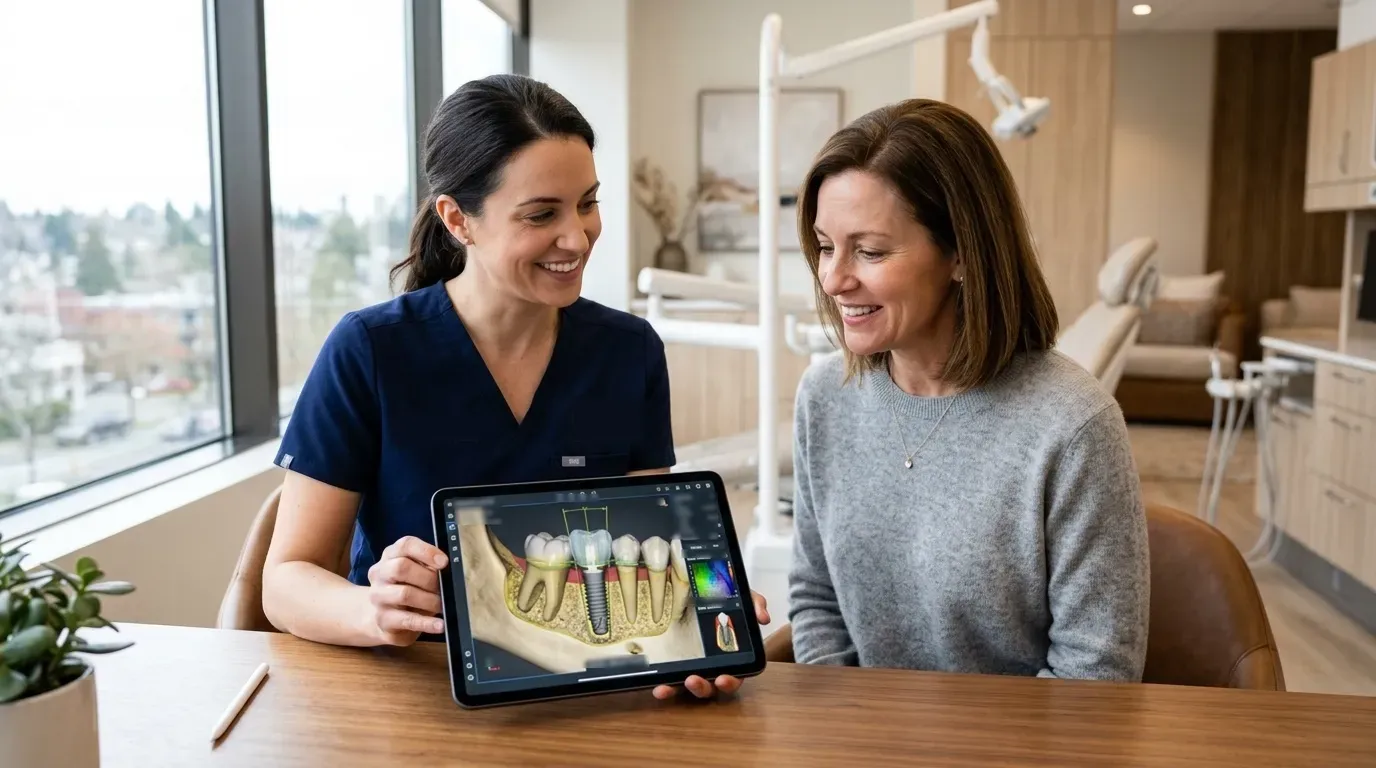
At your first appointment, the dentist performs a full oral examination, checking for cavities, gum disease, and other issues that could affect treatment. A general health review is also carried out, along with a discussion of your expectations and precise measurements to plan the correct implant length and diameter.
Be sure to inform your dentist about any existing medical conditions or medications, particularly blood thinners, as these can affect planning and recovery.
The Dental Implant Patient Journey in Turkey, Step by Step
For international patients, the Turkey dental implants process is designed to be as smooth as possible, even when traveling from abroad. A typical journey looks like this:
- Online consultation – Send X-rays or photos to a Turkey dental implants clinic for an initial assessment and cost estimate before you travel.
- Travel and arrival – Most clinics offering Turkey dental implants arrange airport pickup and hotel accommodation as part of the treatment package.
- In-person examination – A full oral and general health assessment confirms the treatment plan and implant technique.
- Implant placement – The surgical procedure is performed under local anesthesia and may be completed in a single day, depending on the treatment plan.
- Recovery and follow-up – Depending on the case, patients may stay a few extra days for initial healing checks, or return home and come back later for the final prosthetic.
- Final restoration – Once osseointegration is complete, the permanent crown, bridge, or full-arch prosthesis is fitted.
This streamlined structure is one of the reasons Turkey dental implants have become so popular with patients who want predictable timelines and minimal disruption to their work or family life.
Am I a Candidate for Dental Implants in Turkey?
Most healthy adults are good candidates for implants, provided:
- Bone development is complete (typically around age 16 for women and 18 for men) — there is no upper age limit, since bone quality matters more than age.
- Bone density is adequate, or can be improved through grafting.
- There are no uncontrolled systemic diseases, active cancer, or recent chemotherapy treatment.
Controlled diabetes does not rule out implant treatment, as long as the patient follows medical guidance and attends regular check-ups. Smokers can also receive implants, though healing may take longer, so avoiding smoking during recovery is strongly recommended.
How Long Does Dental Implant Treatment Take?
Treatment length varies depending on the number of implants, their location, bone quality and whether additional procedures such as grafting are required. If bone grafting is needed, the healing period before the final prosthesis can be fitted may extend to several months. Most patients can continue their normal daily activities during the overall treatment period, although recovery recommendations vary by case.
Full Mouth Dental Implants in Turkey
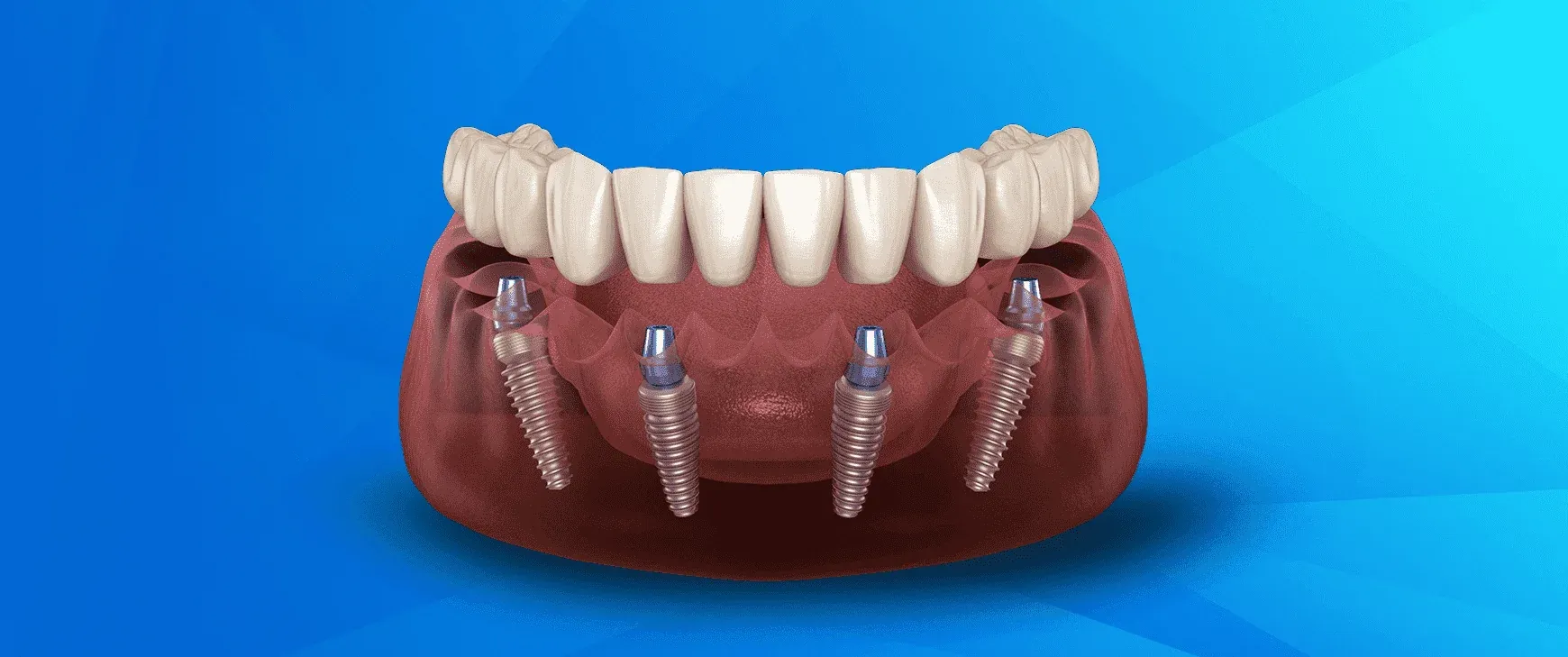
For patients with complete tooth loss, full mouth dental implants offer a fixed, permanent alternative to removable dentures — provided there is sufficient bone to support them. In most cases, around eight implants per jaw are enough to anchor a full arch of replacement teeth, giving patients a stable, natural-feeling bite.
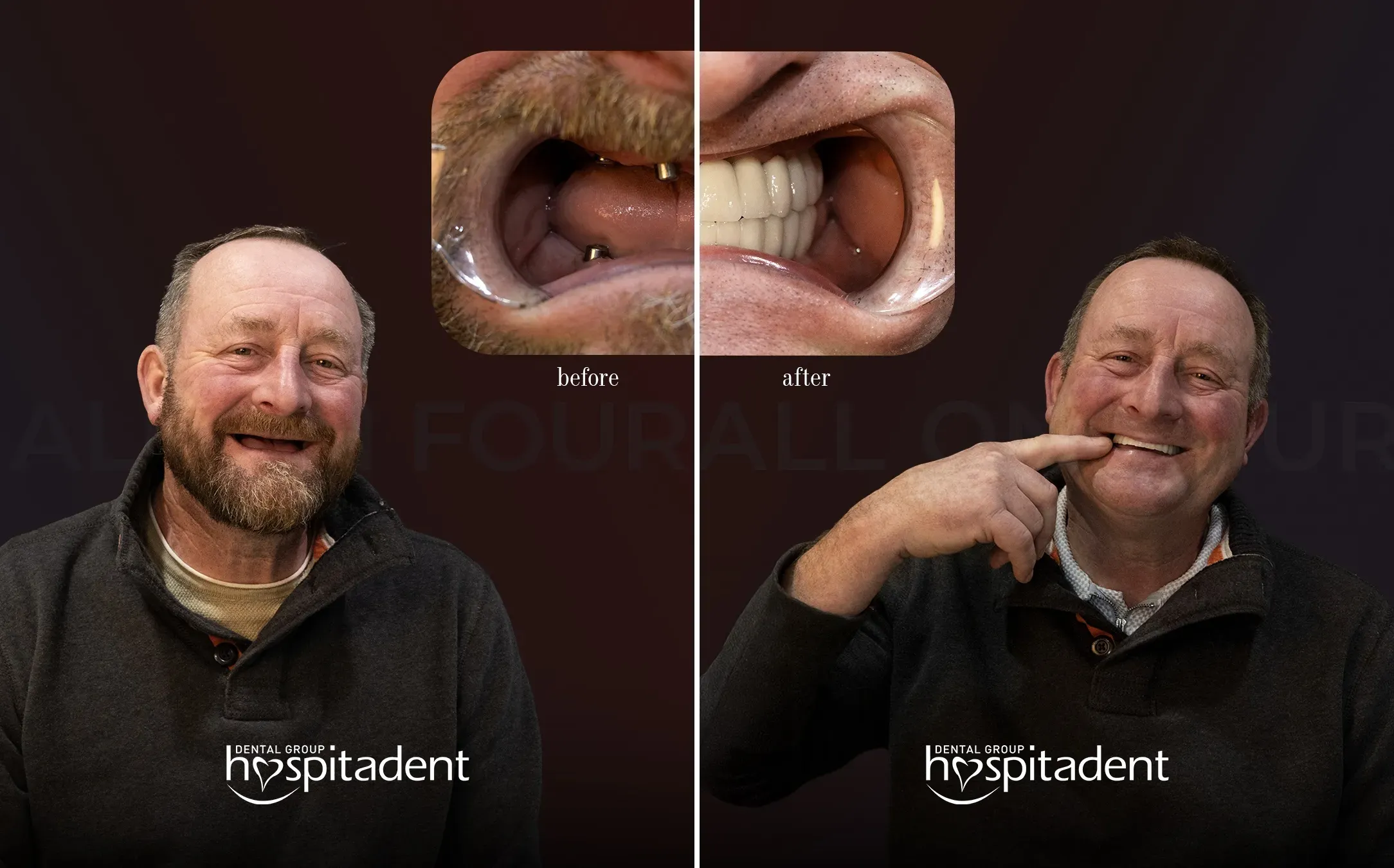
Full mouth Turkey dental implants cases are especially popular with international patients, since they combine the biggest cost savings with the biggest life impact. Techniques such as All-on-4 and All-on-6 allow a complete arch to be restored using just four to six implants, often with a temporary fixed prosthesis fitted on the same day as surgery. This makes full-arch Turkey dental implants treatment one of the most requested procedures among patients traveling specifically for dental tourism.
Is Dental Implant Treatment Painful?
The procedure itself is performed under local anesthesia, so no pain is felt during placement. Some mild discomfort afterward is normal and depends on the number of implants placed, the technique used, and individual pain tolerance. Flapless, incision-free procedures generally cause less post-treatment discomfort than surgical methods involving bone grafting.
Are Dental Implants Safe?
Yes. Despite misleading claims sometimes found online, dental implants are made from extensively researched, biocompatible materials and do not harm the body. Rejection is rare, and there is no scientific evidence linking dental implants to cancer. Implants also don't require reducing or reshaping neighboring healthy teeth, so adjacent teeth remain untouched.
How Long Do Dental Implants Last?
Dental implants are designed as a long-term treatment. Their lifespan depends on implant integration, oral hygiene, gum health, smoking, bite forces and regular professional maintenance.
Affordable Dental Implants in Turkey: What Affects the Cost?
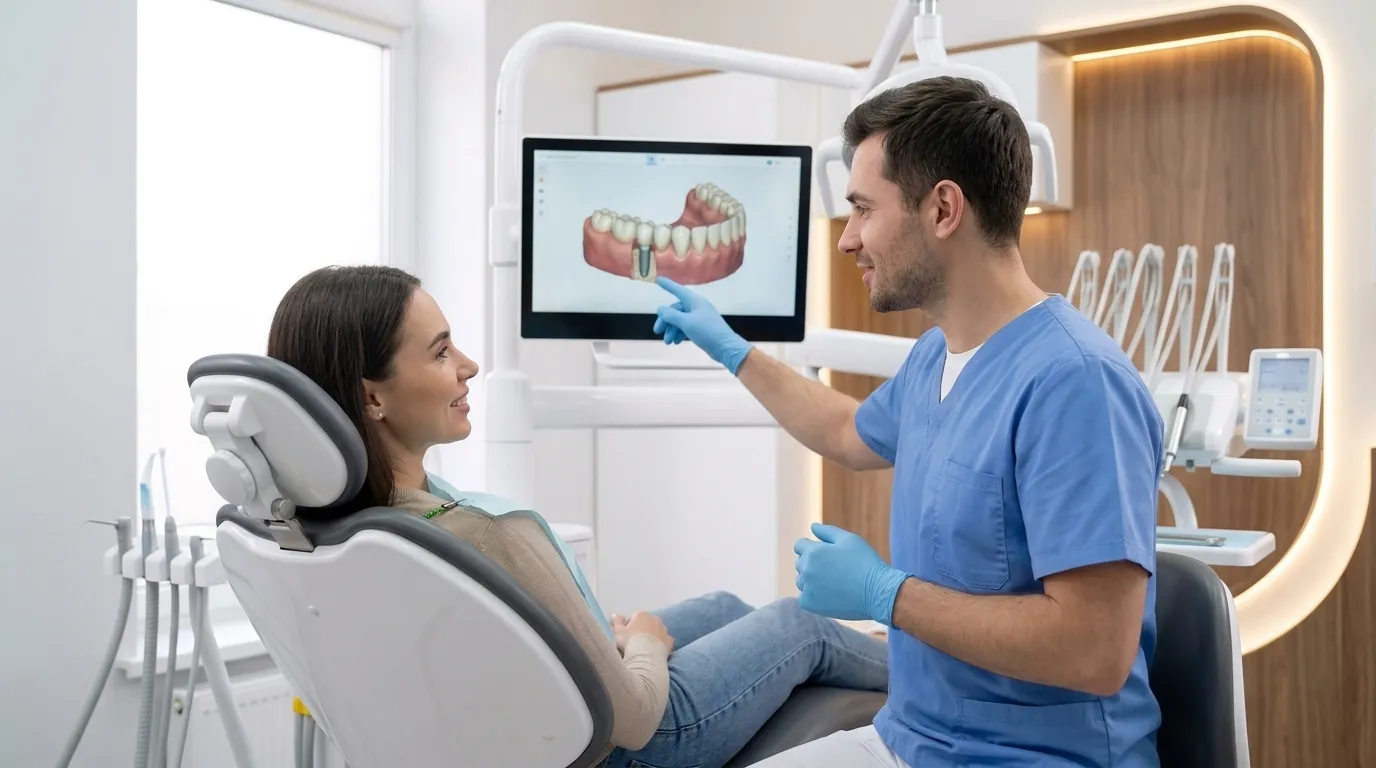
One of the biggest reasons patients travel abroad for treatment is the value offered by affordable dental implants Turkey clinics compare to many Western countries, without compromising on quality. Final pricing depends on:
- The number of implants needed
- Whether bone grafting or additional surgical procedures are required
- The implant brand and materials used
- Individual treatment planning following a clinical examination
Because every case is different, an in-person or virtual consultation is the only way to get an accurate quote.
Single Implant Cost: Turkey vs. Other Countries (Indicative Ranges)
|
Country |
Approx. Cost per Implant (USD) |
|
Turkey |
$400 – $900 |
|
United Kingdom |
$2,000 – $3,500 |
|
United States |
$3,000 – $5,000 |
|
Germany |
$1,800 – $3,000 |
Prices are indicative and may vary depending on the implant brand, treatment complexity and additional procedures. A clinical assessment is required for an exact quotation.
Turkey Dental Implants Price List (Official Clinic Fees)
The table below reflects real, itemized pricing for implant-related procedures commonly offered by dental implants Turkey clinics, shown in Euro, US Dollar, and British Pound.
Initial Diagnosis (Free at Many Clinics)
|
Procedure |
EUR |
USD |
GBP |
|
Examination |
FREE |
FREE |
FREE |
|
Specialist Dentist Examination |
FREE |
FREE |
FREE |
|
Digital Panoramic X-ray |
FREE |
FREE |
FREE |
|
Digital Dental CT Scan (Single Jaw) |
FREE |
FREE |
FREE |
|
Local Anesthesia |
FREE |
FREE |
FREE |
|
General Anesthesia |
€360 |
$410 |
£305 |
|
Sedation |
€260 |
$295 |
£220 |
Implantology
|
Procedure |
EUR |
USD |
GBP |
|
Implant (BEGO) + Abutment |
€350 |
$399 |
£300 |
|
STRAUMANN/ITI Implant |
€600 |
$685 |
£510 |
|
Zygomatic Implant |
€2,070 |
$2,355 |
£1,755 |
|
Sinus Lift |
€495 |
$565 |
£420 |
|
Bone Graft Application (Bone Graft Material) |
€495 |
$565 |
£420 |
|
Implant-Supported Metal-Ceramic Crown (5-Year Warranty) |
€180 |
$205 |
£155 |
|
Implant-Supported Zirconia Crown (5-Year Warranty) |
€220 |
$250 |
£190 |
|
Screw-Retained Implant-Supported Zirconia Crown |
€250 |
$285 |
£215 |
|
All-on-4 BEGO (Excluding Prosthesis) |
€2,000 |
$2,280 |
£1,700 |
|
All-on-4 NOBEL (Excluding Prosthesis) |
€3,200 |
$3,650 |
£2,720 |
|
All-on-6 BEGO (Excluding Prosthesis) |
€2,850 |
$3,250 |
£2,420 |
|
All-on-6 NOBEL (Excluding Prosthesis) |
€4,200 |
$4,800 |
£3,570 |
|
All-on-4 Hybrid Prosthesis (Single Jaw) |
€3,000 |
$3,415 |
£2,550 |
|
All-on-4 Zirconia Prosthesis (Single Jaw) |
€3,800 |
$4,330 |
£3,230 |
|
All-on-4 Temporary Prosthesis (Single Jaw) |
€250 |
$285 |
£215 |
Prices may vary depending on the patient’s individual treatment needs, implant brand and any additional procedures required. A clinical examination is necessary to provide an exact treatment plan and quotation. BEGO, Straumann/ITI and Nobel Biocare are trademarks of their respective manufacturers.
Popular Dental Implant Brands Used in Turkish Clinics
Reputable clinics in Turkey work with internationally recognized implant systems, prioritizing proven, long-lasting materials over cheaper, unverified alternatives — an important factor to ask about when comparing providers.
Traveling for Turkey Dental Implants: What to Expect
Patients flying in specifically for Turkey dental implants often have practical questions about logistics. Most reputable clinics handle the details for you, including:
- Airport pickup and drop-off
- Hotel or clinic-partnered accommodation for the duration of treatment
- Multilingual staff or interpreters to support Turkey dental implants patients throughout their stay
- A dedicated treatment coordinator who manages scheduling and follow-up care
- Clear pre- and post-operative instructions in the patient's own language
Because of this level of support, many patients find that arranging Turkey dental implants is far less complicated than expected, even when coordinating international travel around a medical procedure.
How to Choose the Right Turkey Dental Implants Clinic
Not all providers of Turkey dental implants offer the same standard of care, so it's worth evaluating a few key factors before booking:
- Dentist qualifications and experience – Look for implantologists with specific training and a strong case history in implant dentistry.
- Clinic accreditation – International certifications (such as JCI or ISO standards) are a good indicator of consistent quality for Turkey dental implants providers.
- Implant brand transparency – A trustworthy clinic will clearly state which implant system is used and provide official documentation.
- Patient reviews and before/after cases – Genuine testimonials and verifiable results help confirm the quality of a clinic's Turkey dental implants outcomes.
- Warranty and aftercare policy – Ask what guarantees are offered if a complication arises after you've returned home.
Taking the time to compare providers ensures your Turkey dental implants experience delivers the long-term results you're expecting.
Aftercare: Caring for Your New Dental Implants
The days immediately following surgery are the most important for successful healing. Patients should:
- Avoid hot foods and drinks
- Refrain from smoking and alcohol
- Limit physical activity
- Maintain gentle but consistent oral hygiene
Long term, implants require the same care as natural teeth — regular brushing, flossing, interdental brushes or oral irrigators, and professional cleanings at least twice a year.
Signs of Implant Failure: When to Contact Your Dentist
While implant failure is rare when performed by an experienced dentist, patients should contact their clinic immediately if they notice persistent pain, swelling, looseness of the implant, or gum recession around the treated area.
Why Choose a Dental Implant Clinic in Turkey?
With modern technology, precise treatment planning, and experienced dental teams, Turkey dental implants achieve success rates of 90–95%. Long-term outcomes depend on bone density, oral hygiene, surgical technique, and implant quality — all areas where Turkish clinics have invested heavily to meet international standards, making the country a trusted choice for patients seeking reliable, affordable dental implants Turkey-wide.
Final Thoughts on Turkey Dental Implants
Choosing Turkey dental implants means gaining access to experienced specialists, modern surgical techniques, and significant cost savings — all without compromising on safety or long-term results. Whether you need a single implant or a full-mouth restoration, Turkey dental implants clinics are equipped to guide you through every step, from your first consultation to years of aftercare. If you're considering dental implants Turkey-wide, booking a consultation is the best first step toward understanding your personal treatment plan, timeline, and cost.
For comprehensive information about implant treatment, see our main guide.
Implant GuideDoctor Profile
Author and Medical Review
Dr. Melike KENTKURANOral and Maxillofacial Surgery Specialist
View ProfileThis content has been evaluated in accordance with Hospitadent Medical Publication Board standards for medical accuracy, currency and patient information.
Our Awards
See All ›2019 – 2020
Health Tourism Champion
Since its founding, Hospitadent has provided oral and dental care to patients travelling from every continent for health tourism. In the Service Exporters' Association research of 2019 and 2020, we ranked first in the Dental Health Services category. Within the same report we placed 15th among all healthcare institutions in 2019 and moved up to 10th in 2020. With uncompromising customer satisfaction, Hospitadent remains the healthcare institution that treats the highest number of international oral and dental patients.
2013
TEMOS International Quality Certificate
Guided by dedicated international departments, Hospitadent welcomes patients from abroad without any language barriers, offering assistance with accommodation, city and Bosphorus tours, concierge guidance, treatment logistics and medication support to keep satisfaction at its peak. With the goal of carrying the same quality standards to both Turkish and foreign patients, we received the TEMOS "International Quality in Dental Care" certificate in 2013—an accreditation granted by the organization that evaluates and certifies worldwide patient service quality based on the "Made in Germany" quality seal.
2020
Turquality Brand Support Program
For 16 years, the Turquality Brand Support Program has helped Turkish products build and promote their image abroad. Dental Group Hospitadent earned the right to join this initiative, taking an important step on its branding journey. Being the first dental healthcare group in a program that includes only five hospitals from the healthcare sector proves not only the quality image we project, but also the high standards we uphold.
2018
Stevie Awards – Most Innovative Customer Service
The Stevie Awards, recognized worldwide for honoring outstanding organizations and leaders, is the only international business awards program. In 2018, Hospitadent became the first hospital in Turkey to win a Stevie Award by receiving the "Most Innovative Customer Service of the Year" prize. Signature experiences such as Smiling Center, Digital Smile Design and Dental SPA played a decisive role in earning this accolade.
2019 – 2020
Service Exporters Association Award
Serving dental tourists from all over the world since its foundation, Hospitadent was honored by the Service Exporters' Association in the Champions of Service Exports program, which celebrates the rising value of Turkey's service industries. Thanks to its contribution to the national economy, Hospitadent received a certificate of achievement and ranked 15th among general healthcare institutions in 2019 and 10th in 2020, continuing to lead oral and dental treatments with an unwavering focus on patient satisfaction.
2021
Great Place To Work® Certified
Based on the employee experience and satisfaction survey completed by our teams, GPTW Turkey evaluated Hospitadent and awarded us the "Great Place To Work® Certified" distinction. As the first and only dental hospital holding this leading workplace culture certificate, Hospitadent continues its journey toward many more achievements.
Patient Reviews
Experiences of our patients
Adrian
I had the great experience of my life… I had the great experience of my life for my treatment with my implants, crowns and tooth whitening thanks to Patient coordinator Sinan , Oral Surgeon Eser and Doctor Tankut. I really appreciate everything what you did for me. Thank you very much.
Maarouff
Excellent Dental Implant Experience I had a dental implant treatment with Hospitadent and I’m very satisfied with my experience. The staff were friendly and professional from the beginning, and the clinic was clean and modern. The dentist explained everything clearly, which helped me feel comfortable and confident. The procedure was smooth and not as painful as I expected. I’m very happy with the final result—it looks natural and feels great. I would definitely recommend Hospitadent to anyone considering dental treatment. Special thanks to Mr. Sinan, who assisted us from the UK all the way to Turkey, arranging airport transfers both ways and booking an excellent hotel. I would also like to thank the doctor who carried out my implant, along with the team for the general cleaning and excellent overall care.
Niat Nuguse
Recommend I have been in the dentist chair more times than I care to count, and finally decided to go ahead with full treatment including fillings, crowns, and one implant. I also wanted to make it as cost-effective as possible. After meeting Sinan, the patient assistant in London, and having a full consultation and review of the treatments I needed, my mind was completely put at ease and I decided to move forward. Sinan was amazing—from his infectious smile to his outstanding hospitality. Aya, who was my translator, made everything run smoothly and even kept me company in the waiting room, which really meant a lot. A huge thank you to Dr. Necip for doing such an amazing job and for working hard and staying extra late to make sure everything was done perfectly. Happy with the care and result.
Alastair Innes
Outstanding care From the very srart, all of the staff were kind, friendly and professional, after the consultation and plan , there was no pressure selling only good advie , the dental work was spread over several days with a day off in the middle I had 1 x implant, 1x bone graft, 4 replacement crowns, 1 x root extraction and a filling At all times the dentists and surgeons were calm , kind, gentle and proffessional The hospital / clinic is very modern , better than my local denist
Sohib Ghafouri
It was a delight to be a patient of Prosthesis Specialist Doctor Sevdenur. It was a delight to be a patient of Prosthesis Specialist Doctor Sevdenur who was extremely experienced, patient and friendly throughout the entire process. Our interpreter Patient Consultant Sinan was a major help and very empathetic, helpful and accommodating. They kept in touch after the procedure and gave plenty of advice and reassured us of any concerns. We did 6 implants and a root canal and have recommended the clinic to friends and family.
All reviews are from our real patients.