Implant in 1 Day: Fast Smile Restoration
Learn how Implant in 1 Day treatment works, its benefits, recovery process, candidacy, and costs for restoring your smile with immediate dental implants.
Modern restorative dentistry has undergone a massive transformation in recent years, making missing teeth restoration faster, more efficient, and far less stressful for patients worldwide. Among the most sought-after restorative procedures today, the Implant in 1 day treatment offers an innovative solution that allows individuals to walk into a dental clinic with compromised or missing teeth and leave on the very same afternoon with a fully functional, beautiful new smile.
For decades, traditional implant procedures required patients to wait anywhere from three to six months between initial implant placement and final prosthesis attachment. During this extended healing period, patients often had to deal with uncomfortable removable dentures or noticeable gaps in their teeth. The development of modern immediate-loading techniques has changed the landscape entirely. By choosing an Implant in 1 day treatment, patients avoid prolonged functional impairment and social anxiety, gaining immediate structural support and aesthetic satisfaction.
Understanding the Science Behind Implant in 1 Day Treatment
To fully appreciate how an Implant in 1 day treatment functions, it is helpful to look at the biomechanics of immediate loading. Traditional protocols insisted on a long period of osseointegration—the process by which titanium fuses with natural bone—before subjecting the implant to functional forces. However, advancements in dental technology, surface chemistry, and micro-geometry have proven that immediate restoration is both safe and remarkably successful when high primary stability is achieved.
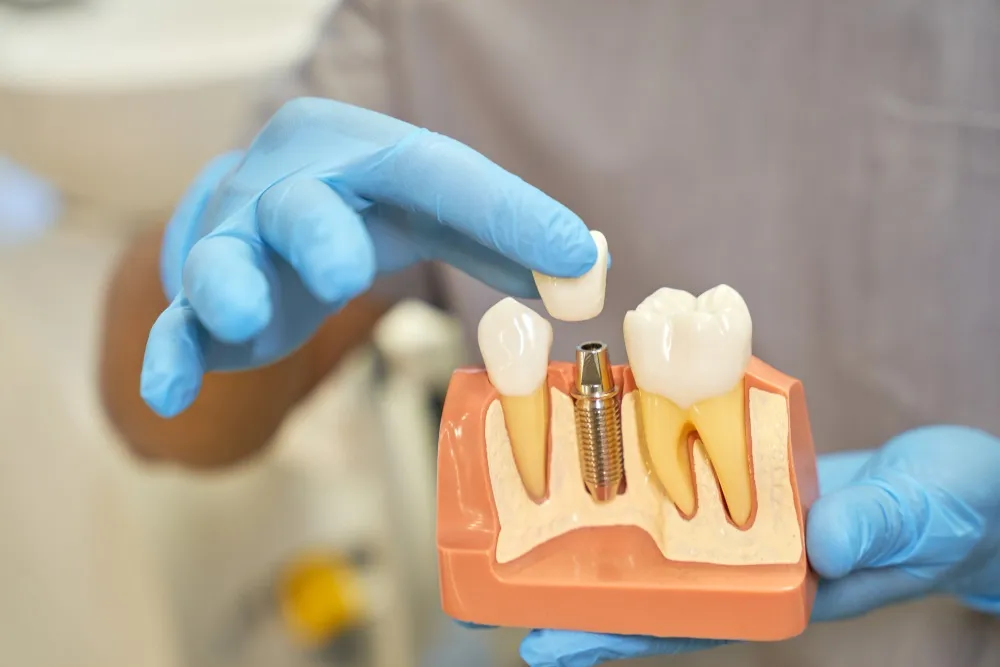
When an oral surgeon places a specialized titanium post into the jawbone, primary stability is measured in insertion torque (typically requiring 35 to 45 Ncm). If this primary mechanical lock is strong enough, a provisional crown or bridge can be loaded immediately without disrupting the microscopic healing process. This forms the biological foundation of every successful Implant in 1 day treatment.
Standard dental implant treatment protocols rely on staged healing, whereas immediate loading relies on precise distribution of mechanical force. By splinting multiple implants together with a temporary arch or carefully adjusting single crowns to avoid heavy biting contact, clinicians ensure that the bone heals safely around the fixture while the patient enjoys immediate functionality. For patients exploring advanced restoration options abroad, evaluating factors such as clinical expertise and overall dental implant cost in Turkey plays a key role in choosing the right treatment plan.
Key Advantages of Same-Day Dental Restorations
Choosing an Implant in 1 day treatment provides numerous clinical, psychological, and lifestyle advantages over conventional multi-stage implant surgeries.
1. Instant Aesthetic and Functional Restoration
The most evident benefit of an Implant in 1 day treatment is speed. Patients leave the clinic on day one with a fixed, natural-looking set of temporary teeth. This eliminates the embarrassment of public toothlessness or the instability of traditional plastic dentures.
2. Reduced Surgical Interventions and Healing Time
Because the extraction of damaged teeth, implant placement, and provisional fitting occur in a single appointment, soft tissues undergo fewer disruptions. This minimizes overall trauma, reduces postoperative swelling, and streamlines the tissue remodeling process around the final prosthesis.
3. Soft Tissue Preservation and Natural Gum Contours
When a tooth is extracted and left empty for months, the surrounding gingival tissue collapses. An Implant in 1 day treatment maintains the natural architecture of your gumline by using custom provisional crowns to support the papillae from the very first hour.
4. Continuous Lifestyle and Confidence
Patients who choose an Implant in 1 day treatment do not need to take extended leaves of absence from work or avoid social engagements. The ability to speak clearly and smile confidently immediately following surgery transforms the patient experience.
Specialized Techniques Used in Immediate Loading
Depending on whether a patient is missing a single tooth, multiple teeth, or an entire arch, different surgical configurations are employed for an Implant in 1 day treatment.
Full Arch Rehabilitation: All-on-4 and All-on-6
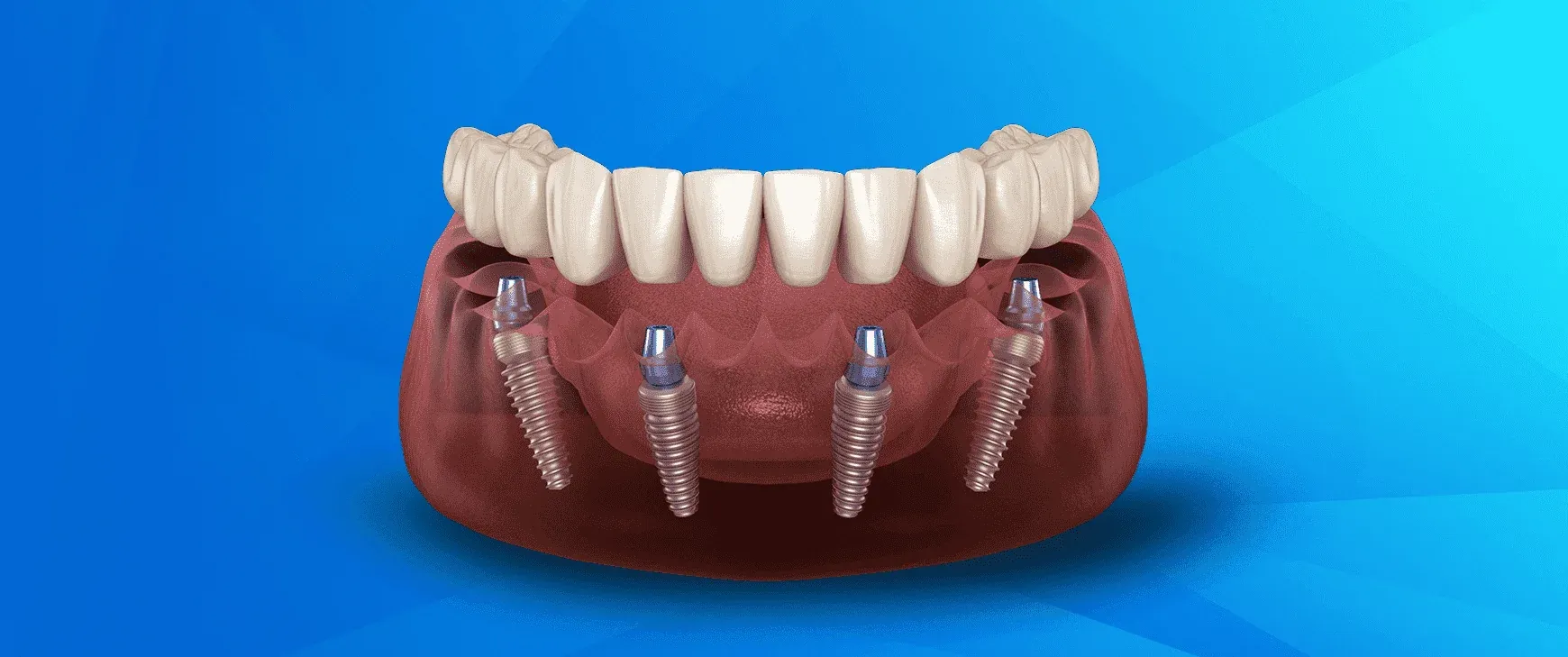
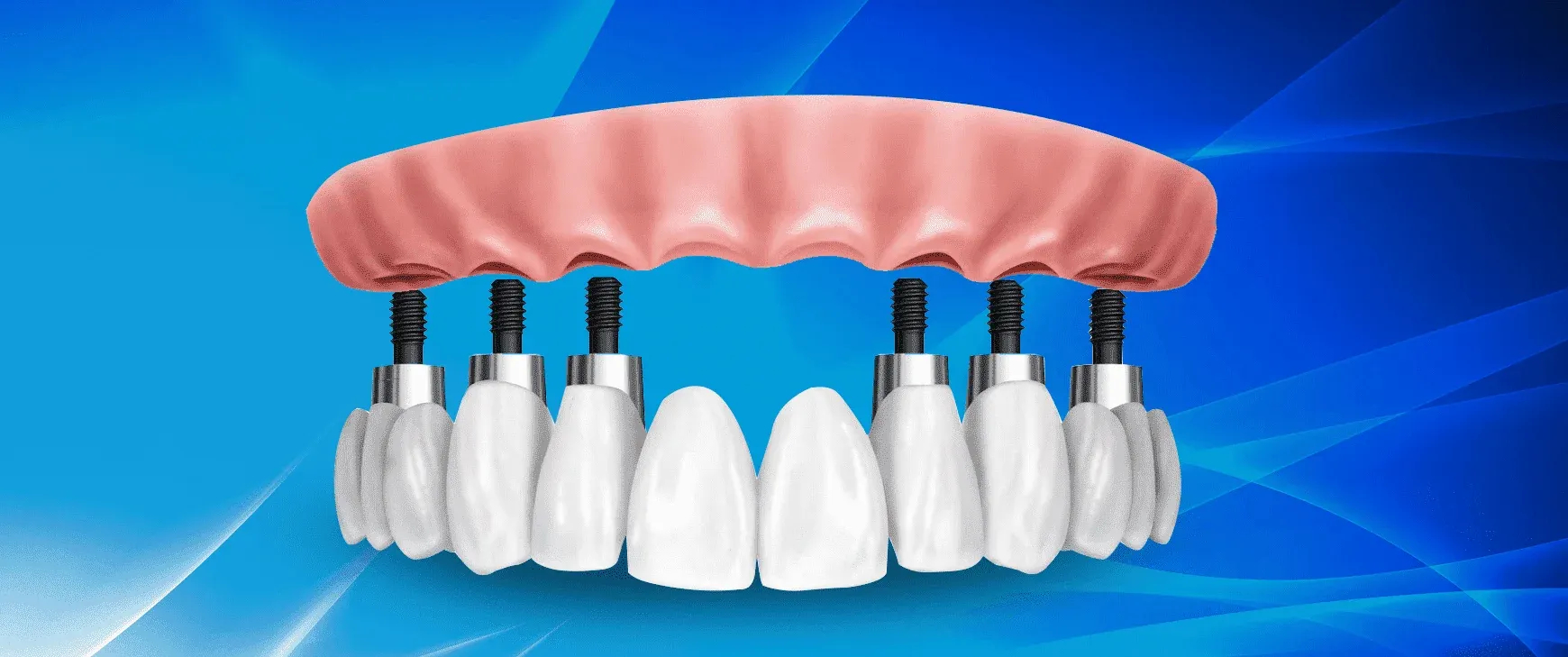
When restoring an entire upper or lower jaw, immediate loading achieves maximum strength through rigid cross-arch stabilization. Clinicians connect four or six implants using a single continuous acrylic or PMMA bridge.
- All-on-4 System: The All-on-4 dental implants technique utilizes two straight anterior implants and two posterior implants tilted at angles up to 45 degrees. This angled placement anchors into dense, quality bone, frequently avoiding the need for complex bone graft procedures while making an Implant in 1 day treatment possible for full-arch cases.
- All-on-6 System: For patients with broader jaw structures or greater bite forces, All-on-6 dental implants provide two additional anchor points. This additional foundation provides superior load distribution, making it an excellent choice for a robust full-mouth Implant in 1 day treatment.
Step-by-Step Patient Journey for Implant in 1 Day Treatment
Achieving a flawless result in a single day requires meticulous planning, state-of-the-art diagnostic tools, and synchronized teamwork between oral surgeons and lab technicians.
Step 1: Pre-Surgical Digital Diagnostics
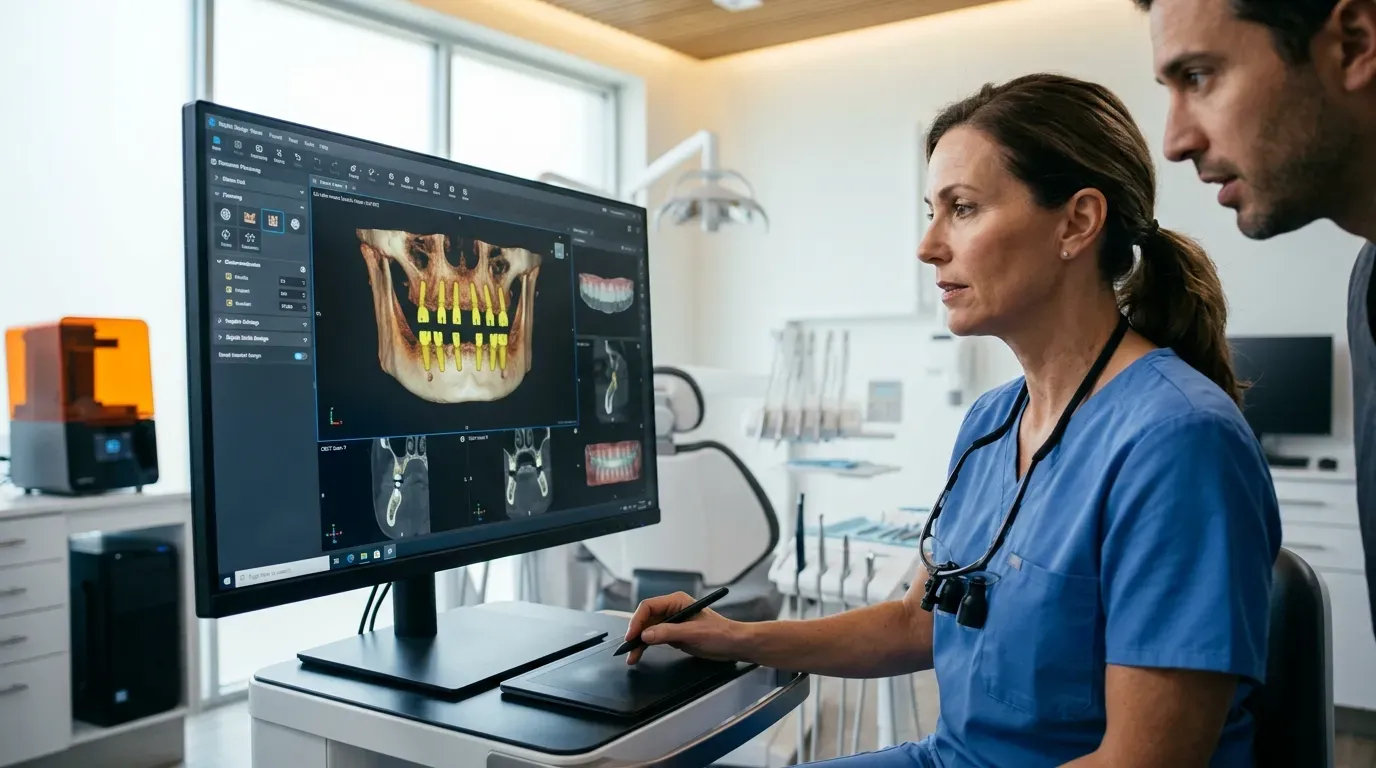
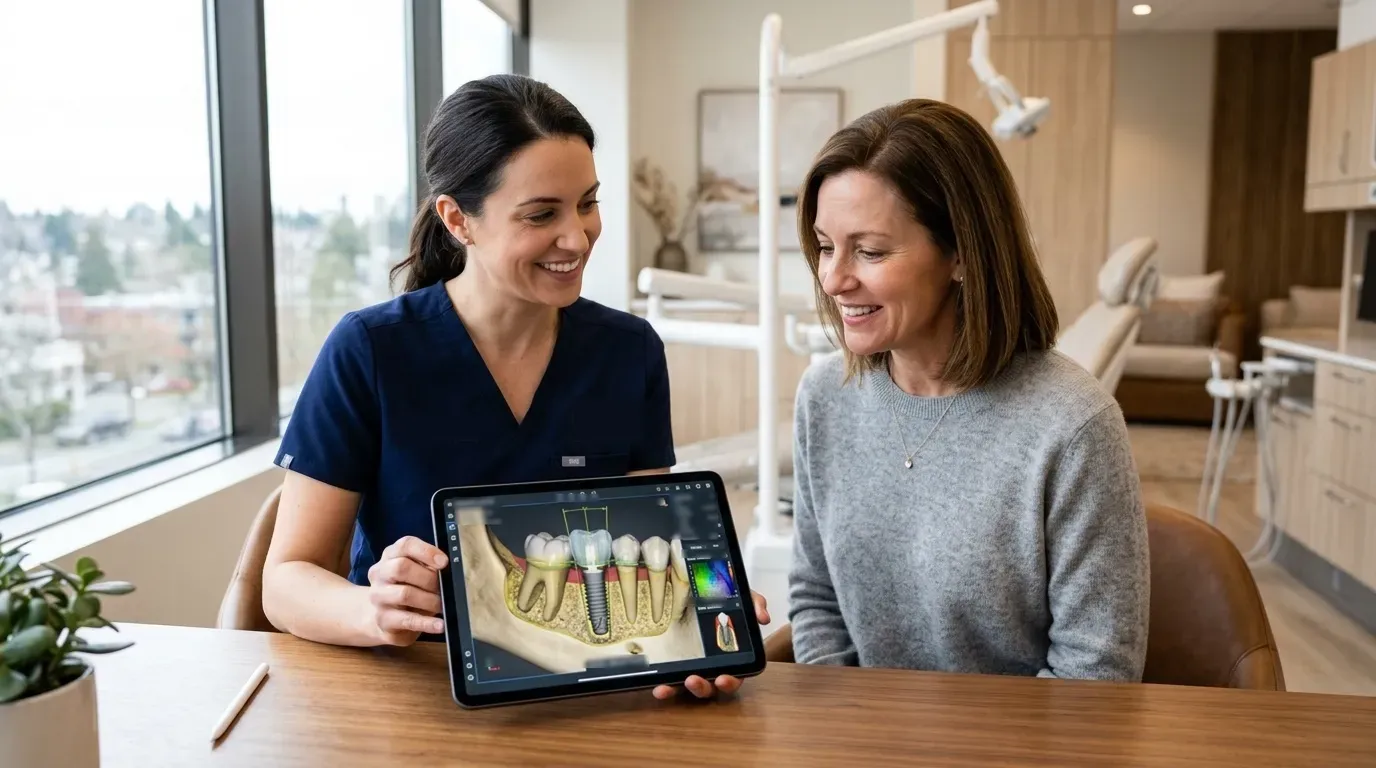
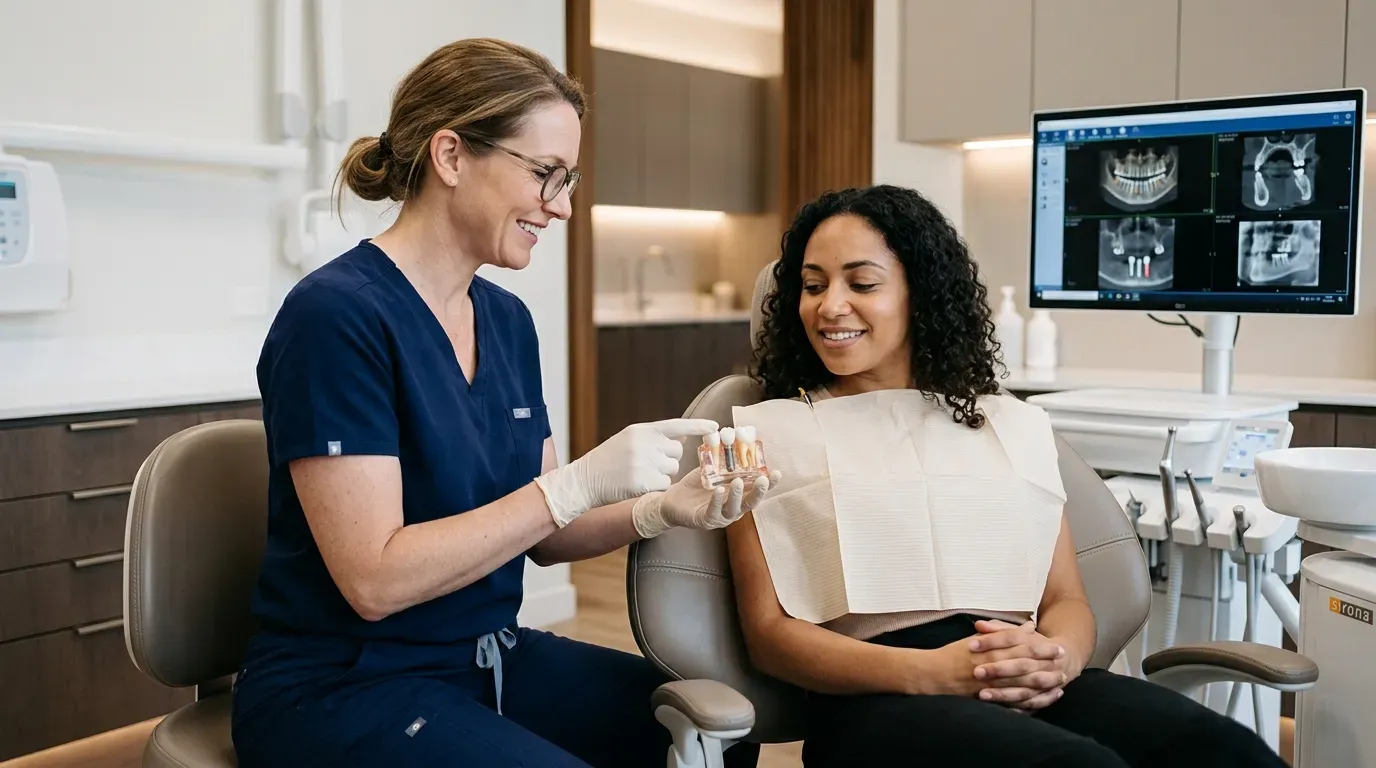
Before surgery day, 3D Cone Beam Computed Tomography (CBCT) scans and intraoral digital impressions capture the exact anatomical structures of your jaw, nerve pathways, and sinus cavities. Computer-guided software plans the exact position, angle, and depth of each fixture for your Implant in 1 day treatment.
Step 2: Extraction and Immediate Fixture Placement
On the day of surgery, local anesthesia or conscious sedation ensures complete patient comfort. Any compromised teeth are gently removed, preserving as much surrounding bone as possible. Titanium posts are inserted directly into the prepared sites using computerized surgical guides to achieve optimal insertion torque for an Implant in 1 day treatment.
Step 3: Digital Impression and On-Site Laboratory Milling
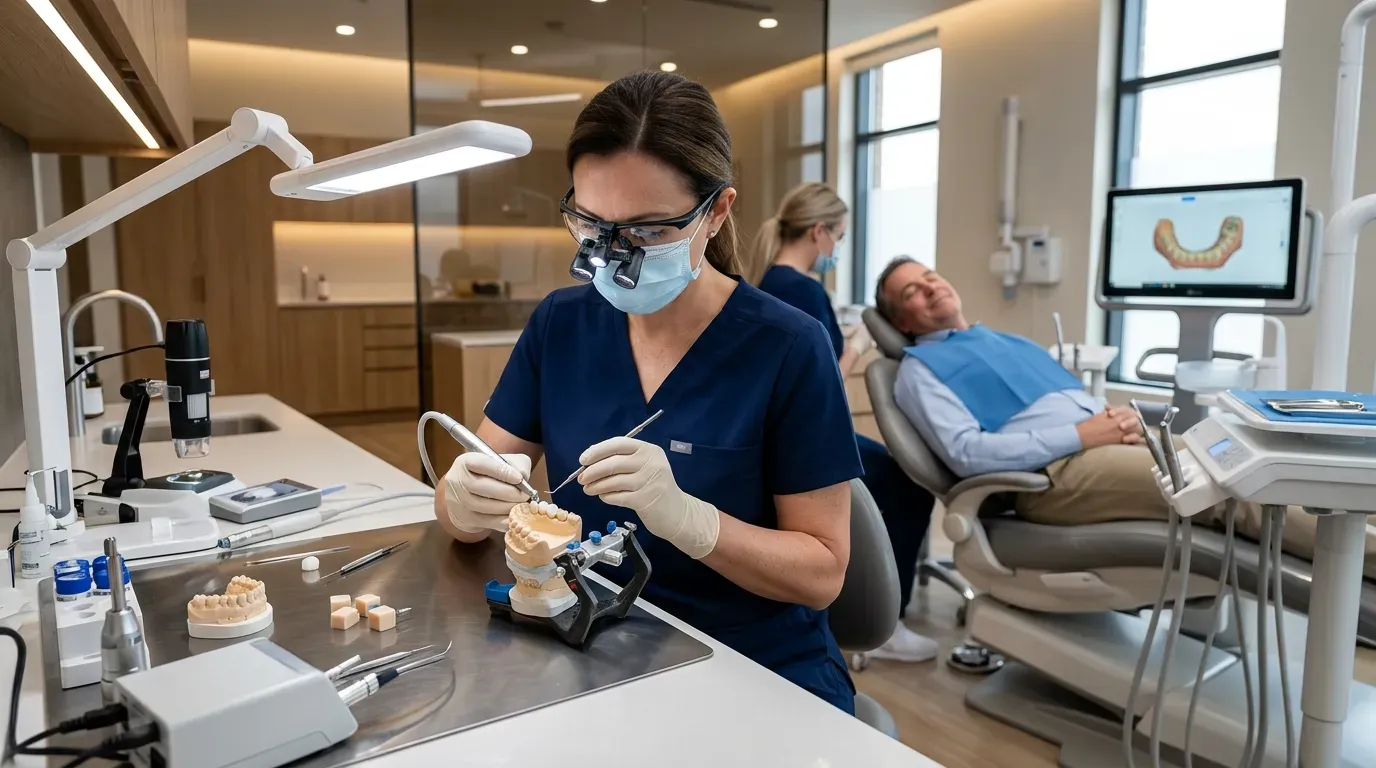
Once implants are anchored, digital scans are transmitted to the in-house dental laboratory. Advanced CAD/CAM milling machines carve high-density provisional crowns or bridges out of specialized bio-compatible materials within hours.
Step 4: Attachment of Provisional Teeth
By afternoon, the provisional restoration is securely attached to the implants. The dentist verifies the bite (occlusion) to ensure the newly placed temporary teeth are free from excessive shearing stress, finalizing your initial Implant in 1 day treatment experience.
Side-by-Side Comparison: Traditional vs. Same-Day Dental Implants
Understanding the practical differences between conventional protocols and modern immediate techniques helps patients make informed decisions.
|
Feature / Metric |
Conventional Dental Implants |
Implant in 1 Day Treatment |
|
Total Treatment Time |
3 to 9 Months |
Single Day Surgery & Fitting |
|
Number of Surgical Visits |
2 to 4 Appointments |
1 Primary Surgical Visit |
|
Immediate Aesthetics |
Temporary Removable Denture or Gap |
Fixed, Non-Removable Provisional Teeth |
|
Bone Grafting Needs |
Frequently Required Before Placement |
Often Minimized via Angled Implants |
|
Gum Tissue Preservation |
Moderate (Requires Tissue Re-shaping) |
Excellent (Preserves Natural Papillae) |
|
Primary Requirement |
General Bone Volume |
High Insertion Torque (35+ Ncm) |
|
Patient Discomfort |
Multiple Healing Phases |
Single Integrated Healing Period |
|
Initial Cost Impact |
Spread Over Multiple Visits |
Consolidated Single-Stage Investment |
Am I a Candidate for an Implant in 1 Day Treatment?
While an Implant in 1 day treatment offers life-changing convenience, clinical suitability depends on specific anatomical and physical conditions.
Candidate Criteria
- Adequate Bone Density: The jawbone must be dense enough to anchor the implant with strong mechanical stability on day one.
- Healthy Periodontal Tissues: Surrounding soft tissues must be free from active infection or severe, untreated periodontitis. If gum disease is present, receiving comprehensive gum treatment prior to surgery is essential to create a healthy foundation for the implants.
- Good Systemic Health: Controlled blood glucose levels, non-compromised immune systems, and non-smoking status increase success rates significantly.
- Absence of Severe Bruxism: Heavy nocturnal teeth grinding can exert unmanageable forces on healing implants, requiring protective night guards or habit management before undergoing an Implant in 1 day treatment.
Essential Aftercare and Recovery Protocol
Proper home maintenance ensures that your new temporary restoration transitions smoothly into a permanent, lifelong success after an Implant in 1 day treatment.
- Apply cold ice packs externally to the cheeks to manage local swelling.
- Stick to cool, liquid or ultra-soft foods (smoothies, broths, yogurts).
- Avoid hot liquids, hard straws, and strenuous physical activity.
- Take prescribed antibiotics and pain relief medication strictly as directed.
Weeks 1 through 12: Soft Food Diet Phase
During the initial 3 months, your bone is undergoing active osseointegration around your Implant in 1 day treatment fixtures. Even though your new teeth look and feel natural, you must protect them from extreme forces.
- Allowed Foods: Scrambled eggs, well-cooked pasta, soft fish, mashed potatoes, soups, and soft cheeses.
- Foods to Avoid: Hard crusty bread, nuts, raw carrots, steaks, hard candies, and ice cubes.
Long-Term Hygiene and Maintenance
- Clean around implants daily using specialized super-floss or soft interdental brushes.
- Use an oral irrigator (water flosser) on low pressure to clear food debris underneath fixed bridges.
- Maintaining immaculate hygiene prevents plaque buildup and bacterial imbalance; if chronic breath odor persists despite good habits, professional bad breath treatment can target underlying causes effectively.
- Maintain biannual checkups and professional hygienic cleanings to protect your Implant in 1 day treatment investment.
Why Turkey and Istanbul Are Global Leaders for Implant in 1 Day Treatment
Over the past decade, Turkey—and specifically the vibrant metropolis of Istanbul—has established itself as the world’s leading hub for advanced dental tourism and complete smile makeovers. Tens of thousands of international patients travel to Istanbul every year specifically to undergo an Implant in 1 day treatment, drawn by a combination of world-class clinical expertise, advanced technologies, and warm hospitality.
World-Class Dental Infrastructure in Istanbul
Istanbul hosts state-of-the-art dental centers equipped with fully integrated digital workflows, in-house CAD/CAM laboratories, 3D CBCT scanners, and surgical navigation tools. This advanced technological infrastructure is precisely what enables top Turkish clinics to perform an efficient Implant in 1 day treatment seamlessly within hours, without outsourcing prosthetic manufacturing to third-party labs.
Unmatched Value and Luxury Hospitality
The financial benefits of receiving an Implant in 1 day treatment in Turkey are significant. Due to lower operational overheads and favorable exchange rates, international patients can save between 50% to 70% on complete smile rehabilitations compared to prices in the United Kingdom, Western Europe, or North America—without sacrificing material quality or medical safety. Furthermore, clinics in Istanbul typically offer all-inclusive VIP packages that cover luxury hotel stays, private airport transfers, personal interpreters, and complete surgical procedures.
Combining Healthcare with an Unforgettable Vacation
Choosing Istanbul for your Implant in 1 day treatment allows you to pair world-class dental restoration with an unforgettable cultural vacation. Between appointments, patients can explore historic treasures like the Hagia Sophia, the Topkapi Palace, and the Grand Bazaar, or enjoy fine dining overlooking the scenic Bosphorus Strait. Walking into a appointment and emerging hours later with a brand-new smile—while enjoying a Turkish holiday—makes the trip both functional and memorable.
Cost Comparison: Implant in 1 Day Treatment Worldwide
To illustrate the economic advantages of traveling to Turkey for your treatment, consider this international cost breakdown for full-mouth single-arch immediate restorations:
|
Country / Region |
Average Cost (Single Arch Immediate Load) |
Included Services |
|
United States |
$20,000 - $35,000 |
Surgery & Prosthetic Only (Transfers extra) |
|
United Kingdom |
£12,000 - £22,000 |
Basic Consultation & Surgery Only |
|
Germany / Western Europe |
€14,000 - €25,000 |
Standard Surgery & Basic Materials |
|
Australia |
$22,000 - $38,000 AUD |
Clinical Fees Only |
|
Turkey (Istanbul) |
€3,500 - €7,500 |
VIP Transfers, Hotel, Surgery, Diagnostics & 3D Scanning |
Transform Your Life with Same-Day Dentistry
An Implant in 1 day treatment represents a remarkable leap forward in modern dentistry, blending surgical accuracy with aesthetic excellence. Patients no longer need to suffer through months of tooth loss, discomfort, or temporary dentures. By taking advantage of advanced 3D diagnostics, expert surgical techniques like All-on-4 and All-on-6, and world-class dental hubs like Istanbul, Turkey, you can restore your complete confidence, speech, and biting function in a single afternoon. Speak with a qualified dental specialist today to determine if an Implant in 1 day treatment is the ideal step forward for your smile journey.
For comprehensive information about implant treatment, see our main guide.
Implant GuideDoctor Profile
Author and Medical Review
Dr. Melike KENTKURANOral and Maxillofacial Surgery Specialist
View Profile

This content has been evaluated in accordance with Hospitadent Medical Publication Board standards for medical accuracy, currency and patient information.
Our Awards
See All ›2019 – 2020
Health Tourism Champion
Since its founding, Hospitadent has provided oral and dental care to patients travelling from every continent for health tourism. In the Service Exporters' Association research of 2019 and 2020, we ranked first in the Dental Health Services category. Within the same report we placed 15th among all healthcare institutions in 2019 and moved up to 10th in 2020. With uncompromising customer satisfaction, Hospitadent remains the healthcare institution that treats the highest number of international oral and dental patients.
2013
TEMOS International Quality Certificate
Guided by dedicated international departments, Hospitadent welcomes patients from abroad without any language barriers, offering assistance with accommodation, city and Bosphorus tours, concierge guidance, treatment logistics and medication support to keep satisfaction at its peak. With the goal of carrying the same quality standards to both Turkish and foreign patients, we received the TEMOS "International Quality in Dental Care" certificate in 2013—an accreditation granted by the organization that evaluates and certifies worldwide patient service quality based on the "Made in Germany" quality seal.
2020
Turquality Brand Support Program
For 16 years, the Turquality Brand Support Program has helped Turkish products build and promote their image abroad. Dental Group Hospitadent earned the right to join this initiative, taking an important step on its branding journey. Being the first dental healthcare group in a program that includes only five hospitals from the healthcare sector proves not only the quality image we project, but also the high standards we uphold.
2018
Stevie Awards – Most Innovative Customer Service
The Stevie Awards, recognized worldwide for honoring outstanding organizations and leaders, is the only international business awards program. In 2018, Hospitadent became the first hospital in Turkey to win a Stevie Award by receiving the "Most Innovative Customer Service of the Year" prize. Signature experiences such as Smiling Center, Digital Smile Design and Dental SPA played a decisive role in earning this accolade.
2019 – 2020
Service Exporters Association Award
Serving dental tourists from all over the world since its foundation, Hospitadent was honored by the Service Exporters' Association in the Champions of Service Exports program, which celebrates the rising value of Turkey's service industries. Thanks to its contribution to the national economy, Hospitadent received a certificate of achievement and ranked 15th among general healthcare institutions in 2019 and 10th in 2020, continuing to lead oral and dental treatments with an unwavering focus on patient satisfaction.
2021
Great Place To Work® Certified
Based on the employee experience and satisfaction survey completed by our teams, GPTW Turkey evaluated Hospitadent and awarded us the "Great Place To Work® Certified" distinction. As the first and only dental hospital holding this leading workplace culture certificate, Hospitadent continues its journey toward many more achievements.
Patient Reviews
Experiences of our patients
Dmytro
Review for Hospitadent Dental Clinic – Istanbul, Turkey I had my dental treatment at Hospitadent Dental Clinic in Istanbul, Turkey, where I received 21 crowns and 4 dental implants with 4 crowns placed on them. The entire experience was handled at the highest professional level from start to finish. Unlike my previous dental treatment experience in Ireland, I had almost no pain after the procedures. There was only mild discomfort for about 30 minutes, and I did not take a single painkiller. Everything healed perfectly. I would especially like to thank patient assistant Sinan for his support, coordination, and attention throughout the entire process. His help made everything smooth and stress-free. Special thanks as well to Dr. Berk Aksoy, Prosthodontics Specialist, for his precise and highly professional work, and to implant surgeon Dr. Ismail Eser Bolat for performing the implant procedures at an exceptional level. The service, quality of treatment, professionalism, and patient care at Hospitadent are outstanding. I am truly grateful for the results and highly recommend Hospitadent to anyone looking for top-quality dental treatment in Istanbul.
Hilâl
Great! We were at Hospitadent Mecidiyeköy to finish a started implant treatment and to correct chipped veneers (due to teeth grinding). We were treated indescribably well, professional and felt extremely safe and comfortable there. Our doctor was Dr. Berk Aksoy and our translator Sultan. We were super happy with our contact persons. The final results of our treatments are gorgeous! We would come anytime again whenever there is need.
Ben S.
Ideal for sceptical and careful tourists Perfect for tourists and foreigners in Istanbul (as I am). This is the 4th dental clinic in Istanbul I went to (one was too expensive, one closed, the other one was fishy) and finally found the one where I'll stay. From the very first contact, up until some post-treatment adjustments I wanted, they have been focused on service and being helpful and not on maximizing the money they can make - that's a dentist you call trustworthy. I needed a molar extraction with immediate German implant and tooth placement 4 months later. I had specialists for each step of that process and was always in the most capable hands. All of it was around EUR. Checkups, pre-surgery x-ray and consultation was all free, as were later adjustments. One of the key selling points for me was their price transparency. I asked for the price and they readily told me beforehand and didn't change it later on. They have German and English translators on-site and on WhatsApp (more languages as well), that are very friendly, helpful, communication was flawless throughout the entire stay. As a foreigner I never felt lost. I've recommended this place to a few people already and will continue to do so. Also just to clarify: I wasn't paid for this review, nor do I get any discount for it
Brian Moreira
Dental treatment for international client. My father underwent the procedure for four dental implants and front crowns, and the results are remarkable. From the moment we stepped in, the staff demonstrated unparalleled professionalism and warmth. They took the time to thoroughly explain each step of the process, ensuring my father felt comfortable and informed throughout. I recommend this clinic for international clients like us, particularly Dr. Tugçe, Dr. Beyza, and translator Duygu, for anyone seeking high-quality dental care in Istanbul.
Gozel Hankuliyeva
Great experience with Hospitadent I had good experience with Hospitadent. Doctor Ezgi Dagdewiren did great job with my implants and crowns. All doctors and nurses and translators were very polite and very professional.I more likely will return to them for my dental care in future.
All reviews are from our real patients.