All on 6 Dental Implants: Complete Guide
Discover the benefits, procedure, recovery, materials, candidacy, and cost factors of All on 6 dental implants for a permanent, natural-looking full-arch smile.
Severe tooth loss affects not only chewing function and facial appearance, but also overall systemic health and self-confidence. For individuals seeking a permanent, highly stable solution to restore a full arch of teeth, All on 6 dental implants offer an advanced restorative technique that rebuilds natural oral mechanics. By anchoring six titanium posts directly into the jawbone, this full-arch rehabilitation method establishes a robust framework for a permanent bridge, allowing patients to regain full dental functionality and aesthetic harmony.
Edentulism, whether total or partial, often leads to progressive jawbone degradation over time. As natural tooth roots vanish, the lack of biological stimulation causes bone tissue to resorb. Traditional removable dentures can temporarily conceal missing teeth, but they frequently fail to halt bone loss, shift during eating or speaking, and cause gum irritation. Modern full-arch implant techniques have changed this landscape by anchoring fixed prostheses directly into the jaw. In this comprehensive guide, we examine the science, surgical protocol, materials, candidacy requirements, and long-term care associated with full-arch implant rehabilitation using All on 6 dental implants.
What Are All on 6 Dental Implants?
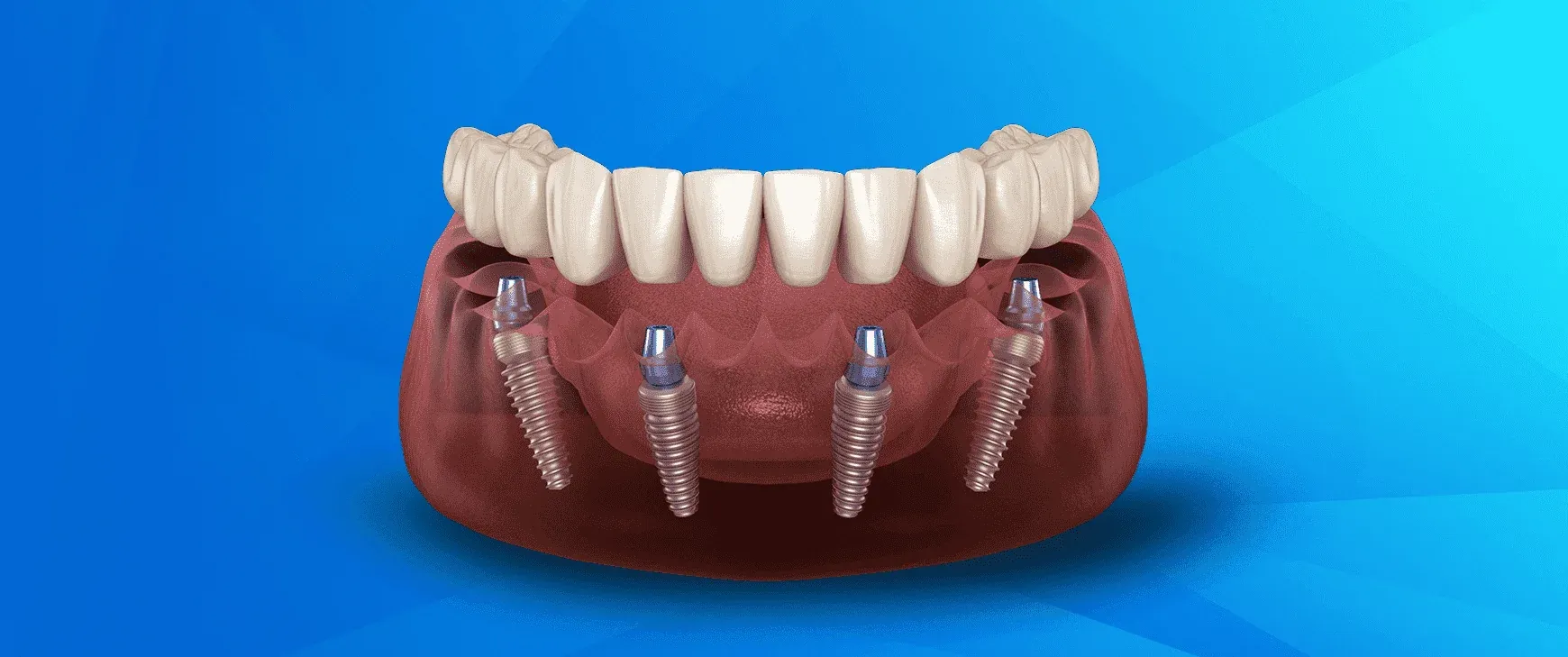
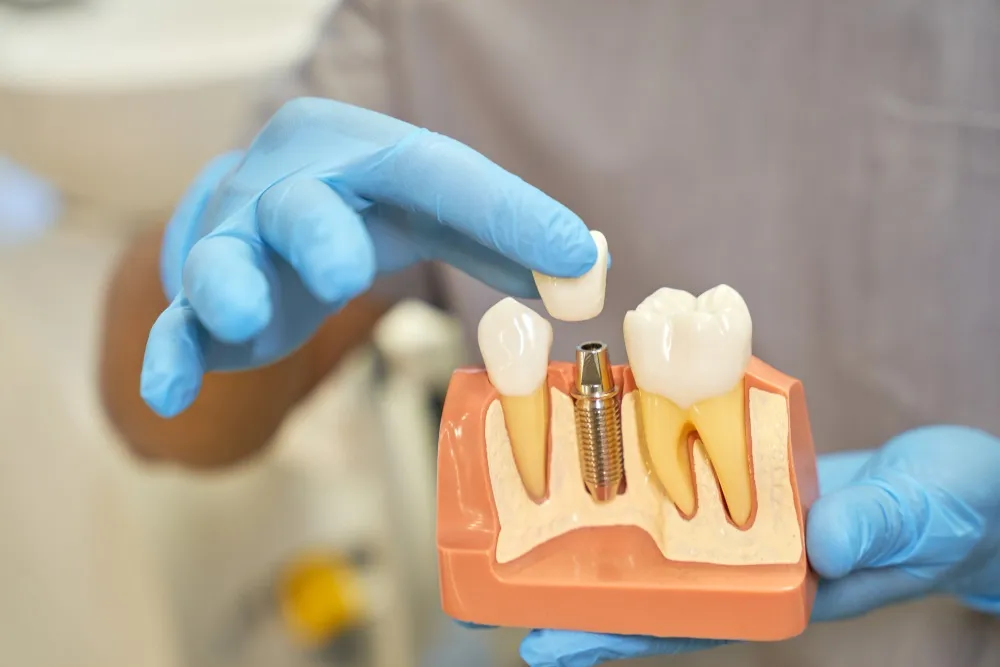
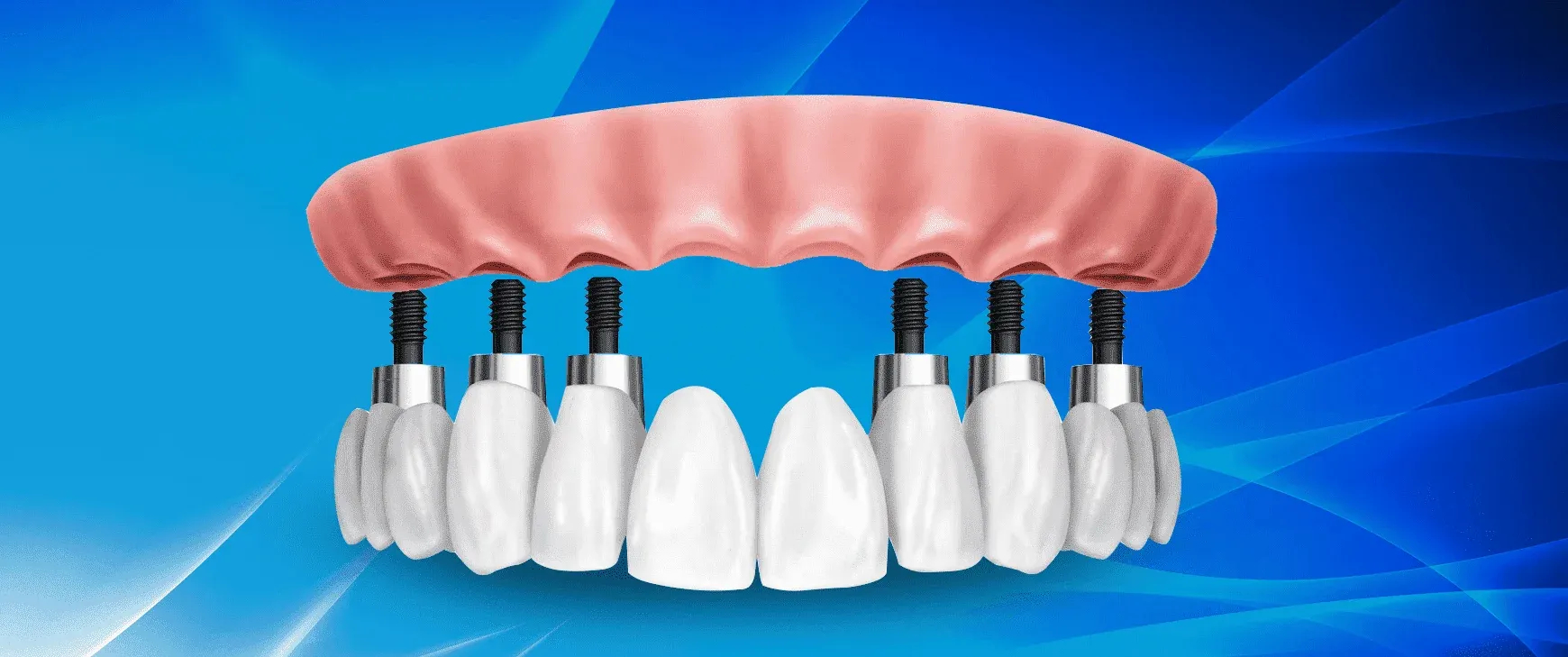
The term All on 6 dental implants refers to a full-arch rehabilitation protocol in which an entire set of upper or lower teeth is supported permanently by six strategically located implant fixtures. These artificial roots, typically manufactured from biocompatible titanium or high-grade zirconia, are surgically integrated into the jawbone. Once integrated, they serve as immovable foundation pillars for a customized 10-to-14-unit fixed prosthetic bridge.
Unlike conventional single-tooth replacements that require an individual fixture for every missing root, All on 6 dental implants leverage structural engineering principles. Placing six posts distributes occlusal forces across the entire dental arch. When patients evaluate options like the total dental implant cost in Turkey, understanding this modern treatment approach helps highlight why full-arch restoration provides long-term value: the surrounding bone cells grow directly against the implant surface through a process known as osseointegration. This biological connection locks the posts in place, preventing the progressive structural collapse of the lower face.
The Mechanical Principles Behind All on 6 Dental Implants
To understand why All on 6 dental implants offer distinct biomechanical advantages, it helps to examine how chewing forces act upon the human jaw. The posterior regions of the mouth—where molars reside—endure the highest occlusal loads during mastication, often exceeding hundreds of pounds of pressure per square inch.
- Load Balance Across Six Points: Distributing biting forces over six load-bearing posts decreases the strain placed on any single fixture, minimizing the risk of mechanical fatigue or implant loosening.
- Posterior Support Coverage: By positioning two implants in the anterior region and four in the premolar and molar regions, All on 6 dental implants provide firm support in the areas subjected to heavy chewing.
- Micro-Movement Reduction: Minimizing subtle movements during the early healing period is essential for successful bone integration. Six anchored points create a rigid perimeter that stabilizes the temporary bridge throughout the recovery phase.
Primary Benefits of All on 6 Dental Implants
Choosing All on 6 dental implants offers systemic, functional, and psychological benefits that far exceed the capabilities of removable oral appliances.
1. Full Restoration of Masticatory Force
Standard dentures restore approximately 20% to 30% of natural chewing capacity. In contrast, fixed bridges supported by All on 6 dental implants restore up to 90% or more of natural bite force. Patients can comfortably return to a diverse diet rich in raw vegetables, meats, nuts, and seeds without worrying about loose plates or discomfort.
2. Prevention of Progressive Bone Resorption
Bone tissue requires physical pressure to maintain its density and volume. Without tooth roots, the alveolar ridge diminishes rapidly in the first year following tooth loss. The posts used in All on 6 dental implants act as synthetic roots, transferring masticatory force into the bone matrix and triggering ongoing cellular renewal.
3. Natural Aesthetics and Facial Rejuvenation
Extensive tooth loss causes the lower third of the face to collapse inward, creating deep nasolabial folds and thin lips that accelerate the appearance of aging. Fixed prosthetic bridges supported by All on 6 dental implants rebuild lip support and vertical facial height, giving the face a fuller, more youthful dynamic.
4. Hassle-Free Daily Care
Because the restoration remains permanently fixed inside the mouth, maintaining All on 6 dental implants involves brushing, flossing, and water-jet cleansing just like natural teeth. There is no need for messy adhesive creams, overnight soaking tubs, or nightly removal protocols.
Who Is an Ideal Candidate for All on 6 Dental Implants?
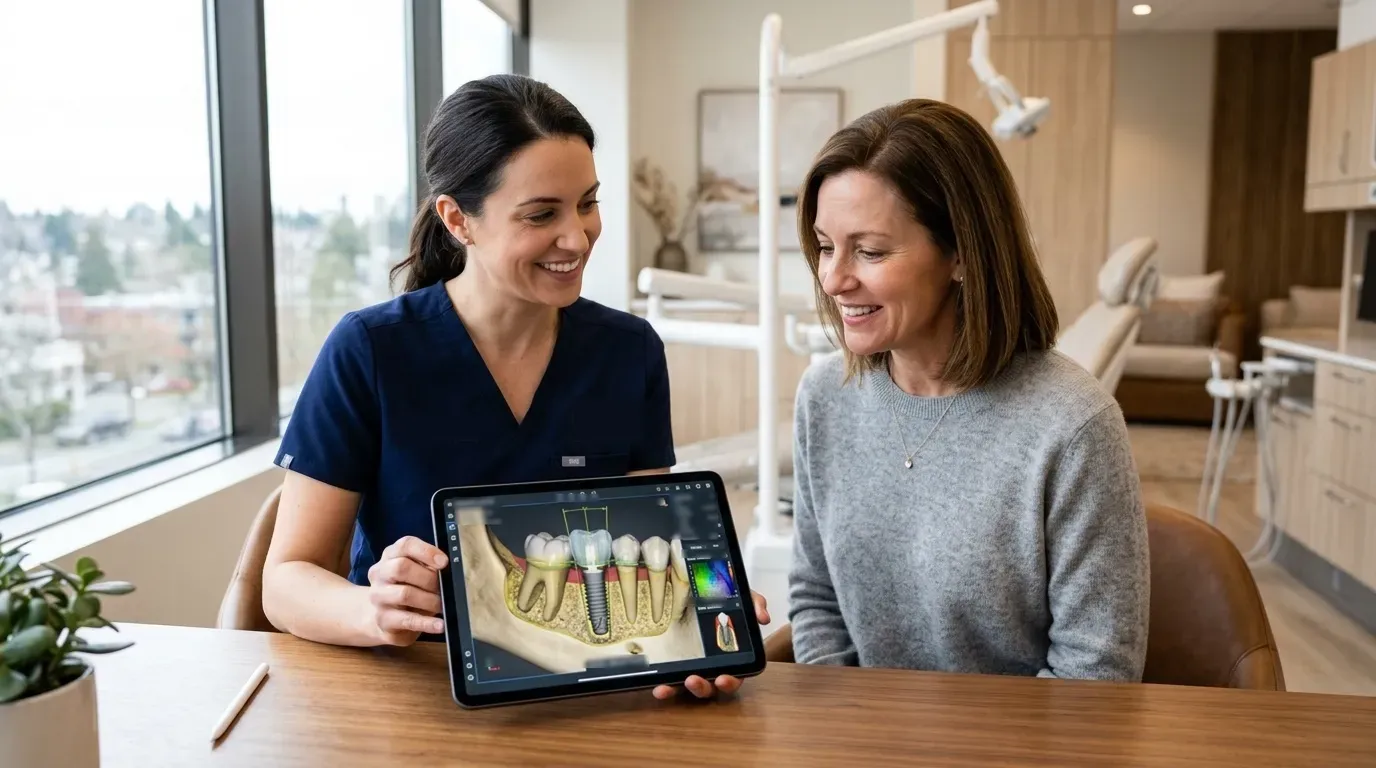
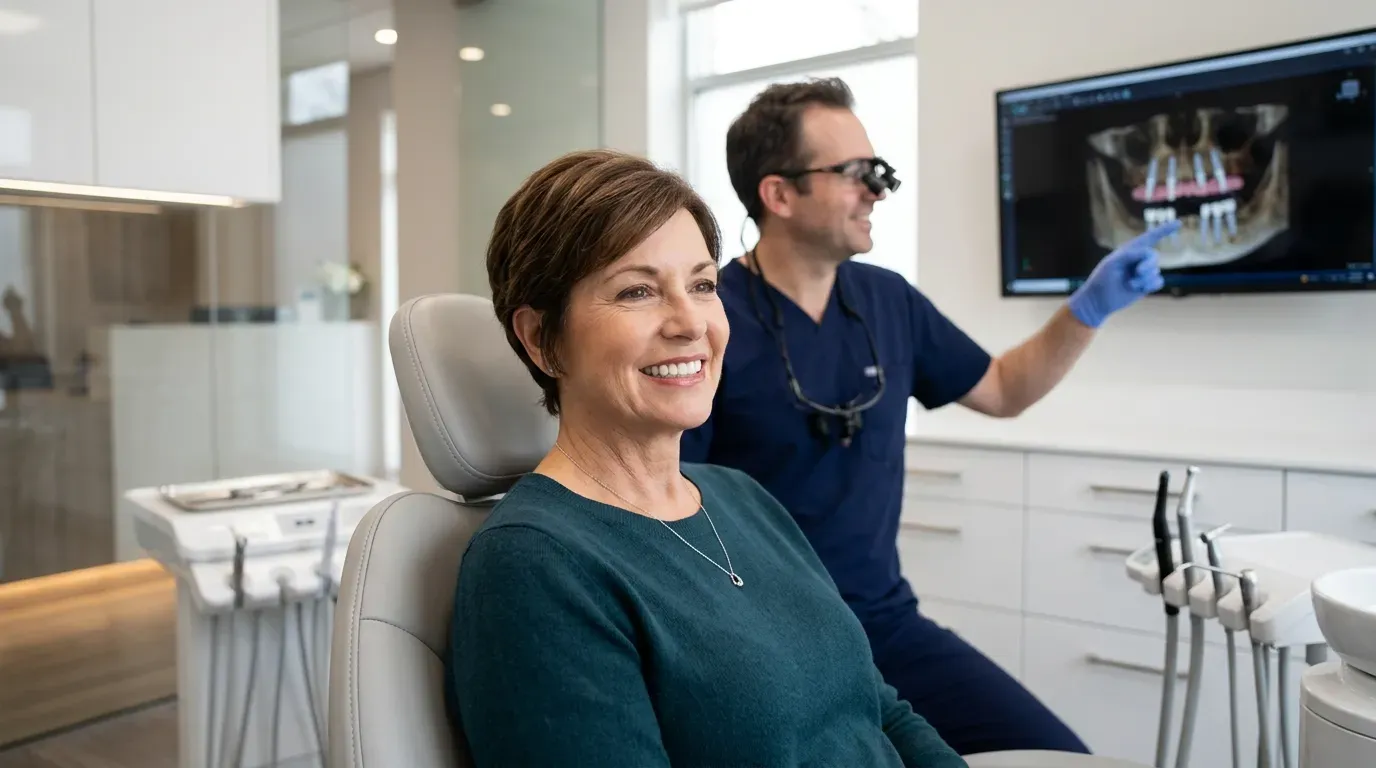
Determining whether All on 6 dental implants are right for you requires a thorough clinical assessment, including 3D Cone Beam Computed Tomography (CBCT) imaging and systemic health evaluation.
Clinical Suitability Checklist for All on 6 Dental Implants
- Severe Edentulism or Failing Teeth: Candidates for All on 6 dental implants typically suffer from widespread tooth loss, advanced periodontal breakdown, or severely fractured teeth beyond repair.
- Adequate Jawbone Volume: Having All on 6 dental implants installed requires sufficient bone height and width in both the front and back sections of the jawbone.
- Good Systemic Health: Successful osseointegration of All on 6 dental implants depends on standard wound-healing mechanics. Uncontrolled diabetes, active cancer treatments, or severe autoimmune conditions require medical stabilization prior to surgery.
- Non-Smoking Status (or Willingness to Pause): Nicotine restricts microvascular blood flow, significantly increasing the risk of early failure for All on 6 dental implants and delaying gum healing.
- Commitment to Oral Hygiene: Sustaining long-term health for All on 6 dental implants requires consistent daily oral care to prevent peri-implant bacterial infections. Addressing underlying bacterial imbalances or seeking professional bad breath treatment ensures a healthier oral environment before and after full-arch reconstruction.
All on 6 Dental Implants vs. Alternative Treatment Options
Selecting the right restorative approach requires comparing full-arch methodologies against one another. The decision often comes down to available bone density, patient preferences, budget, and long-term durability expectations.
|
Parameter |
All on 6 Dental Implants |
All on 4 System |
Traditional Dentures |
Individual Implants (10-12 Posts) |
|
Number of Fixtures |
6 titanium posts per arch |
4 titanium posts per arch |
0 (Rests on gums) |
10 to 12 separate posts |
|
Fixation Type |
Fixed (Screw-retained) |
Fixed (Screw-retained) |
Removable |
Fixed (Individual crowns/bridges) |
|
Bite Force Efficiency |
Excellent (~90%+) |
Very Good (~75%-80%) |
Poor (~20%-30%) |
Superior (~95%+) |
|
Bone Density Need |
Moderate to High |
Low to Moderate |
N/A (Accelerates bone loss) |
Very High (Requires bone grafting) |
|
Surgical Complexity |
Moderate |
Moderate |
None |
High (Multiple surgical sites) |
|
Redundancy Protection |
High (6 support points) |
Moderate (4 support points) |
None |
Maximum |
|
Longevity |
Decades / Lifetime |
Decades / Lifetime |
5 to 7 years average |
Decades / Lifetime |
Key Differences Between All on 6 Dental Implants and 4 Implants
While the widely known All-on-4 treatment protocol utilizes four implants angled to avoid areas with reduced bone density, choosing All on 6 dental implants significantly improves weight distribution. For patients with wider jaw structures or stronger jaw muscles, spreading forces across six points minimizes mechanical stress on individual screws and reduces prosthetic flex.
Detailed Step-by-Step Treatment Journey with All on 6 Dental Implants
Undergoing full-arch rehabilitation with All on 6 dental implants involves a precise multi-stage process designed to guarantee accurate placement, optimal healing, and beautiful final aesthetics.
Stage 1: Initial Diagnostics and Digital Planning for All on 6 Dental Implants
Every successful transformation utilizing All on 6 dental implants begins with comprehensive digital diagnostics.
- High-resolution 3D CBCT scans map the underlying bone architecture, nerve pathways, and sinus cavities in exact detail.
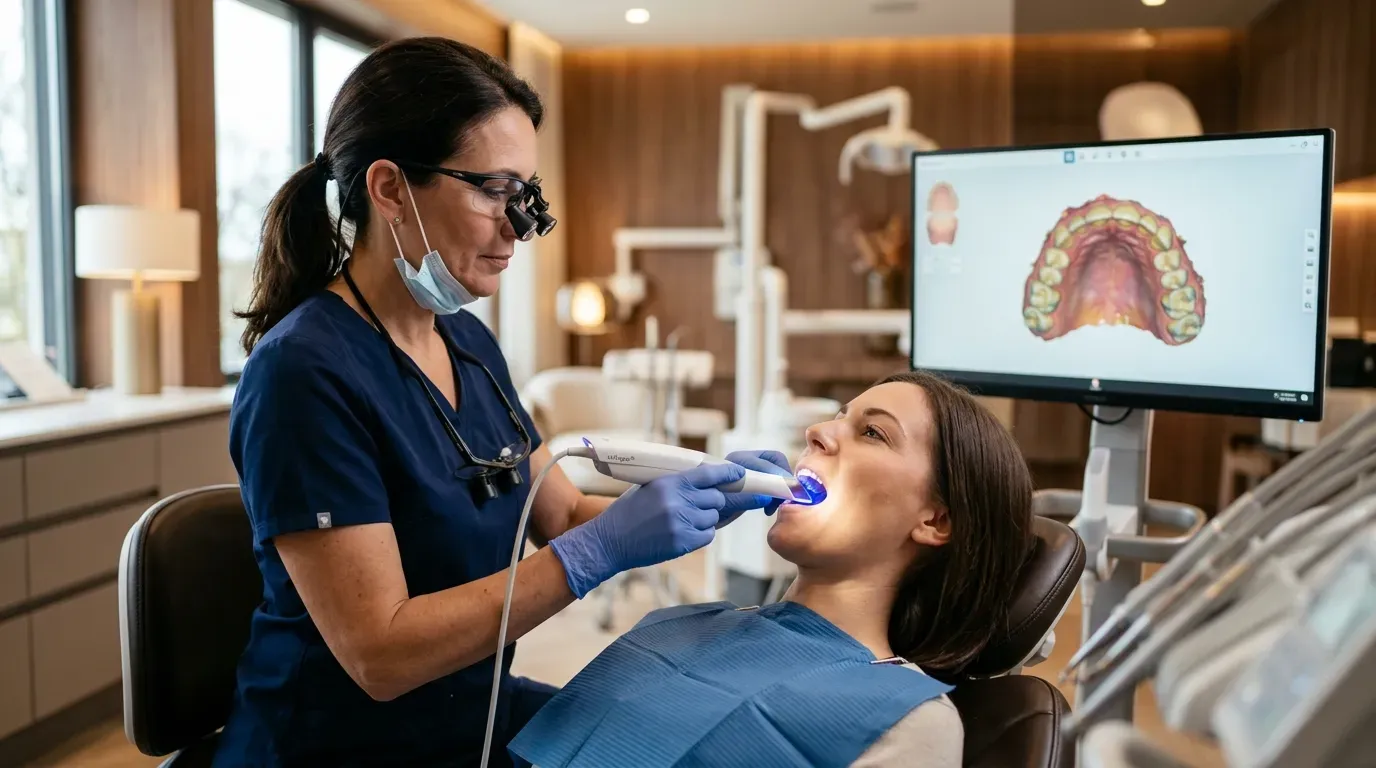
- Intraoral 3D scans capture digital impressions of the soft tissue contours.
- Computer-guided surgical software plans the placement of All on 6 dental implants, detailing the exact angle, depth, and trajectory for each fixture.
Stage 2: Surgical Placement Phase of All on 6 Dental Implants
On the day of surgery for All on 6 dental implants, local anesthesia or IV sedation ensures complete patient comfort.
- Any remaining damaged or nonsalvageable natural teeth are carefully extracted.
- The bone tissue is smoothed and prepared to create a stable, even foundation.
- Using custom surgical guides, the clinician places All on 6 dental implants into pre-determined locations in the jawbone.
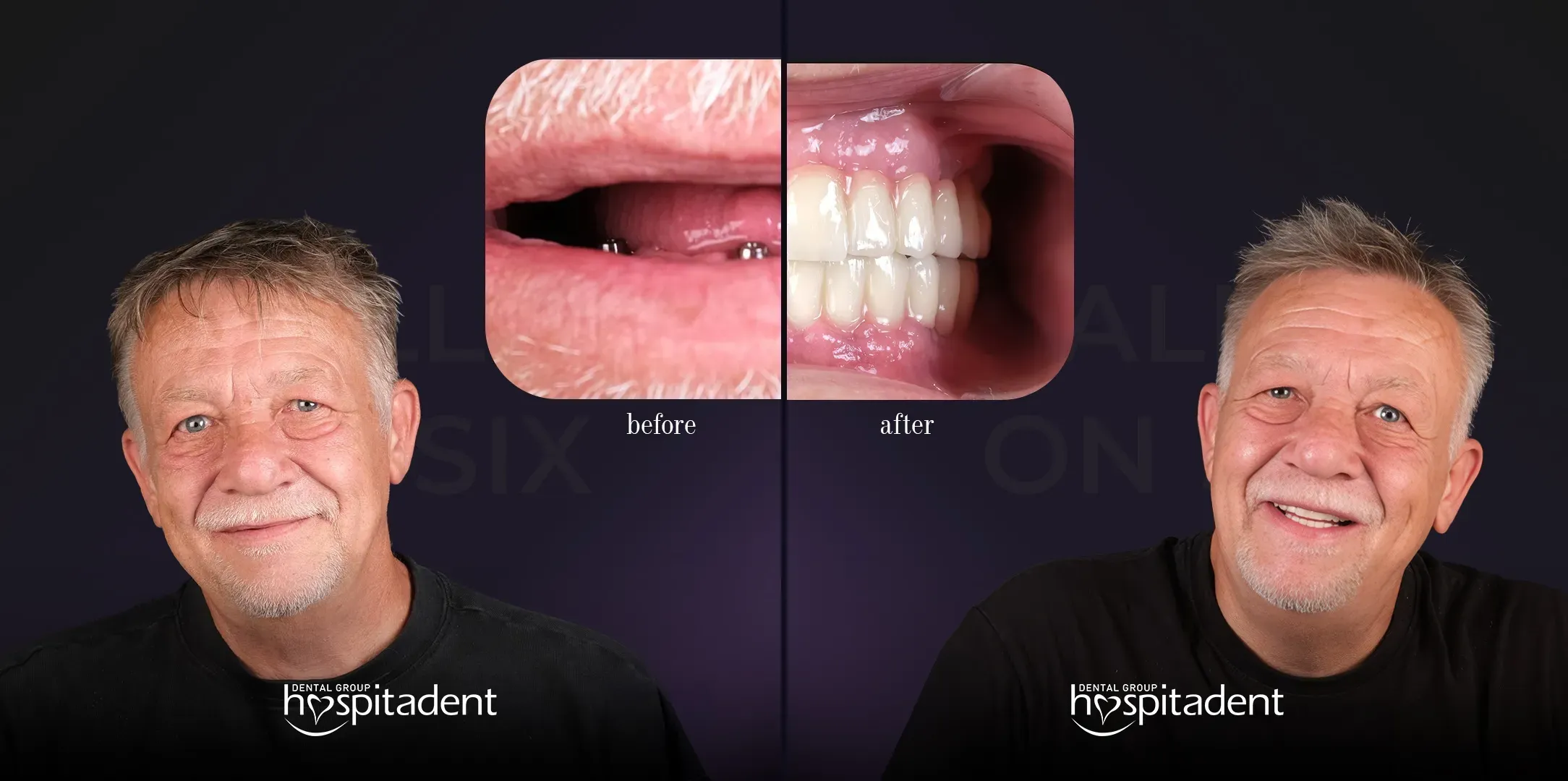
- If primary stability is reached, a lightweight temporary fixed bridge is secured to the All on 6 dental implants, allowing the patient to leave the clinic with a functional smile on the same day.
Stage 3: Healing and Osseointegration
Over the next 3 to 6 months, bone tissue fuses around the textured titanium surfaces of the All on 6 dental implants. During this crucial healing phase, patients stick to a soft-food diet to avoid placing excessive pressure on the integrating posts while the surrounding bone matures.
Stage 4: Crafting the Final Custom Prosthesis
Once osseointegration of the All on 6 dental implants is verified through clinical and radiographic evaluations, the temporary bridge is removed. Final impressions are taken to craft the permanent custom restoration.
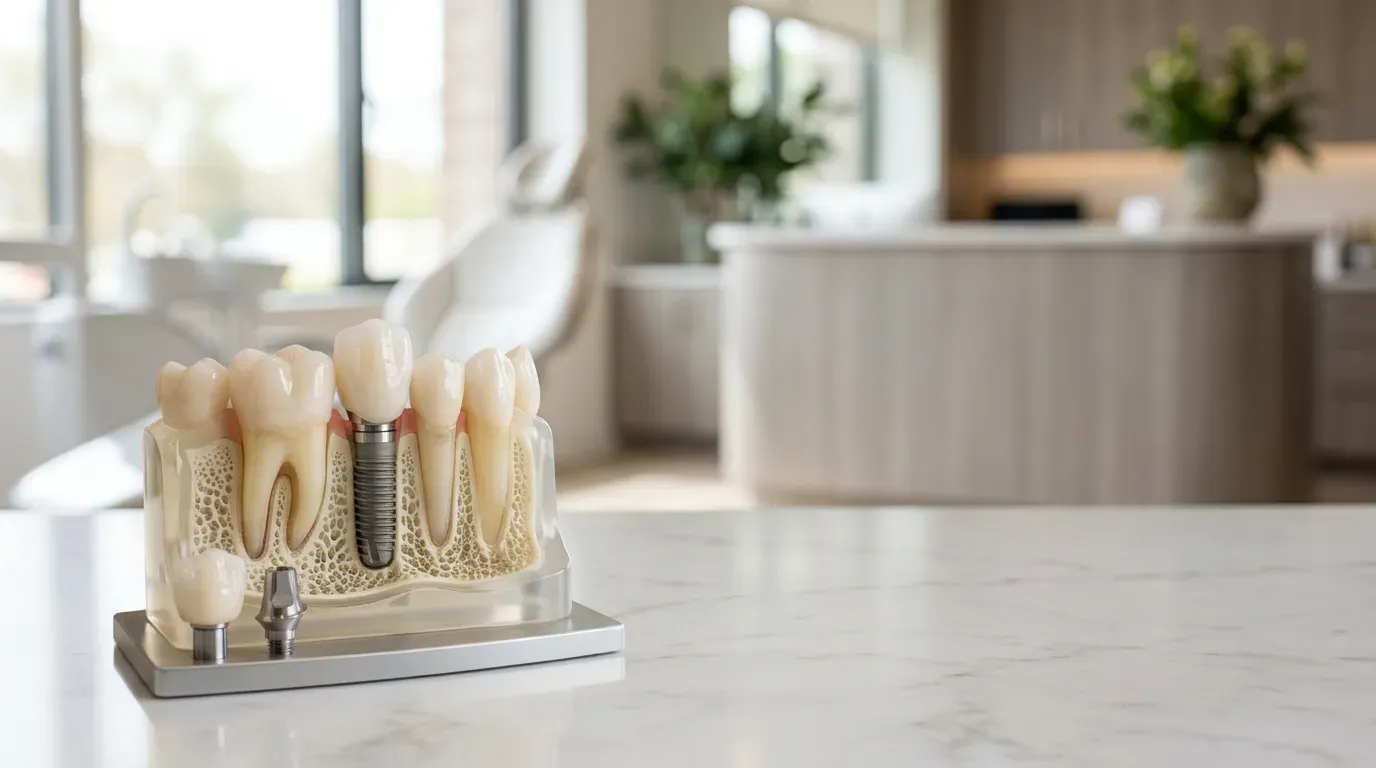
Patients receiving All on 6 dental implants can choose between various high-end material options. For example, full-arch frameworks can support long-lasting zirconium crowns or porcelain-fused-to-metal bridges. In some cases, single-unit crown restorations can be integrated onto specialized custom abutments to create optimal aesthetic boundaries and natural translucency.
Prosthetic Material Options for All on 6 Dental Implants
The long-term durability and appearance of your All on 6 dental implants depend heavily on the material chosen for the final bridge.
1. Monolithic Zirconia for All on 6 Dental Implants
Zirconia is widely regarded as the gold standard material for full-arch bridges supported by All on 6 dental implants.
- Extremely High Chip Resistance: Highly resistant to chipping, cracking, or surface wear.
- Biocompatible: Smooth, polished surfaces discourage bacterial plaque accumulation along the gum line.
- Natural Translucency: Mimics the natural light reflection of real tooth enamel over All on 6 dental implants.
2. Porcelain-Fused-to-Metal (PFM)
PFM bridges fitted over All on 6 dental implants feature a sturdy cast-metal alloy core coated with ceramic porcelain layers.
- Decades of proven clinical success in complex dental restorations.
- Excellent structural strength for wide spans across the jaw.
- Requires meticulous hygiene care around internal metal-porcelain joints.
3. High-Impact Acrylic over Titanium Bar
An affordable option for All on 6 dental implants featuring a light titanium framework layered with acrylic resin teeth.
- Easy to repair or modify if individual tooth surfaces show wear over time.
- Softer bite feel that helps absorb excessive clenching forces on All on 6 dental implants.
- Requires periodic polishing to maintain surface shine and prevent staining.
Why Istanbul, Turkey is the Premier Destination for All on 6 Dental Implants
In recent years, İstanbul has emerged as a global capital for advanced medical and dental tourism, attracting tens of thousands of international patients annually who seek world-class care for All on 6 dental implants. The city seamlessly bridges East and West, offering an unparalleled fusion of ancient historical majesty, vibrant cultural heritage, and cutting-edge healthcare infrastructure. Dental clinics in İstanbul feature state-of-the-art facilities equipped with 3D CBCT imaging, CAD/CAM milling laboratories, and digital smile design technology that equal or exceed the finest clinical standards in Western Europe and North America.
For patients seeking comprehensive aesthetic transformations, combining full-mouth restoration with a customized Hollywood Smile in Turkey offers the opportunity to achieve complete facial harmony alongside functional structural repair.
Choosing Turkey for your All on 6 dental implants procedure provides an exceptional blend of clinical excellence and cost efficiency. Oral surgeons and prosthodontists in Turkey undergo rigorous academic training and handle a high volume of complex full-arch reconstructions, giving them unmatched surgical precision. Beyond the medical advantages, visiting İstanbul transforms a dental procedure into a memorable travel experience. Patients undergoing treatment for All on 6 dental implants can spend their recovery days exploring world-famous landmarks like the Hagia Sophia, the Blue Mosque, and the Grand Bazaar, or simply relaxing on a scenic Bosphorus cruise. With luxurious hospitality, warm Turkish culture, transparent all-inclusive packages, and significant cost savings, Turkey stands out as the ultimate destination for full-mouth smile restorations.
Recovery and Post-Operative Care Protocol for All on 6 Dental Implants
Proper care following surgery for All on 6 dental implants helps minimize discomfort, speed up tissue healing, and protect your investment.
Essential Home Care Routine for All on 6 Dental Implants
- Water Flossers: Using an oral irrigator on a gentle pressure setting sweeps away food debris from under the bridge of All on 6 dental implants where regular string floss cannot reach.
- Interdental Brushes: Rubber-coated interdental brushes easily slip between implant abutments on All on 6 dental implants to gently clear away bacterial plaque.
- Non-Abrasive Toothpaste: Cleaning your bridge over All on 6 dental implants with non-abrasive gels prevents microscopic scratches on polished porcelain or zirconia surfaces.
- Professional Maintenance: Visiting your dental clinic every 6 months for professional cleanings, bite checks, and radiographic reviews keeps your All on 6 dental implants in top condition.
Cost Factors and Value Investment for All on 6 Dental Implants
The total financial investment for All on 6 dental implants varies based on several clinical and technical factors:
- Pre-Surgical Treatments: Bone grafting, sinus lift procedures, or extractions prior to receiving All on 6 dental implants alter the total treatment plan.
- Prosthetic Material Choice: Custom monolithic zirconia bridges fitted onto All on 6 dental implants carry a higher initial investment than metal-acrylic options due to raw material costs and lab craftsmanship.
- Surgical Precision Tools: Utilizing 3D CBCT scans, computer-generated surgical guides, and digital smile design technology for All on 6 dental implants ensures higher accuracy and long-term success.
- Surgeon Expertise: Complex full-arch rehabilitations with All on 6 dental implants require advanced surgical training, specialized skill, and experienced restorative teams.
Although All on 6 dental implants require a higher upfront investment than removable dentures, their exceptional durability, bone-preserving benefits, and lower long-term maintenance costs make them a highly cost-effective investment in your lifelong health and confidence.
For comprehensive information about implant treatment, see our main guide.
Implant GuideDoctor Profile
Author and Medical Review
Dr. Melike KENTKURANOral and Maxillofacial Surgery Specialist
View ProfileThis content has been evaluated in accordance with Hospitadent Medical Publication Board standards for medical accuracy, currency and patient information.
Our Awards
See All ›2019 – 2020
Health Tourism Champion
Since its founding, Hospitadent has provided oral and dental care to patients travelling from every continent for health tourism. In the Service Exporters' Association research of 2019 and 2020, we ranked first in the Dental Health Services category. Within the same report we placed 15th among all healthcare institutions in 2019 and moved up to 10th in 2020. With uncompromising customer satisfaction, Hospitadent remains the healthcare institution that treats the highest number of international oral and dental patients.
2013
TEMOS International Quality Certificate
Guided by dedicated international departments, Hospitadent welcomes patients from abroad without any language barriers, offering assistance with accommodation, city and Bosphorus tours, concierge guidance, treatment logistics and medication support to keep satisfaction at its peak. With the goal of carrying the same quality standards to both Turkish and foreign patients, we received the TEMOS "International Quality in Dental Care" certificate in 2013—an accreditation granted by the organization that evaluates and certifies worldwide patient service quality based on the "Made in Germany" quality seal.
2020
Turquality Brand Support Program
For 16 years, the Turquality Brand Support Program has helped Turkish products build and promote their image abroad. Dental Group Hospitadent earned the right to join this initiative, taking an important step on its branding journey. Being the first dental healthcare group in a program that includes only five hospitals from the healthcare sector proves not only the quality image we project, but also the high standards we uphold.
2018
Stevie Awards – Most Innovative Customer Service
The Stevie Awards, recognized worldwide for honoring outstanding organizations and leaders, is the only international business awards program. In 2018, Hospitadent became the first hospital in Turkey to win a Stevie Award by receiving the "Most Innovative Customer Service of the Year" prize. Signature experiences such as Smiling Center, Digital Smile Design and Dental SPA played a decisive role in earning this accolade.
2019 – 2020
Service Exporters Association Award
Serving dental tourists from all over the world since its foundation, Hospitadent was honored by the Service Exporters' Association in the Champions of Service Exports program, which celebrates the rising value of Turkey's service industries. Thanks to its contribution to the national economy, Hospitadent received a certificate of achievement and ranked 15th among general healthcare institutions in 2019 and 10th in 2020, continuing to lead oral and dental treatments with an unwavering focus on patient satisfaction.
2021
Great Place To Work® Certified
Based on the employee experience and satisfaction survey completed by our teams, GPTW Turkey evaluated Hospitadent and awarded us the "Great Place To Work® Certified" distinction. As the first and only dental hospital holding this leading workplace culture certificate, Hospitadent continues its journey toward many more achievements.
Patient Reviews
Experiences of our patients
Hot Tub
I had 6 top and bottom implants Had a great experience Well looked after from arrival to being dropped back to airport Zeynap coordinated for me and was very helpful and attentive. I would recommend this denticed.
Alastair Innes
From the very srart, all of the staff were kind, friendly and professional, after the consultation and plan , there was no pressure selling only good advie , the dental work was spread over several days with a day off in the middle I had 1 x implant, 1x bone graft, 4 replacement crowns, 1 x root extraction and a filling At all times the dentists and surgeons were calm , kind, gentle and proffessional The hospital / clinic is very modern , better than my local denist
Maarouff
I had a dental implant treatment with Hospitadent and I’m very satisfied with my experience. The staff were friendly and professional from the beginning, and the clinic was clean and modern. The dentist explained everything clearly, which helped me feel comfortable and confident. The procedure was smooth and not as painful as I expected. I’m very happy with the final result—it looks natural and feels great. I would definitely recommend Hospitadent to anyone considering dental treatment. Special thanks to Mr. Sinan, who assisted us from the UK all the way to Turkey, arranging airport transfers both ways and booking an excellent hotel. I would also like to thank the doctor who carried out my implant, along with the team for the general cleaning and excellent overall care.
Ben S.
Ideal for sceptical and careful tourists Perfect for tourists and foreigners in Istanbul (as I am). This is the 4th dental clinic in Istanbul I went to (one was too expensive, one closed, the other one was fishy) and finally found the one where I'll stay. From the very first contact, up until some post-treatment adjustments I wanted, they have been focused on service and being helpful and not on maximizing the money they can make - that's a dentist you call trustworthy. I needed a molar extraction with immediate German implant and tooth placement 4 months later. I had specialists for each step of that process and was always in the most capable hands. All of it was around EUR. Checkups, pre-surgery x-ray and consultation was all free, as were later adjustments. One of the key selling points for me was their price transparency. I asked for the price and they readily told me beforehand and didn't change it later on. They have German and English translators on-site and on WhatsApp (more languages as well), that are very friendly, helpful, communication was flawless throughout the entire stay. As a foreigner I never felt lost. I've recommended this place to a few people already and will continue to do so. Also just to clarify: I wasn't paid for this review, nor do I get any discount for it
All reviews are from our real patients.