Understanding the overall dental implant cost before committing to treatment is one of the most vital steps for any patient considering restorative oral surgery. Dental implant pricing varies significantly depending on geographical location, the materials selected, the surgical complexity of the case, and the clinical expertise involved. Having a clear, itemized picture upfront empowers patients to plan their finances confidently, evaluate competitive quotes effectively, and avoid unexpected expenses during recovery. Unlike temporary solutions, permanent tooth restoration requires surgical precision, biocompatible fixtures, sophisticated diagnostic imaging, and an extensive healing period spanning several months. This multi-phase process explains why the initial investment for implants is higher than traditional fillings, removable appliances, or bridges. However, tooth restoration via advanced dental implant treatment is universally recognized by clinicians as the gold standard for missing tooth replacement. They restore full chewing force, preserve natural facial contours, prevent progressive bone loss, and function seamlessly alongside surrounding natural teeth. Weighing total dental implant cost against these lifelong functional and aesthetic benefits provides a clear perspective on long-term value for every patient.
What Are the Primary Factors That Determine Dental Implant Cost?
The total price quoted for dental implants is rarely an arbitrary figure. Instead, it reflects a combination of manufacturing expenses, surgical protocols, facility overhead, and specialized clinical labor. Understanding these core components helps clarify why price variations exist across different providers and geographic regions. Clinics operating in major metropolitan centers face substantial overhead, including commercial rent, high staff salaries, administrative taxes, and strict regulatory compliance fees. These ongoing operational expenses are directly reflected in patient invoices. Conversely, accredited clinics operating in countries with lower operational overhead and favorable exchange rates can offer identical medical-grade materials and surgical standards at a fraction of Western prices.
The specific implant fixture selected also has a major bearing on the final bill. Commercial pure titanium and titanium alloys remain the industry standard due to decades of clinical testing proving exceptional osseointegration with human jawbone tissue. Modern ceramic zirconia implants offer a hypoallergenic, metal-free alternative ideal for patients with thin gum biotypes or metal sensitivities, though they often carry a distinct price tag. Furthermore, premium tier-one implant manufacturers invest heavily in patented surface treatments, extensive clinical trials, and global warranties, which raises their purchase price compared to generic alternatives.
How Does Case Complexity Affect Your Overall Dental Implant Cost?
No two human jawbones are anatomically identical. A patient with optimal bone density, healthy mucosal tissues, and no pre-existing periodontal disease will experience a straightforward placement with a lower dental implant cost. In contrast, patients suffering from chronic tooth loss, long-term bone resorption, or collapsed sinus cavities require specialized preparatory interventions before an implant can be anchored securely. Preparatory surgeries such as ridge augmentation, sinus elevations, or bone grafting increase treatment duration and total cost.
The quantity of missing teeth dictates the number of implant posts required. Replacing a single missing tooth involves one fixture, one connector, and one crown. Restoring multiple adjacent missing teeth may utilize an implant-supported bridge, reducing the per-tooth fixture expense. Replacing an entire dental arch typically requires specialized full-arch techniques like All-on-4 dental implants or All-on-6 dental implants, where strategically angled posts support a full fixed bridge without requiring individual root replacements for each tooth.
What Is the Average Dental Implant Cost for a Single Tooth Replacement?
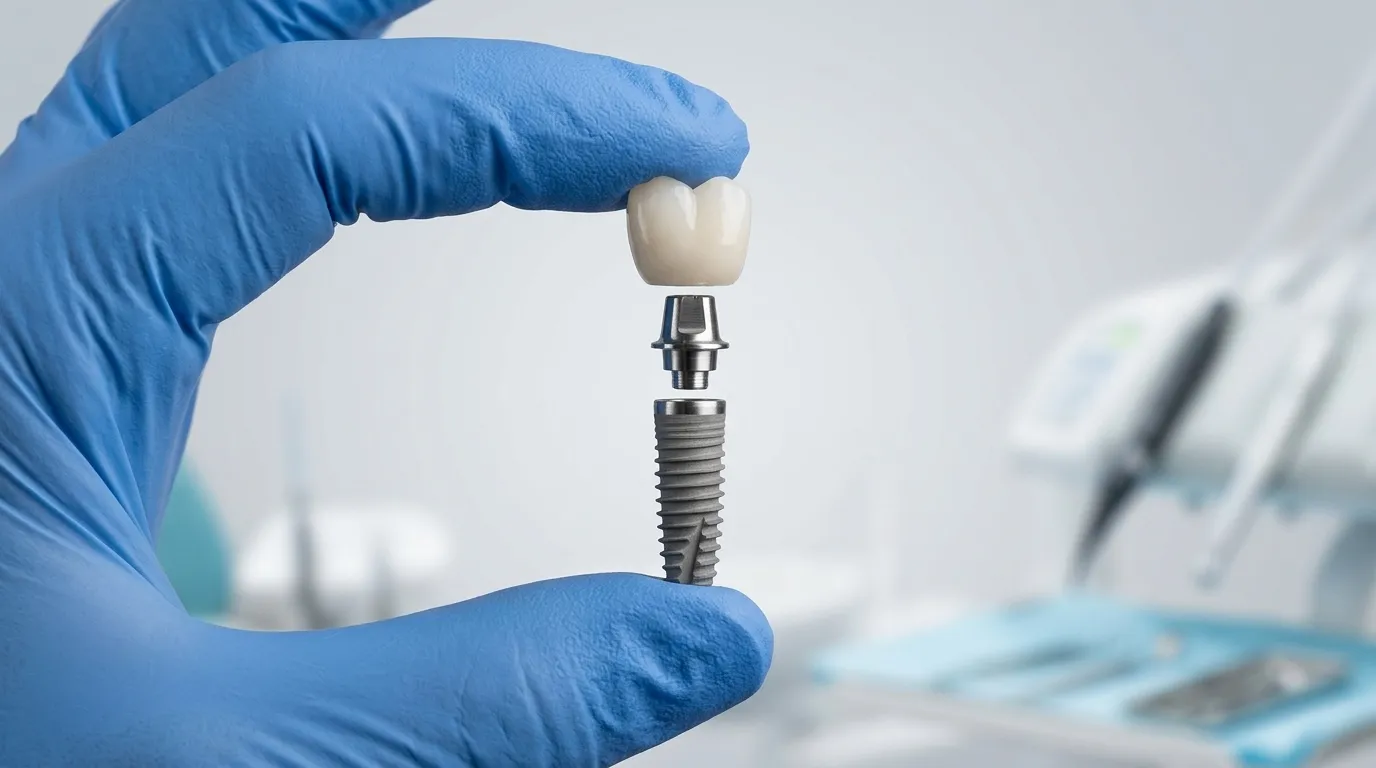
When inquiring about a single-tooth replacement, patients must ensure they are reviewing a complete price breakdown rather than an isolated estimate for the titanium post alone. A complete single-tooth restoration consists of three main structural components: the implant fixture (post), the custom or prefabricated abutment, and the prosthetic crown that sits above the gumline. In Western nations like the United States, Canada, and the UK, a complete single-tooth implant restoration generally ranges from $2,500 to $5,000 per tooth. In international dental centers such as Turkey, the exact same high-tier implant brand and custom ceramic crown combo often ranges between $600 and $1,200.
This stark contrast highlights the impact of operational economics rather than a compromise in healthcare quality. Patients evaluating quotes should always clarify whether surgical placement, localized anesthesia, diagnostic X-rays, abutment fitting, and final crown placement are bundled together or itemized as separate charges. Unbundling can make an initial price appear artificially inexpensive until additional line items are added later in treatment, skewing the real dental implant cost.
How Does the Choice of Crown Material Impact Dental Implant Cost?
Porcelain-Fused-to-Metal Crowns
Historically common and budget-friendly, PFM crowns combine a metallic substructure for strength with an outer ceramic coating. While durable, they can display an unsightly dark metallic line at the gumline over time if gum tissue recedes, making them less desirable for anterior teeth.
Monolithic Zirconia Crowns
Zirconia represents the modern standard for posterior molar and premolar restorations. Exceptional fracture toughness enables monolithic zirconia crowns to withstand heavy biting pressure while delivering natural translucency, white coloration, and excellent biocompatibility at a balanced price point.
E-Max Lithium Disilicate Crowns
E-Max crowns provide premium light transmission and depth matching natural tooth enamel seamlessly. Because of their unmatched lifelike beauty, E-Max ceramics are frequently selected for anterior front tooth restorations, carrying a slightly higher aesthetic price tag in exchange for pristine visual appeal.
What Is the Typical Clinical Timeline Behind Dental Implant Cost?
- Initial Consultation and 3D Imaging Phase: Comprehensive clinical examination, medical history review, and 3D CBCT bone density scans to design a precise digital surgical guide.
- Surgical Placement Phase: Localized surgical preparation of the osteotomy site, precision placement of the titanium fixture into the jawbone, and placement of a healing cap or protective suture.
- Osseointegration and Healing Phase: A required resting period lasting 3 to 6 months while bone cells bond securely around the titanium surface, during which patients wear a temporary restoration.
- Abutment Placement and Digital Scanning: Uncovering the integrated post, attaching the permanent abutment, and taking a digital intraoral scan to design the final custom crown.
- Final Prosthetic Delivery: Fitting, testing bite alignment, and permanently securing the custom zirconia or ceramic crown to complete the treatment.
What Is the Full-Arch Dental Implant Cost for All-on-4 and All-on-6?
For individuals facing extensive tooth loss, failing bridge work, or advanced periodontal disease, restoring individual teeth one-by-one is neither anatomically feasible nor financially practical. Advanced full-arch implant techniques allow oral surgeons to restore an entire jaw of 10 to 14 teeth using a strategically placed set of foundational posts. The two main full-arch protocols utilized globally are All-on-4 and All-on-6, which maximize contact with available jawbone tissue and often avoid the need for extensive bone grafting.
The All-on-4 procedure anchors a full, fixed prosthetic bridge using four posts per arch. The two posterior implants are angled at up to 45 degrees to capitalize on naturally dense bone near the front of the jaw, bypassing sinus cavities. The All-on-6 protocol places six implants per jawbone, distributing bite forces across a broader foundation. Because it requires additional hardware and surgical placement, All-on-6 carries a slightly higher initial dental implant cost than All-on-4, but provides superior stability for patients with high bite forces.
What Types of Full-Arch Bridges Are Used and How Do They Affect Price?
Acrylic Hybrid Bridges with Titanium Framework
Lightweight and budget-friendly, acrylic hybrid prosthetics feature high-grade denture teeth set upon a rigid internal metal or titanium bar. They provide adequate chewing efficiency and are relatively easy to repair or modify if artificial teeth wear down over years of use.
Full-Arch Monolithic Zirconia Bridges
Milled from a solid block of high-translucency zirconia, these premium prosthetics deliver exceptional mechanical strength, stain resistance, and natural gum-and-tooth aesthetics. Zirconia arches resist chipping and wear, offering superior long-term durability that justifies a higher upfront investment.
Provisional Versus Permanent Full-Arch Prosthetics
Patients evaluating full-arch quotes must ensure the total covers both the immediate temporary arch worn during the multi-month healing phase and the final, custom-milled permanent bridge fitted after osseointegration is fully verified by the prosthodontist.
Which Hidden Procedures and Additional Fees Increase Dental Implant Cost?
- Bone Grafting (Augmentation): When a tooth has been missing for a long time, the underlying jawbone naturally resorbs. If bone volume is inadequate to surround an implant post, processed bone graft material must be placed to rebuild the ridge.
- Sinus Lift (Sinus Augmentation): For missing upper molars, the maxillary sinus floor often drops down. A sinus lift gently elevates the sinus membrane and inserts bone graft material beneath it to create adequate vertical depth for safe anchoring.
- Simple or Complex Tooth Extractions: If damaged, decayed, or fractured teeth remain in the target area, they must be surgically extracted before or during implant placement, incurring surgical fees.
- 3D CBCT Diagnostic Imaging: Standard 2D panoramic X-rays are insufficient for safe surgical navigation. A 3D Cone Beam CT scan provides accurate digital cross-sections of bone height, density, nerve pathways, and sinus locations.
- Sedation and Anesthesia Services: While standard placements are performed painlessly under local anesthesia, anxious patients may choose oral conscious sedation or IV twilight sedation, which requires specialized monitoring equipment.
How Does Dental Implant Cost Compare Across Global Regions?
Understanding regional pricing differences allows international patients to make informed choices. Below is a structured comparison highlighting average price ranges across single-tooth, bridge, and full-arch procedures between the United States, the United Kingdom, and premier international clinics in Turkey:
|
Treatment Category |
Average Cost (US) |
Average Cost (UK) |
Average Cost (Turkey) |
Key Inclusions |
|
Single Tooth Implant (Complete) |
$2,500 – $5,000 |
£2,000 – £3,500 |
$600 – $1,200 |
Titanium fixture, custom abutment, ceramic crown, local anesthesia |
|
Implant-Supported Bridge (3 Units) |
$5,000 – $9,000 |
£4,000 – £6,500 |
$1,400 – $2,500 |
2 foundational implant fixtures, 3-unit zirconia or ceramic bridge framework |
|
All-on-4 Full-Arch (Per Arch) |
$15,000 – $30,000 |
£9,500 – £15,000 |
$3,000 – $5,500 |
4 specialized implants, provisional arch, final fixed prosthetic bridge |
|
All-on-6 Full-Arch (Per Arch) |
$18,000 – $35,000 |
£12,000 – £18,000 |
$4,000 – $7,000 |
6 specialized implants, increased stability, final monolithic zirconia bridge |
Why Is Dental Implant Cost Significantly Lower in Turkey?
Regional economics play a dominant role in shaping global healthcare pricing structures. In Western countries, choosing a clinic in a downtown metropolitan center can yield prices 30% to 50% higher than a rural practice due to elevated real estate overhead and staff payrolls. On an international scale, cross-border health travel has expanded choices for patients seeking high-end care at lower prices. Countries like Turkey have established specialized medical infrastructure catered to international patients.
Key economic drivers enabling lower prices in Turkey include favorable operational conditions such as lower facility rents, lower laboratory operating expenses, and competitive domestic currency exchange rates against USD, EUR, and GBP. Leading international clinics perform thousands of implant placements annually, securing wholesale pricing directly from global implant manufacturers. Many premier international clinics provide all-inclusive packages that bundle 5-star hotel accommodations, VIP airport-clinic transfers, dedicated multilingual translators, and pre-operative digital imaging directly into a transparent flat rate.
How Has Digital Technology Reduced Long-Term Dental Implant Cost?
Over the past two decades, technological advances have made implant treatment more predictable and accessible. When dental implants were first introduced to commercial dentistry, specialized surgical knowledge was restricted, manufacturing capacity was limited, and lab work required labor-intensive manual casting. This limited supply kept treatment prices high. Today, digital transformation has streamlined clinical workflows, reducing chair time and laboratory overhead significantly.
3D digital intraoral scanning replaces messy manual physical impressions with instant, sub-millimeter accurate optical scans. Computer-guided implant surgery allows surgeons to plan the exact depth, trajectory, and angle of every post virtually before entering the operating room using 3D-printed surgical guides. These efficiency gains reduce surgical time, swelling, and complication rates. Because a properly placed, well-maintained implant can last 25 years to a lifetime, its annual amortized cost is often significantly lower than that of conventional bridges or dentures, which require replacement or relining every few years.
Does Private Dental Insurance Cover Any Dental Implant Cost?
Partial Allowance and Major Restorative Coverage
Many comprehensive private dental insurance plans reimburse a percentage (often 30% to 50%) of the restorative crown or abutment portion under major prosthetic benefits, even if they cap annual benefit limits or exclude the surgical fixture itself.
Preparatory Surgical Procedure Coverage
Policies frequently cover necessary auxiliary steps such as damaged tooth extractions, diagnostic X-rays, or localized bone grafting under standard surgical benefits, reducing out-of-pocket expenses for the overall treatment journey.
Accident and Medical Necessity Clauses
If tooth loss resulted from traumatic facial injury, industrial accidents, or systemic medical conditions, specialized medical insurance policies may cover a significant portion of restorative costs under emergency reconstructive surgery guidelines.
How to Correctly Evaluate and Compare Written Dental Quotes?
- Demand an Itemized Line-Item Breakdown: Ensure the estimate explicitly itemizes the post, abutment, crown, surgical fee, local anesthesia, and 3D CBCT imaging to avoid surprise charges.
- Verify the Exact Implant Brand and Origin: Confirm that the clinic utilizes globally recognized, tier-one implant systems with international distribution and published clinical research.
- Clarify Written Guarantees and Warranties: Ask what written lifetime or multi-year warranties cover the titanium post and the custom prosthetic crown in the event of mechanical failure or osseointegration issues.
- Check Preparatory Surgery Inclusions: Verify whether initial quotes include bone grafting, sinus lifts, or tooth extractions, or if those will be billed after secondary examination.
- Calculate Total Travel Expenses for Cross-Border Care: When comparing domestic care against international treatment, calculate the full picture—including flights, lodging, local transportation, and time off work.
What Is the Real Difference Between Budget and Premium Implant Systems?
Patients often wonder whether choosing a budget implant brand carries clinical risks compared to a premium market leader. Industry leaders like Straumann and Nobel Biocare invest heavily in proprietary, acid-etched, sandblasted porous surface treatments that accelerate bone cell adhesion and speed up osseointegration times. They maintain decades of clinical safety data, universal component availability worldwide (ensuring replacement parts are accessible anywhere decades later), and offer written lifetime fixture guarantees.
Value-tier manufacturers utilize standard titanium surfaces and simplified manufacturing processes. While they meet strict medical manufacturing regulations and deliver solid success rates in straightforward clinical cases, they may lack the extensive long-term research data or rapid osseointegration profiles of top-tier systems. Most experienced oral surgeons recommend selecting reputable, well-established brands—especially for complex cases like All-on-4 or All-on-6 restorations—where long-term structural integrity and component availability are essential.

Why Are Dental Implants a Cost-Effective Long-Term Investment?
When comparing tooth replacement options, many patients initially hesitate at the upfront dental implant cost and consider cheaper alternatives such as removable dentures or tooth-supported fixed bridges. While traditional options carry lower initial price tags, they come with ongoing financial and biological costs. Removable dentures require periodic relining, replacement every 5 to 7 years, adhesive pastes, and cleaning tablets. More importantly, dentures do not stimulate the jawbone, leading to continued bone atrophy and facial collapse over time.
Traditional dental bridges require grinding down healthy adjacent teeth to serve as support crowns, compromising their structural integrity and increasing the risk of future decay and root canal treatments. When a bridge fails, multiple teeth often require replacement, multiplying long-term restorative expenses. Dental implants integrate directly into the bone, stimulating natural cellular renewal and preserving adjacent teeth. When amortized over 20 to 30 years, a successfully osseointegrated implant post represents the most economical, durable, and health-preserving investment in modern dentistry.
What Questions Should You Ask Your Oral Surgeon About Treatment Costs?
Before committing to surgery, scheduling a formal consultation is essential to clarify every clinical and financial expectation. Patients should ask how many similar implant procedures the surgeon has performed, what brand of implants and abutments will be placed, and whether the surgeon is board-certified in oral and maxillofacial surgery or periodontology. Inquiring about clinic protocols for managing rare complications like peri-implantitis or failed osseointegration provides peace of mind.
Financially, patients should confirm whether follow-up check-ups, suture removal, and bite adjustments are included in the original quote. Asking if third-party healthcare financing or phased payment plans are available can help spread the financial commitment across several months. By approaching the consultation with clear, direct inquiries, patients protect their financial investment and step forward confidently toward a fully restored, healthy smile.
Doctor Profile
Author and Medical Review
Dr. Melike KENTKURANOral and Maxillofacial Surgery Specialist
View ProfileThis content has been evaluated in accordance with Hospitadent Medical Publication Board standards for medical accuracy, currency and patient information.
Our Awards
See All ›2019 – 2020
Health Tourism Champion
Since its founding, Hospitadent has provided oral and dental care to patients travelling from every continent for health tourism. In the Service Exporters' Association research of 2019 and 2020, we ranked first in the Dental Health Services category. Within the same report we placed 15th among all healthcare institutions in 2019 and moved up to 10th in 2020. With uncompromising customer satisfaction, Hospitadent remains the healthcare institution that treats the highest number of international oral and dental patients.
2013
TEMOS International Quality Certificate
Guided by dedicated international departments, Hospitadent welcomes patients from abroad without any language barriers, offering assistance with accommodation, city and Bosphorus tours, concierge guidance, treatment logistics and medication support to keep satisfaction at its peak. With the goal of carrying the same quality standards to both Turkish and foreign patients, we received the TEMOS "International Quality in Dental Care" certificate in 2013—an accreditation granted by the organization that evaluates and certifies worldwide patient service quality based on the "Made in Germany" quality seal.
2020
Turquality Brand Support Program
For 16 years, the Turquality Brand Support Program has helped Turkish products build and promote their image abroad. Dental Group Hospitadent earned the right to join this initiative, taking an important step on its branding journey. Being the first dental healthcare group in a program that includes only five hospitals from the healthcare sector proves not only the quality image we project, but also the high standards we uphold.
2018
Stevie Awards – Most Innovative Customer Service
The Stevie Awards, recognized worldwide for honoring outstanding organizations and leaders, is the only international business awards program. In 2018, Hospitadent became the first hospital in Turkey to win a Stevie Award by receiving the "Most Innovative Customer Service of the Year" prize. Signature experiences such as Smiling Center, Digital Smile Design and Dental SPA played a decisive role in earning this accolade.
2019 – 2020
Service Exporters Association Award
Serving dental tourists from all over the world since its foundation, Hospitadent was honored by the Service Exporters' Association in the Champions of Service Exports program, which celebrates the rising value of Turkey's service industries. Thanks to its contribution to the national economy, Hospitadent received a certificate of achievement and ranked 15th among general healthcare institutions in 2019 and 10th in 2020, continuing to lead oral and dental treatments with an unwavering focus on patient satisfaction.
2021
Great Place To Work® Certified
Based on the employee experience and satisfaction survey completed by our teams, GPTW Turkey evaluated Hospitadent and awarded us the "Great Place To Work® Certified" distinction. As the first and only dental hospital holding this leading workplace culture certificate, Hospitadent continues its journey toward many more achievements.