All on 4 vs All on 6 dental implants represent the pinnacle of modern restorative dentistry for patients suffering from extensive tooth loss or severely compromised oral health. Making the right choice between these two advanced surgical protocols requires a deep understanding of your unique anatomical structure, bone density, and long-term functional expectations. While both techniques provide a permanent, screw-retained alternative to removable traditional dentures, the structural differences can significantly impact the final clinical outcome. Patients often find themselves overwhelmed by the technical medical jargon when trying to navigate their full-arch rehabilitation options in foreign or domestic clinics. In this comprehensive guide, we will meticulously dissect the biological, mechanical, and financial nuances of both procedures to help you make a highly informed medical decision. Achieving a flawless, fully functional, and lifelong healthy oral structure begins with understanding these profound technological differences in precise detail.
All On 4 Vs All On 6 Dental Implants: What Is The Main Difference?
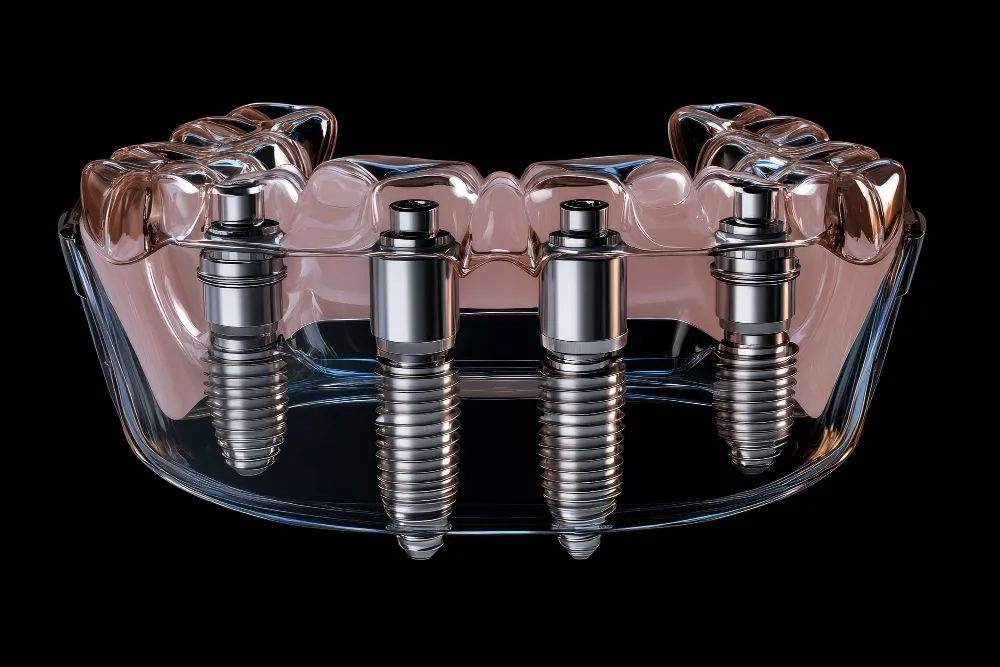
Understanding the core mechanical disparity between All on 4 vs All on 6 dental implants is the fundamental first step in choosing your restorative path. As the numerical names explicitly suggest, the primary anatomical distinction lies entirely in the total number of titanium roots strategically inserted into your jawbone. The four-implant protocol utilizes two straight anterior implants and two sharply angled posterior implants to maximize contact with the available dense frontal bone. Conversely, the six-implant protocol distributes the intense mechanical chewing forces across a wider surface area by utilizing two additional artificial roots in the posterior regions. This fundamental difference dictates how the final prosthetic bridge will be supported, balanced, and maintained over the patient's entire lifespan. Therefore, a thorough radiological examination by an experienced oral surgeon is absolutely necessary to determine which specific configuration your unique skeletal framework can safely support.
The angulation of the posterior screws in the four-implant technique is a revolutionary biomechanical concept designed to completely bypass vulnerable anatomical structures like the sinus cavities. By tilting these artificial roots at a dramatic forty-five-degree angle, surgeons can engage the highest quality anterior bone without needing to perform invasive, lengthy bone grafting procedures. However, evaluating All on 4 vs All on 6 dental implants often highlights that the six-implant method provides a more robust, vertically aligned foundation if sufficient bone volume already naturally exists. When six titanium posts are successfully integrated, the overall mechanical stress exerted on each individual implant is significantly reduced during heavy daily mastication. This reduction in isolated stress drastically lowers the long-term risk of implant fatigue, screw loosening, or potential structural failure of the overlying porcelain bridge. The choice ultimately depends on whether your jaw possesses the natural biological architecture required to securely house those two additional posterior stabilizing pillars.
Patients must also consider how these distinct surgical configurations influence the physical length and the rigid stability of the final prosthetic teeth. A framework supported by four pillars might require a slightly shorter posterior dental arch to prevent dangerous cantilever forces from breaking the back teeth. In contrast, analyzing All on 4 vs All on 6 dental implants reveals that six pillars allow for a fully extended, complete set of teeth that mimics natural dentition perfectly. Having a complete set of molars dramatically improves your grinding efficiency and provides a much more comfortable, natural sensation when consuming tough, fibrous foods. Furthermore, if one implant unexpectedly fails in a six-implant system, the remaining five can usually still support the bridge while the failed site heals. Losing an implant in a four-pillar system, however, instantly compromises the entire arch, demonstrating the immense value of having that extra mechanical redundancy.
Which Surgical Approach Offers Better Long Term Jawbone Stability?
The preservation of natural jawbone density is a critical medical objective in any successful full-mouth rehabilitation procedure. When natural teeth are lost, the surrounding jawbone ceases to receive necessary mechanical stimulation and rapidly begins to resorb or melt away. Titanium roots act as artificial substitutes that stimulate the bone tissue from within, tricking the body into maintaining its healthy biological mass. The decision regarding All on 4 vs All on 6 dental implants directly impacts the geographic distribution of this crucial internal skeletal stimulation. Placing six implants inherently stimulates a much larger surface area of the jawbone, effectively preventing posterior bone loss more comprehensively than four implants can. Therefore, patients who are biologically capable of receiving six implants generally experience superior long-term facial bone preservation and profound structural integrity.
In situations where a patient has already suffered severe posterior bone atrophy, inserting six implants might biologically be impossible without extensive grafting surgeries. The four-implant system was specifically designed to overcome this exact anatomical handicap by utilizing only the dense bone located in the anterior portion of the jaw. By tilting the back implants, the surgeon completely avoids the compromised posterior bone while still providing excellent stability for the fixed bridge. This means that while bone preservation in the back of the mouth might not be entirely halted, the overall functional stability of the jaw is perfectly secured. Comparing All on 4 vs All on 6 dental implants in heavily atrophied cases shows that the four-pillar approach often presents a safer, less invasive pathway. The surgeon must carefully balance the desire for maximum bone stimulation against the surgical risks associated with trying to place implants in dangerously thin bone.
It is also vital to understand that the success of bone preservation is not determined solely by the number of screws inserted. The quality of the patient's daily oral hygiene, their systemic health conditions, and their smoking habits play a massive role in maintaining healthy bone levels. A perfectly executed six-implant surgery can completely fail if the patient develops peri-implantitis due to severe plaque accumulation around the gum margins. Conversely, a well-maintained four-implant system can remain rock-solid and beautifully stable for decades without showing any signs of dangerous marginal bone loss. Debating All on 4 vs All on 6 dental implants requires patients to acknowledge their own personal responsibility in maintaining a sterile oral environment. Ultimately, the best method for long-term stability is the one that perfectly matches both the patient's anatomical limits and their lifelong hygienic commitment.
All On 4 Vs All On 6 Dental Implants: How Does The Cost Compare?
Financial considerations are understandably a major deciding factor for patients planning to undergo extensive, life-changing full-arch restorative surgeries. As a general medical rule, procedures that involve more surgical time, more titanium materials, and extra clinical labor naturally incur higher total expenses. Consequently, the six-implant protocol is universally more expensive than the four-implant alternative due to the addition of those two extra premium titanium roots. Patients researching the All-on-4 implant cost will discover that it offers a highly functional and beautiful outcome at a noticeably more accessible price point. This financial advantage makes the four-pillar system an incredibly attractive option for individuals seeking premium restorations without completely exhausting their medical budgets. However, patients must ensure they are comparing comprehensive packages that include all laboratory fees, extractions, and provisional prosthetics to avoid hidden surprises.
When evaluating the higher financial commitment required for the six-implant alternative, patients must deeply consider the long-term biological and mechanical returns on that investment. The extra titanium posts provide unparalleled structural redundancy, meaning the final ceramic bridge is significantly less likely to suffer from stress-induced fractures over time. Exploring the All-on-6 implant cost reveals that the initial higher payment often serves as a massive insurance policy against future prosthetic repairs or implant failures. Furthermore, the ability to support a larger, heavier zirconia bridge with more teeth drastically improves chewing efficiency, which many patients deem utterly priceless. Examining All on 4 vs All on 6 dental implants from a purely economic perspective requires looking decades into the future rather than just at the immediate surgical bill. Spending slightly more upfront for enhanced stability is frequently recognized by medical professionals as the most cost-effective strategy in the grand scheme of dental healthcare.
It is also absolutely essential to factor in the potential costs of auxiliary surgical procedures when calculating your total final medical budget. If a patient insists on having six implants but lacks the necessary posterior bone volume, they will require highly invasive sinus lifts and massive bone grafts. These additional, highly complex surgeries not only extend the total healing timeline by several months but also inflate the overall financial burden exponentially. In such biological scenarios, analyzing All on 4 vs All on 6 dental implants quickly demonstrates that avoiding bone grafts makes the four-implant method dramatically cheaper. Patients should request fully itemized treatment plans from their chosen clinics to see exactly how much these potential bone grafting procedures will impact their wallets. Transparent financial planning ensures that your journey towards a flawless smile remains totally stress-free and completely aligned with your personal economic realities.
Are You A Suitable Candidate For Advanced Full Arch Restorations?
Determining patient suitability for complex implant surgeries requires a rigorous, multidimensional medical evaluation conducted by a highly experienced specialist. The absolute most critical anatomical requirement for either procedure is the presence of an adequate amount of healthy, dense jawbone to securely anchor the titanium screws. Dentists utilize advanced three-dimensional cone beam computed tomography (CBCT) scans to measure your bone volume, density, and proximity to vital nerves with milimetric precision. The debate regarding All on 4 vs All on 6 dental implants becomes irrelevant if the patient's jawbone has completely deteriorated beyond the point of surgical repair. In cases of extreme bone loss, specialists might need to consider alternative solutions such as zygomatic implants, which anchor directly into the cheekbones. A thorough radiological assessment is the only definitive way to establish a safe, predictable, and structurally sound foundation for your new permanent smile.
Systemic health conditions also play a monumental and undeniable role in determining your candidacy for these invasive surgical restorative interventions. Patients suffering from uncontrolled diabetes, severe osteoporosis, or undergoing heavy radiation therapy present significantly higher risks for surgical complications and implant failures. Uncontrolled blood sugar levels severely impair the body's natural cellular healing processes, drastically reducing the chances of successful osseointegration between the bone and the titanium. While comparing All on 4 vs All on 6 dental implants, your surgeon will demand a complete medical clearance from your primary care physician if you have chronic illnesses. However, patients with well-managed systemic conditions are frequently cleared for surgery, provided they strictly adhere to their prescribed medical regimens and post-operative instructions. Absolute transparency regarding your medical history is completely non-negotiable and serves as the ultimate guarantee for your surgical safety and long-term success.
Lifestyle habits, particularly chronic tobacco consumption, heavily influence your suitability and the ultimate biological survival rate of your expensive dental restorations. Smoking violently constricts the blood vessels in your gums, depriving the surgical sites of the vital oxygen and nutrients required for rapid, healthy cellular healing. This toxic habit exponentially increases the risk of developing peri-implantitis, a destructive bacterial infection that aggressively melts away the bone supporting the artificial roots. Whether evaluating All on 4 vs All on 6 dental implants, surgeons universally advise patients to completely cease smoking several weeks before and after the operation. Many highly ethical specialists will flatly refuse to perform these complex surgeries on heavy smokers to prevent inevitable clinical failures and severe patient disappointment. Committing to a healthier lifestyle is not just a medical recommendation; it is an absolute biological necessity for anyone wanting to maintain a permanent, flawless smile.
All On 4 Vs All On 6 Dental Implants: How Long Does The Surgery Take?
The duration of the surgical intervention is a primary concern for patients who suffer from severe dental anxiety or have extremely tight personal schedules. Modern surgical protocols have been incredibly optimized, allowing experienced surgical teams to perform these extensive full-arch rehabilitations with astonishing speed and precision. In most standard clinical cases, the surgical placement of the implants for a single jaw can be successfully completed within two to four hours. When analyzing All on 4 vs All on 6 dental implants, the procedure involving fewer screws is naturally completed slightly faster, reducing the time spent in the surgical chair. However, placing two additional implants typically only adds about thirty to forty-five minutes to the overall surgical timeline, assuming no complex bone grafting is required. The surgical speed is vastly enhanced by the use of custom-made, 3D-printed surgical guides that dictate the exact angle and depth for every single titanium root.
One of the most revolutionary aspects of these modern protocols is the ability to extract failing teeth, place implants, and attach temporary teeth simultaneously. Patients who travel specifically to receive Full Dental Implants in one day benefit immensely from this accelerated and highly efficient immediate loading technique. This remarkable timeline means that you can enter the clinic with a severely broken-down smile and leave just hours later with fully fixed, functional temporary teeth. Comparing All on 4 vs All on 6 dental implants in the context of immediate loading shows that both methods are perfectly capable of supporting same-day provisional prosthetics. This immediate restoration completely eliminates the psychological trauma of having to wear removable, uncomfortable temporary dentures during the crucial months of bone healing. The surgical efficiency of these procedures provides an unparalleled level of patient comfort, instant aesthetic gratification, and profound psychological relief.
Despite the rapid nature of the initial surgery, patients must clearly understand that the entire restorative journey is not completed in a single afternoon. The temporary acrylic bridge attached on the day of surgery is designed strictly for aesthetic purposes and to protect the implants while they biologically fuse with the bone. It takes approximately three to six months for the jawbone to fully heal and lock the titanium screws permanently into place through osseointegration. Once this lengthy biological healing phase is successfully concluded, the patient must return to the clinic to receive their final, permanent porcelain or zirconia bridge. The true timeline of All on 4 vs All on 6 dental implants spans several months from the initial surgical incision to the delivery of the final masterpiece. Patience and strict adherence to the dietary restrictions during this waiting period are utterly essential to guarantee the lifelong success of the surgical investment.
What Is The Expected Recovery Time After A Full Mouth Rehabilitation?
The immediate post-operative recovery phase is a highly critical period that dictates the long-term biological success of your newly placed artificial roots. Despite the invasive nature of drilling into the jawbone, most patients are genuinely surprised by how manageable and relatively painless the recovery process actually is. The initial swelling and minor bruising around the cheeks and lips usually peak within forty-eight hours and naturally subside completely by the end of the first week. When assessing All on 4 vs All on 6 dental implants, the recovery timelines are virtually identical since the surgical trauma is effectively minimized using advanced guided surgery techniques. Surgeons prescribe specific, highly effective anti-inflammatory medications, specialized antibacterial mouthwashes, and targeted painkillers to ensure the patient remains entirely comfortable during these crucial first few days. Strict rest and the consistent application of cold compresses to the face are highly recommended to drastically reduce physical inflammation and accelerate cellular healing.
Dietary restrictions are the most rigid and absolutely non-negotiable aspect of the recovery process during the first few months following the operation. Patients are strictly confined to a liquid or extremely soft-food diet for at least six to eight weeks to prevent the temporary bridge from shifting. Biting into hard, crunchy, or heavily chewy foods can exert catastrophic mechanical forces on the implants before they have fully integrated with the surrounding bone tissue. Analyzing All on 4 vs All on 6 dental implants shows that regardless of the number of pillars, any premature heavy chewing can cause the implants to physically fail and fall out. You must consume highly nutritious, lukewarm soups, soft mashed potatoes, and protein-rich smoothies to safely nourish your body without violently traumatizing the surgical sites. This temporary sacrifice of your normal eating habits is a tiny price to pay for ensuring the permanent stability of your expensive dental restorations.
Returning to normal daily activities and work schedules can typically be safely managed within three to five days after the surgical intervention. However, patients must strictly avoid heavy physical lifting, intense cardiovascular workouts, and extreme bending over for at least two full weeks post-surgery. Strenuous physical exertion causes dangerous spikes in your systemic blood pressure, which can trigger severe throbbing pain or aggressive bleeding at the delicate suture sites. During discussions about All on 4 vs All on 6 dental implants, your medical team will provide you with a highly detailed, personalized recovery timeline based on your specific health profile. Attending all scheduled post-operative check-ups is vitally important so the surgeon can accurately monitor the healing tissues and safely remove the surgical stitches. Following these professional guidelines meticulously guarantees a flawlessly smooth, complication-free healing journey and a perfect transition into your permanent smile.
All On 4 Vs All On 6 Dental Implants: Which Is Better For Upper Jaws?
The anatomical differences between the upper maxilla and the lower mandible heavily influence the strategic decisions made by surgeons during full-arch rehabilitations. The bone in the upper jaw is naturally much softer, more porous, and generally less dense than the heavy, thick cortical bone found in the lower jaw. Additionally, the presence of the large, air-filled maxillary sinus cavities in the upper jaw severely limits the vertical space available for inserting long titanium screws. When considering All on 4 vs All on 6 dental implants for the upper arch, many specialists strongly prefer the six-implant protocol if the bone volume allows for it. The softer nature of the maxillary bone requires a wider distribution of chewing forces, making those two extra implants incredibly valuable for long-term structural survival. Having six solid pillars in the upper jaw drastically reduces the mechanical stress on each individual implant, providing a much safer and highly predictable clinical outcome.
However, placing six implants in the upper jaw is frequently complicated by the invasive expansion of those problematic maxillary sinus cavities. If the sinus floor has dropped significantly due to years of tooth loss, placing posterior implants becomes biologically impossible without performing massive sinus lifting surgeries. These complex bone grafting procedures drastically increase the total surgical cost, prolong the healing time by several months, and introduce higher risks of postoperative infections. In these anatomically compromised situations, the All on 4 vs All on 6 dental implants debate often heavily favors the four-implant technique to avoid the sinuses entirely. By tilting the posterior implants sharply forward, the surgeon perfectly anchors the screws into the dense anterior bone, completely bypassing the hollow sinus cavities. This clever biomechanical workaround provides excellent stability for the upper bridge while sparing the patient from enduring agonizing, expensive, and lengthy bone augmentation surgeries.
The choice ultimately boils down to a delicate balance between the patient's existing bone architecture and their desire for maximum long-term prosthetic stability. If the upper jaw naturally possesses excellent bone height and density, skipping the six-implant option might be viewed as an unnecessary compromise of structural integrity. Conversely, forcing six implants into a severely atrophied maxilla by performing massive grafts can expose the patient to completely unnecessary and avoidable surgical trauma. Your surgeon will thoroughly analyze your 3D CBCT scans to present the safest, most logical, and biologically sound strategy for your specific upper jaw. The ultimate goal of comparing All on 4 vs All on 6 dental implants is never to force a specific protocol, but to tailor the engineering to your body. A meticulously planned upper jaw restoration will provide you with decades of flawless aesthetics, powerful chewing capacity, and absolute psychological confidence.
Can Invasive Bone Grafting Procedures Be Completely Avoided?
The profound fear of undergoing highly invasive, painful, and costly bone grafting surgeries is a major deterrent for many patients seeking full-mouth restorations. Historically, patients with severe bone atrophy were automatically forced to endure months of grafting procedures before even being considered for traditional dental implants. The revolutionary introduction of tilted implant techniques completely shattered this old medical paradigm, offering a brilliant biological workaround for anatomically compromised individuals. When evaluating All on 4 vs All on 6 dental implants, the four-implant protocol stands out precisely because it was ingeniously engineered to eliminate the need for bone grafts. By angling the posterior screws, surgeons can effectively reach the dense native bone in the front of the jaw, rendering posterior bone deficiencies completely irrelevant. This massive surgical advantage drastically reduces the total treatment timeline, lowers the overall financial burden, and significantly minimizes post-operative patient discomfort.
However, the complete avoidance of bone grafting is not an absolute, universal guarantee for every single patient who walks into a dental clinic. If the bone deterioration is incredibly severe across the entire jaw, including the anterior frontal regions, some level of localized bone augmentation might still be biologically necessary. Even when opting for the four-pillar system, tiny amounts of synthetic bone powder are sometimes packed around the implant threads to ensure perfect cellular integration. Comparing All on 4 vs All on 6 dental implants reveals that the six-implant method almost always requires extensive grafting if the posterior bone is severely lacking. Patients insisting on six implants must be mentally and financially prepared to undergo those complex sinus lifts and heavy ridge augmentations to create a solid foundation. The decision to graft or not to graft must be based entirely on strict radiological evidence rather than the patient's desire to simply avoid surgery.
For patients who possess absolutely minimal bone volume in the upper jaw, modern dentistry offers an even more advanced alternative known as zygomatic implants. These specialized, extra-long titanium screws are designed to completely bypass the fragile maxillary bone and anchor directly into the dense, solid cheekbones (zygoma). This incredible surgical technique allows even the most severely atrophied patients to receive a fixed full-arch bridge without ever undergoing a single bone grafting procedure. The discussion surrounding All on 4 vs All on 6 dental implants evolves significantly when zygomatic options are introduced, offering hope to those previously deemed untreatable. Your highly specialized maxillofacial surgeon will deeply evaluate all these advanced structural options to design a completely graft-free, rapid, and highly successful surgical plan. Modern medical engineering guarantees that almost every patient, regardless of their bone loss, can safely achieve a permanent, beautiful, and highly functional smile.
All On 4 Vs All On 6 Dental Implants: How Do They Impact Chewing Force?
Restoring a patient's natural ability to chew tough, fibrous, and crunchy foods is arguably the most profoundly life-changing functional benefit of implant-supported full-arch restorations. Traditional removable dentures rest purely on the sensitive gum tissues, limiting a person's chewing capacity to a mere twenty percent of their original biological strength. Both advanced implant protocols securely anchor the prosthetic bridge directly into the jawbone, instantly restoring bite force to near-natural, incredibly powerful levels. However, when comparing All on 4 vs All on 6 dental implants, the structural engineering directly influences the distribution of these massive masticatory forces across the jaw. Having six solid titanium pillars naturally provides a wider, more heavily reinforced foundation, which excels at absorbing the intense vertical pressures generated during heavy chewing. Patients with a heavy bite or a strong muscular jaw often benefit immensely from the superior load distribution offered by the six-implant configuration.
The length of the final prosthetic bridge is also a crucial mechanical factor that heavily dictates the overall chewing efficiency and safety of the restoration. A four-implant system usually supports a bridge consisting of ten to twelve teeth, meaning the very back molars might be intentionally excluded from the final design. Extending the bridge too far past the last implant creates a dangerous "cantilever" effect, which can act like a crowbar and violently snap the posterior implants. Analyzing All on 4 vs All on 6 dental implants reveals that the six-implant method allows for a fully extended bridge with fourteen functional teeth. This full complement of molars provides a much broader, more natural grinding surface, making chewing tough meats or hard nuts significantly easier and safer. If maximizing your posterior chewing capacity is a top priority, the six-pillar system undoubtedly provides the most robust and anatomically complete mechanical solution.
Despite these distinct mechanical differences, patients who receive the four-implant system rarely complain about any noticeable lack of functional chewing power in their daily lives. The twelve teeth provided by the four-pillar bridge are more than sufficient to comfortably chew a completely normal, healthy, and unrestricted modern diet. The brain quickly adapts to the new prosthetic boundaries, and patients effortlessly relearn how to position food within the safe zones of their new teeth. When evaluating All on 4 vs All on 6 dental implants, the choice should be driven by bone availability and budget rather than an obsessive fear of losing chewing power. Both highly advanced systems will profoundly upgrade your quality of life, allowing you to confidently eat in public without the terrifying fear of your teeth falling out. Ultimately, the transition from failing teeth to either of these fixed implant solutions represents a monumental, glorious victory for your daily digestive health and comfort.
What Are The Long Term Maintenance Requirements For Your New Teeth?
The widespread misconception that artificial implant-supported teeth require absolutely zero maintenance is a dangerous fallacy that leads to devastating, long-term biological failures. While titanium roots cannot decay like natural teeth, the living gum tissues and the underlying jawbone surrounding them remain highly susceptible to aggressive bacterial infections. Protecting your massive surgical investment demands a rigorous, uncompromising daily oral hygiene routine that must be executed with absolute precision and unwavering dedication. Patients must brush their fixed prosthetic bridges twice a day using soft-bristled toothbrushes and non-abrasive pastes to prevent deeply scratching the delicate porcelain glaze. When researching All on 4 vs All on 6 dental implants, you must understand that both systems require you to meticulously clean the microscopic gaps between the gums and the bridge. Using specialized water flossers and custom-sized interdental brushes is strictly mandatory to flush out the hidden, destructive food debris that normal brushing physically cannot reach.
Professional clinical maintenance is the second, equally vital component of ensuring the lifelong survival and pristine aesthetics of your full-arch implant restorations. You are medically required to visit your dental specialist every six months for a highly detailed, professional evaluation and a deep ultrasonic cleaning session. During these critical appointments, the hygienist will expertly remove any hardened tartar deposits from around the implant collars, preventing the onset of tissue-destroying peri-implantitis. Regardless of whether you chose All on 4 vs All on 6 dental implants, the dentist will carefully check your bite alignment to ensure no destructive forces are damaging the screws. Occasionally, the dentist might completely unscrew the prosthetic bridge to professionally clean the hard-to-reach underlying tissues and thoroughly polish the ceramic surfaces in the laboratory. This preventative maintenance protocol is the ultimate, non-negotiable insurance policy that keeps your implants rock-solid and your gums perfectly pink and healthy.
Patients who suffer from nocturnal teeth grinding (bruksizm) face an additional, highly destructive mechanical threat to the longevity of their beautiful porcelain teeth. The immense, involuntary pressures generated during sleep can easily chip the ceramic materials, loosen the retaining screws, or even violently snap the titanium implants. To combat this silent destroyer, your dentist will fabricate a custom-fitted, hard acrylic night guard that you must religiously wear every single time you sleep. The debate over All on 4 vs All on 6 dental implants becomes entirely irrelevant if you shatter your expensive restoration due to unprotected, aggressive nighttime grinding. Wearing this simple protective appliance acts as a crucial shock absorber, effortlessly diffusing the catastrophic grinding forces away from your delicate dental work. Embracing these lifelong maintenance responsibilities is the only guaranteed way to ensure your spectacular new smile lasts flawlessly for the rest of your life.
All On 4 Vs All On 6 Dental Implants: Are The Prosthetic Bridges Different?
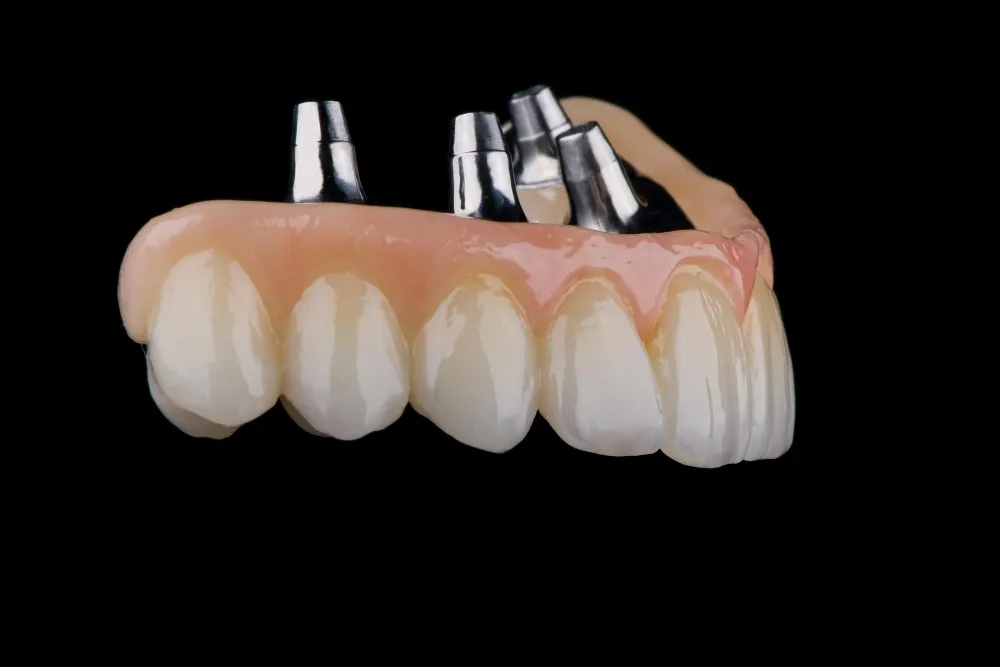
The aesthetic and mechanical quality of the permanent bridge attached to your implants is just as critical as the surgical placement of the titanium roots themselves. The choice of prosthetic materials heavily dictates the final visual appearance, the overall durability, and the long-term biological compatibility of the entire full-mouth restoration. A very popular and highly durable option is the monolithic zirconia bridge, celebrated globally for its incredible resistance to fracturing and its extremely natural, lifelike translucency. Zirconia is entirely metal-free, meaning it will never create ugly dark lines along your gums, providing a flawlessly clean and highly aesthetic white smile. When comparing All on 4 vs All on 6 dental implants, both surgical systems are perfectly capable of supporting these premium, heavy-duty zirconia frameworks. The dense structure of zirconia ensures that it will not absorb dark coffee or tobacco stains, keeping your new smile brilliantly bright for decades.
Another widely used prosthetic option involves a strong titanium internal framework layered with premium cosmetic acrylic or composite materials. These hybrid acrylic bridges are generally much lighter in physical weight and slightly more flexible than solid zirconia, which can provide a softer, more forgiving bite sensation. Furthermore, if an acrylic tooth chips or breaks during an accident, it can often be repaired directly in the patient's mouth very quickly and cost-effectively. However, looking at All on 4 vs All on 6 dental implants, acrylic bridges are inherently more porous, meaning they wear down faster and are far more prone to long-term staining. Zirconia, while significantly more expensive and difficult to repair if chipped, offers a much higher level of permanent aesthetic perfection and brutal mechanical strength. Your specialist will deeply analyze your biting forces and aesthetic goals to recommend the exact prosthetic material that perfectly complements your lifestyle.
The final design of the prosthetic bridge also heavily depends on the amount of natural gum tissue and bone that you have tragically lost over the years. If you have suffered severe bone atrophy, the final bridge must include artificial pink porcelain gums to beautifully mask the lost vertical height and restore proper facial support. This artificial gum line is seamlessly blended with your natural tissues, ensuring that the transition remains completely invisible even when you laugh heartily. In discussions about All on 4 vs All on 6 dental implants, the design of this pink tissue is highly customized to ensure perfect lip support and flawless phonetic function. If you have minimal bone loss, the bridge might only consist of the white teeth emerging directly from your natural gums, creating a highly realistic, organic appearance. The ultimate goal of the prosthetic design is to create an absolute masterpiece that looks, feels, and functions exactly like a perfect set of natural human teeth.
How Do These Modern Solutions Compare To Traditional Removable Dentures?
The transition from removable traditional dentures to fixed, implant-supported full-arch restorations is consistently described by patients as a profoundly life-changing and deeply emotional medical upgrade. Traditional dentures are inherently flawed; they rest solely on the fragile gum tissues, constantly slipping, shifting, and rubbing agonizingly during speech and meals. This chronic instability forces denture wearers to rely heavily on messy, foul-tasting chemical adhesives just to keep their teeth inside their mouths. In stark contrast, both advanced implant protocols securely screw the permanent bridge directly into the rigid jawbone, completely eliminating any possibility of embarrassing movement. The debate concerning All on 4 vs All on 6 dental implants pales in comparison to the massive functional leap from removable plastic to permanently anchored titanium. Fixed implants restore your chewing capacity to nearly one hundred percent, allowing you to confidently bite into crisp apples and tough steaks without a second thought.
Beyond the obvious functional improvements, fixed implant restorations provide immense, invaluable long-term biological protection for your underlying facial skeletal structure. Removable dentures actually accelerate the destruction of your jawbone by constantly compressing the gums and restricting vital blood flow to the underlying bone cells. As the bone inevitably melts away over the years, the dentures become increasingly loose, leading to a sunken, prematurely aged, and highly collapsed facial profile. Alternatively, titanium artificial roots stimulate the bone tissue from within, tricking the body into preserving its natural mass and youthful facial contours. Whether you choose All on 4 vs All on 6 dental implants, both methods actively stop the devastating process of bone resorption permanently in its tracks. This internal biological support prevents your chin from collapsing towards your nose, preserving your facial aesthetics and maintaining your confident, youthful appearance for decades.
The psychological and social benefits of switching to fixed implants are equally, if not more, transformative than the immense physical and biological advantages. Denture wearers often suffer from severe social anxiety, constantly terrified that their teeth might unexpectedly fall out while laughing, sneezing, or speaking in public. Fixed implant bridges completely eradicate this psychological nightmare, granting the patient the absolute freedom to interact socially with unshakeable confidence and profound joy. Furthermore, upper dentures completely cover the sensitive roof of the mouth, severely dulling the patient's ability to properly taste and enjoy their favorite foods. Analyzing All on 4 vs All on 6 dental implants highlights that both fixed systems leave the palate entirely uncovered, instantly restoring your full, natural sense of taste and temperature. Ultimately, choosing fixed implants over removable dentures is not just a dental upgrade; it is a profound reclamation of your fundamental human dignity and daily happiness.
All On 4 Vs All On 6 Dental Implants: What Are The Potential Medical Risks?
Like any invasive surgical procedure performed on the human body, full-arch implant rehabilitations carry inherent, albeit extremely rare, potential medical risks and biological complications. The most immediately concerning surgical risk is the accidental damage to vital anatomical structures, such as the inferior alveolar nerve in the lower jaw or the sinus cavities in the upper jaw. Nerve damage can result in temporary or, in catastrophic cases, permanent numbness and tingling in the patient's lips, chin, or tongue. However, when evaluating All on 4 vs All on 6 dental implants, the use of highly advanced 3D CBCT scans and computer-guided surgical stents reduces these anatomical risks to almost zero. Highly experienced maxillofacial surgeons map the exact trajectory of every single drill bit before the surgery even begins, ensuring absolute anatomical precision and flawless safety. Choosing a deeply experienced, technologically equipped specialist is your absolute best defense against experiencing these terrifying and completely avoidable surgical nerve injuries.
A more common, yet still relatively rare, biological complication is the failure of the titanium implant to successfully integrate and fuse with the surrounding jawbone. This failure of osseointegration can occur due to poor initial bone quality, severe uncontrolled diabetes, or highly aggressive post-operative bacterial infections at the surgical site. Smoking is unequivocally the absolute highest risk factor for implant rejection, as the toxic chemicals severely choke off the vital blood supply needed for cellular bone healing. In the context of All on 4 vs All on 6 dental implants, an implant failure in the four-pillar system is far more devastating, as the entire bridge loses a critical quarter of its support. If an implant fails, the surgeon must remove the loose screw, thoroughly clean the infected socket, graft new bone, and wait several months before attempting to place a new implant. Absolute strict adherence to the surgeon's post-operative hygiene and dietary instructions is medically mandatory to ensure the rapid, flawless integration of your artificial roots.
Long-term mechanical complications primarily involve the physical wear and tear of the overlying prosthetic bridge rather than the failure of the titanium roots themselves. Over decades of heavy use, the ceramic teeth can chip, the acrylic gums can stain, or the tiny internal screws holding the bridge can become slightly loose. Patients who suffer from heavy nocturnal teeth grinding are at an exceptionally high risk of shattering their expensive porcelain work if they refuse to wear their protective night guards. While researching All on 4 vs All on 6 dental implants, patients must realize that the six-implant framework generally handles these extreme mechanical stresses slightly better due to superior load distribution. Fortunately, most of these prosthetic complications can be easily and quickly repaired by the dentist without needing to perform any new invasive surgeries. Understanding and actively managing these potential risks through diligent home care and regular professional check-ups ensures your spectacular new smile remains perfectly intact for a lifetime.
How To Choose The Best Specialist For Your Complex Surgical Treatment?
Selecting the absolute right medical professional is the single most critical, life-altering decision you will make when embarking on a complex full-arch restorative journey. These highly invasive, bone-altering procedures should never be entrusted to a general dentist who only occasionally places a few single implants on the weekends. Patients must aggressively seek out highly specialized, board-certified oral and maxillofacial surgeons or dedicated prosthodontists who perform these massive full-mouth rehabilitations on a daily basis. These elite specialists have endured years of rigorous, intensive hospital-based surgical training specifically focused on complex bone grafting, nerve mapping, and advanced implantology. You must confidently ask the surgeon to present their specific academic credentials, official university diplomas, and verifiable records of their extensive post-graduate surgical education. Entrusting your precious facial anatomy to a highly credentialed, deeply experienced master surgeon guarantees that your procedure will be executed with absolute, flawless medical precision.
Beyond formal academic credentials, visually analyzing the surgeon's historical clinical success through a comprehensive portfolio of their past patient cases is absolutely indispensable. You must request to see high-resolution, unedited before-and-after photographs of patients who presented with severe dental destruction similar to your own unique condition. These visual records provide undeniable, objective proof of the surgeon's aesthetic vision, technical craftsmanship, and ability to handle profoundly complex anatomical disasters. When discussing your options, the surgeon should clearly explain the nuances of All on 4 vs All on 6 dental implants without aggressively pushing you towards the most expensive option. A truly ethical medical professional will base their surgical recommendation entirely on the cold, hard data extracted from your 3D bone scans rather than their own financial incentives. The consultation should feel like a highly educational, completely transparent medical dialogue that leaves you feeling profoundly respected, safe, and entirely confident in the proposed plan.
Finally, you must deeply evaluate the technological infrastructure, the sterilization protocols, and the overall clinical environment of the facility where the surgery will take place. The clinic must be heavily equipped with its own internal 3D CBCT scanner, digital intraoral impression cameras, and a fully integrated, high-tech dental laboratory. The presence of an in-house laboratory ensures that the ceramic technicians work directly alongside the surgeon, resulting in significantly faster and far more accurate prosthetic creations. The surgical operating rooms must adhere to the absolute strictest international hospital-grade hygiene and sterilization standards to completely eliminate any risk of cross-contamination. You should also gauge the empathy, responsiveness, and professionalism of the entire medical support staff who will be guiding you through your vulnerable recovery period. A technologically superior, hyper-sterile, and deeply compassionate clinical environment is the ultimate foundation for a totally successful, anxiety-free, and life-changing surgical experience.
Will Your Facial Aesthetics And Profile Change After The Operation?
One of the most profoundly exciting and highly anticipated outcomes of a full-arch implant rehabilitation is the dramatic, youthful transformation of the patient's entire facial profile. Years of severe tooth loss and chronic bone resorption inevitably lead to a heavily collapsed facial structure, characterized by sunken cheeks, a protruding chin, and deep, aging wrinkles around the mouth. This classical "witches chin" appearance occurs because the foundational support holding the lower third of the face has literally melted away into nothingness. By surgically installing titanium roots and attaching a perfectly engineered prosthetic bridge, the specialist instantly and completely restores this lost crucial vertical facial dimension. The new teeth act as a robust internal scaffolding, immediately pushing the sunken lips and cheeks back outward into their natural, youthful, and highly aesthetic positions. This massive structural correction effectively acts as a non-surgical facelift, often making patients look ten to fifteen years younger the moment the permanent bridge is attached.
The meticulous design of the permanent prosthetic bridge plays a pivotal, artistic role in fine-tuning these incredible facial changes and optimizing the final cosmetic result. The specialist carefully calculates the exact length, width, and forward projection of the new porcelain teeth to ensure they provide optimal, flawless support for the patient's upper lip. If the patient has suffered massive bone loss, the bridge will feature artificial pink porcelain gums designed to brilliantly mask the missing tissue and plump up the facial profile. When discussing the engineering behind All on 4 vs All on 6 dental implants, both methods are entirely capable of supporting these highly customized, lip-enhancing prosthetic frameworks. The teeth are carefully shaded to complement the patient's natural skin tone and the whites of their eyes, ensuring the smile looks incredibly vibrant yet perfectly natural. This extreme attention to artistic detail guarantees that the final restoration does not just look like a set of fake teeth, but rather a harmonious, integrated masterpiece of facial beauty.
Ultimately, the psychological and emotional transformation that directly follows this physical aesthetic upgrade is nothing short of miraculous and deeply inspiring to witness. Patients who have spent decades hiding their mouths, avoiding family photographs, and speaking with a muffled voice suddenly experience an explosive, life-altering surge of absolute self-confidence. The ability to smile broadly, laugh heartily, and project a radiant, healthy appearance fundamentally changes how they interact with their loved ones and their professional colleagues. They no longer feel defined by their dental disease; instead, they feel deeply empowered, highly attractive, and incredibly proud of their new, stunning facial aesthetics. The journey through advanced implant surgery is undeniably challenging, but the ultimate reward is the priceless, permanent reclamation of your personal dignity, your youthful vitality, and your absolute joy for life.