Rubber Dam Isolation: Benefits, Application Steps & Safety
What is a rubber dam and why is it essential for root canals and fillings? Discover how this flexible shield maximizes moisture control, safety, and comfort.
Maintaining an absolute standard of clinical isolation is one of the most critical factors determining the success of modern restorative and endodontic dental procedures. While the human mouth is a perfectly optimized biological environment for digestion, its constant moisture, high humidity, and massive bacterial populations present severe engineering challenges during clinical dental operations. Modern restorative materials, such as composite resins and specialized bonding agents, are highly hydrophobic, meaning even a microscopic droplet of saliva or a single breath of warm humidity can completely compromise their chemical adhesion to the enamel. To overcome this biological hurdle, modern conservative dentistry relies on a simple yet highly effective physical isolation system. This protective barrier acts as a literal shield, separating the specific working zone from the rest of the oral cavity. By establishing a completely dry, visible, and sterile field, this classic dental tool significantly elevates the predictability of treatments while simultaneously maximizing safety and patient comfort.
What Exactly Is a Rubber Dam in Modern Dentistry?
In clinical operative dentistry and endodontics, this medical device refers to a thin, flexible, square sheet typically crafted from high-grade latex or medical-grade silicone for latex-allergic patients. The primary anatomical objective of this isolation system is to fully isolate one or more specific teeth from the rest of the oral environment during a dental procedure.
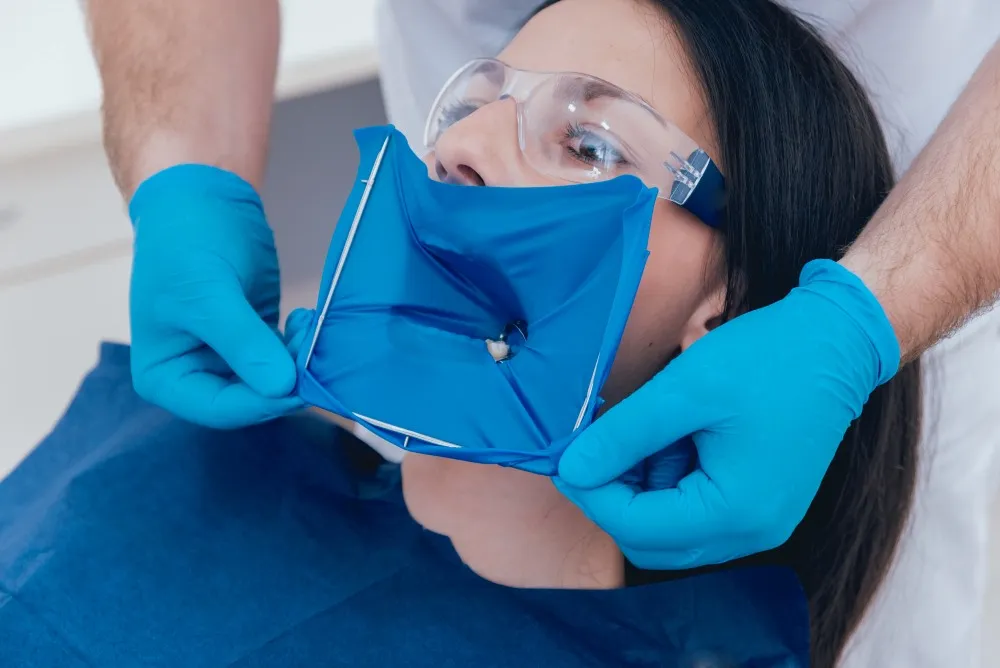
To apply the device, the clinician uses a specialized punch tool to create tiny holes in the flexible sheet corresponding to the teeth that require treatment. The sheet is then stretched over the dental crowns and anchored securely at the gumline using a small metal or plastic clamp. The remainder of the sheet is stretched across an external metal or plastic U-shaped frame resting outside the patient's mouth. This arrangement creates an absolute physical wall that completely isolates the working teeth, keeping them clean, dry, and entirely separated from the tongue, cheeks, and saliva flow.
Why Is Absolute Moisture Control Vital for Restorative Work?
The chemical longevity of modern tooth-colored fillings and dental adhesives depends entirely on the micro-mechanical bond formed between the liquid resin and the porous etched enamel. Understanding how moisture disrupts this bond highlights why a rubber dam is an absolute necessity:
The Failure of Composite Adhesion
When a dentist prepares a cavity, they apply a mild conditioning gel to open up microscopic pores in the enamel and dentin structures. If saliva, blood, or even humid breath contaminates this conditioned surface before the composite resin is placed, the moisture fills those tiny pores. This blocks the bonding agent from penetrating the tooth structure, resulting in a weak chemical bond that will prematurely break under the mechanical pressure of daily chewing.
Prevention of Secondary Recurrent Cavities
When a composite filling fails to bond perfectly due to moisture contamination, a microscopic gap forms along the margin where the filling meets the natural tooth structure. This gap is wide enough to allow microscopic food particles and acid-producing oral bacteria to sneak underneath the restoration over time. Because this secondary decay develops silently beneath the filling, it can easily reach the inner nerve chamber before the patient ever notices a problem.
How Does a Rubber Dam Maximize Patient Safety?
While clinicians highly value this flexible shield for its moisture control capabilities, its primary asset from a patient's perspective is the unprecedented level of safety it provides during intensive operatory sessions. The oral cavity is a small, highly dynamic space where a moving tongue or a sudden swallow can easily interfere with sharp medical instruments. Utilizing a high-quality rubber dam eliminates these risks completely by establishing an impenetrable physical barrier over the throat.
The sheet safely catches all dropped debris, old amalgam filling fragments, and dental pins, preventing the patient from accidentally swallowing or aspirating dangerous foreign objects into their lungs. Furthermore, the device shields the delicate soft tissues of the tongue, lips, and cheeks from accidental cuts or abrasions caused by high-speed rotating diamond burs. It also protects the patient's sensitive taste buds from the harsh, bitter, and highly unpalatable chemical rinsing solutions used by dentists to sterilize root canals or condition enamel surfaces.
Is a Rubber Dam Mandatory for a Root Canal Treatment?
Yes, in contemporary endodontic medicine, performing a professional root canal treatment without the strict isolation of a flexible rubber barrier is widely considered a severe breach of clinical protocol. The ultimate objective of an endodontic procedure is to completely eliminate all bacterial colonies from the intricate micro-channels inside the tooth's root system and seal them permanently.
Human saliva contains millions of active bacteria per milliliter; if even a trace amount of saliva is allowed to leak into the open root canal chamber during treatment, it will recontaminate the space, leading to a failed procedure and a recurrent bone infection down the road. Furthermore, endodontists rely on high-strength chemical disinfectants, such as sodium hypochlorite, to dissolve dead tissue inside the canals. The flexible rubber sheet acts as a mandatory safety barrier, ensuring these harsh chemical solutions stay strictly confined inside the tooth and never leak onto the patient's sensitive throat or oral mucosa.
What Are the Essential Components of a Complete Isolation Kit?
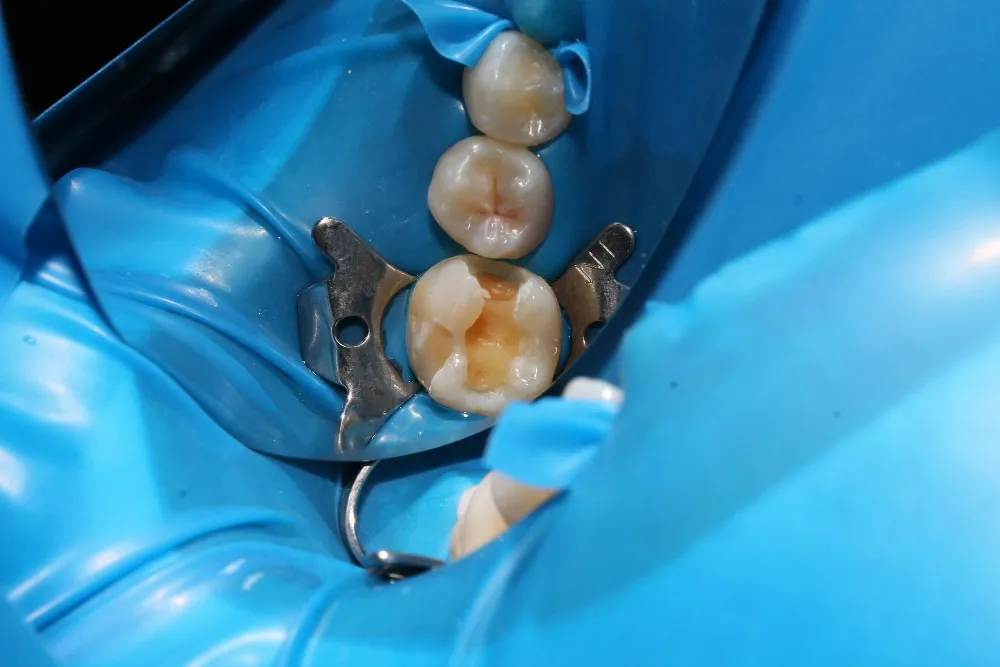
To successfully install this protective barrier, a dental clinician must utilize a specialized sequence of micro-instruments that work together to secure the flexible sheet in place:
- The Flexible Rubber Sheet: Available in varying thicknesses (thin, medium, or heavy) and a wide range of bright colors to provide maximum visual contrast against the white enamel.
- The Punch Template Instrument: A specialized heavy-duty hand tool with a rotating wheel containing varying hole sizes designed to match everything from a tiny lower incisor to a massive molar.
- The Securing Clamps: Small, spring-tempered stainless steel anchors that grip the neck of the tooth just above the gumline to prevent the rubber sheet from slipping upward.
- The Rubber Dam Forceps: A highly specific pair of angled pliers used by the clinician to safely expand the metal clamps and seat them over the tooth crown.
- The External Support Frame: A lightweight U-shaped wire or plastic frame that keeps the outer edges of the rubber sheet tightly stretched and managed outside the patient's face.
Can a Rubber Dam Reduce Dental Anxiety for Anxious Patients?
A highly surprising and frequently documented psychological benefit of utilizing this flexible shield is its profound ability to reduce overall dental anxiety levels in highly fearful individuals. For many patients, a major trigger for dental panic is the constant, claustrophobic sensation of water pooling at the back of their throat, combined with the continuous fear that the dentist's high-speed drill might suddenly slip and nick their moving tongue.
The installation of a custom rubber dam completely eliminates these distressing sensations. The patient feels as though the entire dental procedure is happening completely outside of their body, behind a comfortable protective wall. Saliva accumulates naturally behind the sheet and can be easily managed with a quiet suction tip, preventing any choking sensations. Many anxious patients report that the shield provides a comforting sense of separation, allowing them to relax, close their eyes, and listen to music without feeling constantly hyper-aware of the medical instruments moving inside their mouth.
How Does a Rubber Dam Improve the Dentist's Clinical Efficiency?
The benefits of utilizing an advanced isolation system are fully shared between the patient and the operating dental team. By installing a custom rubber dam, the clinician can work with a significantly higher degree of precision, speed, and focus.
Uncompromised Visual Field Contrast
When the dark or bright colored sheet is stretched over the dental arch, it covers up the distracting pink textures of the gums, the moving tongue, and the wet saliva pools. This leaves only the specific white teeth requiring treatment standing out in stark, clear contrast. This pristine visual field allows the dentist to easily identify microscopic structural cracks, hidden decay margins, and tiny root canal entry holes that would be nearly impossible to visualize clearly in a wet, crowded oral environment.
Elimination of Tongue and Cheek Interferences
In standard un-isolated dentistry, a significant portion of the dentist's active operating time is wasted physically fighting against the patient's strong, involuntary tongue movements and thick cheek muscles using mirrors and retractors. The rigid tension of the stretched rubber sheet automatically keeps the tongue and cheeks entirely pushed back and out of the way. This allows the dentist to utilize both hands efficiently, significantly shortening the overall length of the appointment for the patient.
What Are the Main Step-by-Step Stages of Application?
Installing a custom rubber barrier is a quick, highly streamlined process that an experienced dental team can seamlessly complete within less than two minutes. The clinical application follows a strict sequence:
- Interdental Contact Clearance: The clinician passes dental floss between the teeth to ensure the tight spaces are free of sharp calculus traps that could tear the rubber sheet.
- Precise Sheet Punching: Using a clinical stamp guide, the assistant punches the exact number of holes into the flexible square sheet matching the patient's specific teeth.
- Clamp Selection and Seating: The dentist selects an appropriately sized metal clamp and uses the specialized forceps to gently place it over the anchoring tooth, verifying its stability.
- Stretching the Barrier: The pre-punched rubber sheet is carefully stretched over the metal clamp and threaded down through the tight interdental spaces using dental floss.
- Frame Assembly and Inversion: The outer borders of the sheet are hooked onto the external frame outside the face. Finally, a small hand instrument is used to tuck or "invert" the rubber edges into the gum pocket around the tooth, establishing an airtight, waterproof seal.
Are There Any Physical Contraindications to Using This Device?
While this isolation barrier is an exceptionally safe and universally recommended clinical tool, there are a few specific physical and psychological situations where its application must be modified or completely avoided to preserve patient comfort:
- Patients who suffer from severe, acute respiratory blockages, heavy nasal congestion, or a fully deviated septum that forces them to breathe exclusively through their mouth.
- Individuals who have a documented, severe systemic allergy to natural latex proteins; in these cases, the clinic must utilize entirely latex-free nitrile or silicone alternatives.
- Teeth that are only partially erupted into the mouth or have suffered massive structural fractures down to the bone level, making it physically impossible for a standard metal clamp to gain a secure grip.
- Patients dealing with severe, acute claustrophobia or specialized psychological trauma who experience panic attacks when a barrier is positioned over their mouth.
Can a Rubber Dam Be Used During a Wisdom Tooth Extraction?
While this isolation system is the undisputed gold standard for restorative fillings, cosmetic bonding, and root canal therapies, it is rarely utilized during the surgical extraction of a wisdom tooth. Third molars are located at the absolute back of the dental arch, frequently trapped deep beneath the dense gum tissue or impacted within the jawbone matrix.
Attempting to stretch a flexible rubber sheet and secure a metal clamp in this tight, posterior surgical zone would severely restrict the oral surgeon's physical access, block visual field depth, and prevent the use of necessary surgical handpieces. For a wisdom tooth removal, clinicians prioritize maximum surgical visibility and fluid drainage using high-volume surgical suction tips and specialized cheek retractors instead of a rubber barrier, ensuring the extraction is completed swiftly and safely.
Do Children Benefit from the Use of This Isolation Shield?
Yes, pediatric dentistry is one of the most critical zones where utilizing a fast-drying rubber dam can completely transform the outcome of a treatment plan. Young children naturally possess very active tongues, high volumes of watery saliva, and a low tolerance for the strange tastes of dental chemicals.
By installing a colorful, child-friendly rubber barrier—frequently introduced to the child as a "raincoat for the tooth" or a "dental trampoline"—the pediatric specialist can complete fillings and nerve therapies quickly and safely. The shield completely prevents the child from tasting the bitter conditioning gels, stops them from constantly wanting to close their mouth to spit, and eliminates the risk of an active tongue bumping into a spinning drill, turning a potentially stressful pediatric appointment into a smooth, highly controlled game.
How to Handle a Tear or Leakage During a Procedure?
Even when utilizing the highest grade of heavy-duty latex or silicone materials, the sharp edges of fractured enamel or a tight interdental contact point can occasionally cause a microscopic tear to develop in the rubber sheet during an intense operation. If a tear occurs, moisture can rapidly seep into the sterile field, threatening the success of the restoration.
To manage this without completely removing the entire frame assembly, modern dentists utilize specialized, light-cured liquid caulking materials known as liquid dam barriers. The clinician paints a small amount of this flowable resin directly over the tear or leak zone and cures it with a blue ultraviolet light for ten seconds. The material hardens instantly into a waterproof patch, resealing the field and allowing the dentist to continue the procedure with absolute confidence.
Why Quality Isolation Matters for International Dental Travel?
When a patient chooses to travel abroad to undergo advanced, multi-specialty oral rehabilitations, ensuring the clinic maintains an absolute standard of micro-surgical precision is paramount to guaranteeing the long-term investment of the trip. Elite global dental networks understand that cutting corners on basic isolation protocols is unacceptable.
By strictly incorporating premium isolation systems like the rubber dam across all restorative and root therapies, international clinics demonstrate their commitment to world-class clinical standards. This meticulous attention to detail ensures that every filling, core build-up, and root therapy is executed under perfectly sterile, dry conditions, dramatically maximizing the success rates of the treatments and providing international families with a deeply comforting, high-quality healthcare journey.
What Are the Real Financial Factors Behind Dental Implant Costs?
When a patient is calculating the total budget required for a comprehensive oral transformation, they must evaluate how different specialized tools and surgical protocols impact the overall value. While a simple isolation shield is used for natural teeth, replacing missing roots involves entirely separate components that directly dictate the final dental implant costs:
- The total number of titanium anchors required to safely build a stable structural foundation across the jaw framework.
- The prestige and historical clinical research of the specific implant manufacturing brand selected by the surgical team.
- The high-end material utilized to fabricate the permanent master bridge, with solid monolithic zirconia offering the best long-term color stability.
- The clinical necessity of pre-surgical preparatory surgeries, such as a sinus lift or a localized bone graft to build up thin ridges.
Doctor Profile
This content has been evaluated in accordance with Hospitadent Medical Publication Board standards for medical accuracy, currency and patient information.
Our Awards
See All ›2019 – 2020
Health Tourism Champion
Since its founding, Hospitadent has provided oral and dental care to patients travelling from every continent for health tourism. In the Service Exporters' Association research of 2019 and 2020, we ranked first in the Dental Health Services category. Within the same report we placed 15th among all healthcare institutions in 2019 and moved up to 10th in 2020. With uncompromising customer satisfaction, Hospitadent remains the healthcare institution that treats the highest number of international oral and dental patients.
2013
TEMOS International Quality Certificate
Guided by dedicated international departments, Hospitadent welcomes patients from abroad without any language barriers, offering assistance with accommodation, city and Bosphorus tours, concierge guidance, treatment logistics and medication support to keep satisfaction at its peak. With the goal of carrying the same quality standards to both Turkish and foreign patients, we received the TEMOS "International Quality in Dental Care" certificate in 2013—an accreditation granted by the organization that evaluates and certifies worldwide patient service quality based on the "Made in Germany" quality seal.
2020
Turquality Brand Support Program
For 16 years, the Turquality Brand Support Program has helped Turkish products build and promote their image abroad. Dental Group Hospitadent earned the right to join this initiative, taking an important step on its branding journey. Being the first dental healthcare group in a program that includes only five hospitals from the healthcare sector proves not only the quality image we project, but also the high standards we uphold.
2018
Stevie Awards – Most Innovative Customer Service
The Stevie Awards, recognized worldwide for honoring outstanding organizations and leaders, is the only international business awards program. In 2018, Hospitadent became the first hospital in Turkey to win a Stevie Award by receiving the "Most Innovative Customer Service of the Year" prize. Signature experiences such as Smiling Center, Digital Smile Design and Dental SPA played a decisive role in earning this accolade.
2019 – 2020
Service Exporters Association Award
Serving dental tourists from all over the world since its foundation, Hospitadent was honored by the Service Exporters' Association in the Champions of Service Exports program, which celebrates the rising value of Turkey's service industries. Thanks to its contribution to the national economy, Hospitadent received a certificate of achievement and ranked 15th among general healthcare institutions in 2019 and 10th in 2020, continuing to lead oral and dental treatments with an unwavering focus on patient satisfaction.
2021
Great Place To Work® Certified
Based on the employee experience and satisfaction survey completed by our teams, GPTW Turkey evaluated Hospitadent and awarded us the "Great Place To Work® Certified" distinction. As the first and only dental hospital holding this leading workplace culture certificate, Hospitadent continues its journey toward many more achievements.