How Do Invisible Braces Work? An Overview
Discover how invisible braces straighten teeth discreetly. Compare clear aligners vs. lingual braces, benefits, costs, and full treatment timelines.
Modern orthodontics has evolved beyond traditional bracket systems, allowing patients to achieve ideal alignment without compromising their aesthetic appearance. Undergoing treatment with invisible braces offers a sophisticated, discreet pathway to correcting dental crowding, irregular spacing, and bite discrepancies using virtually undetectable appliances. Whether utilizing transparent thermoplastic aligners or bespoke brackets placed on the interior surfaces of the dentition, this contemporary approach aligns teeth while keeping aesthetic concerns to a minimum. Adults and teenagers who once hesitated to undergo orthodontic correction due to the visibility of conventional metal wires now embrace this treatment to preserve their professional image and social confidence. By applying controlled, biologically calibrated biomechanical forces, modern invisible braces guide the teeth into optimal occlusal harmony while protecting periodontal health and simplifying oral hygiene. Exploring the clinical mechanisms, lifestyle adjustments, and technological foundations behind these systems empowers patients to choose the ideal orthodontic modality for a radiant, enduring smile.
What Are Invisible Braces and What Systems Are Available?
The term encompasses two distinct orthodontic technologies: clear aligner therapy and lingual bracket systems. Clear aligners consist of sequential sets of transparent medical-grade polyurethane trays engineered through computer-aided design to exert precise micro-pressures on designated teeth. Patients replace each tray every one to two weeks, gradually guiding the coronal and radicular portions of the teeth into programmed positions.
Lingual appliances, on the other hand, represent a fixed approach where custom-cast gold or titanium brackets bond directly to the lingual (tongue-facing) enamel surfaces. Both variations fulfill the definition of invisible braces because they conceal the mechanics of orthodontic movement from casual view. While aligners offer the convenience of removability during meals, lingual appliances deliver continuous, uninterrupted mechanical force without demanding daily patient compliance.
Which Orthodontic Problems Can Invisible Braces Successfully Correct?
- Dental Crowding and Overlapping: Resolving severe arch discrepancies by expanding the dental perimeter or performing interproximal enamel reduction.
- Diastema and Spacing Issues: Closing unesthetic gaps between anterior incisors while establishing stable contact points.
- Deep Overbite Correction: Intrusion of lower anterior teeth and leveling the curve of Spee to prevent palatal mucosal impingement.
- Open Bite Malocclusions: Extruding anterior segments or intruding posterior molars through targeted biomechanical vectors.
- Crossbite and Transverse Deficiencies: Moving lingually or buccally displaced premolars and molars into harmonious intercuspation.
Lingual Braces versus Clear Aligners: Comprehensive Modality Comparison
Choosing between interior fixed appliances and removable transparent aligners requires evaluating lifestyle requirements, clinical complexity, and personal discipline. While both options eliminate visible labial brackets, their mechanical operation, hygiene demands, and day-to-day maintenance differ considerably. The comparative table below outlines the essential clinical distinctions between these advanced aesthetic modalities:
|
Clinical Dimension |
Custom Lingual Bracket Systems |
Clear Sequential Aligners |
|
Appliance Placement |
Fixed to lingual/palatal tooth surfaces |
Removable transparent polymer trays |
|
Aesthetic Concealment |
100% invisible from all exterior angles |
Nearly invisible (subtle attachments visible up close) |
|
Patient Compliance Need |
Non-compliant (works 24/7 automatically) |
High compliance (must wear 20–22 hours daily) |
|
Dietary Restrictions |
Avoid hard, crunchy, and sticky foods |
Zero dietary restrictions (removed before eating) |
|
Speech Adaptation Period |
2 to 4 weeks (tongue contact adjustments) |
Minimal (minor lisp resolving in 2 to 3 days) |
|
Hygiene Protocol |
Specialized interdental brushes and water flossers |
Standard brushing, flossing, and aligner cleansing |
Who Is the Ideal Candidate for an Invisible Braces Protocol?
Determining clinical suitability requires evaluating bone density, gingival biotype, and dental morphology. Adults and mature adolescents with healthy periodontal support represent the primary demographic. Patients presenting with mild to complex malocclusions who refuse conventional labial appliances for professional reasons find these discreet solutions transformative. The availability of tailored lingual braces provides an outstanding alternative when complex root uprighting or rotational control is necessary without displaying exterior hardware.
However, successful candidate selection also hinges on behavioral habits. For removable trays, individuals must demonstrate the discipline required to wear the appliances for at least twenty-two hours per day. Patients prone to misplacing items or neglecting daily routines achieve more predictable outcomes with fixed lingual systems. Conversely, individuals with severe bruxism, pronounced skeletal jaw discrepancies requiring orthognathic surgery, or exceptionally short clinical crowns may require preliminary structural preparation before starting.
Digital Treatment Planning: How 3D Technology Drives Invisible Braces
Intraoral Optical Scanning and Photogrammetry
Conventional alginate impressions are replaced with high-speed digital wand scanners. These capture millions of optical coordinates to produce an accurate, distortion-free three-dimensional virtual model of the maxillary and mandibular dental arches.
Virtual Biomechanical Simulation and Staging
Specialized orthodontic software segments each individual tooth, allowing the clinician to map linear and rotational movements within biological boundaries. The software calculates exact force distribution vectors and designs the staging increments for each sequential stage.
Automated CAD/CAM Manufacturing
Using the final virtual setup, high-resolution stereolithography 3D printers fabricate precision molds over which medical-grade polymers are thermoformed, or robotic arms bend custom titanium alloy archwires matching lingual bracket slots.
Do Invisible Braces Truly Shorten the Overall Treatment Duration?
The speed of orthodontic alignment depends on biological bone remodeling rather than appliance visibility alone. Nevertheless, digital planning often accelerates tooth positioning by eliminating redundant, exploratory mechanical adjustments. Because each tooth movement is calculated algorithmically from the start, unnecessary round-tripping of root structures is minimized. In straightforward mild crowding cases, treatment can be completed within six to nine months.
Patient compliance remains the most influential factor dictating overall duration. With removable trays, failure to achieve twenty-two hours of daily wear halts bone remodeling, leaving the teeth out of sync with subsequent aligners. When comparing treatment durations across modalities, patients often contrast these systems with traditional metal braces, which work continuously but lack predictive pre-programmed stage timing. In fully compliant patients, digitally guided aesthetic mechanics achieve targeted clinical goals with impressive efficiency.
How Do Clear Aligners Compare to Lingual Orthodontic Appliances?
Clear aligners encase the entire clinical crown in thermoformed plastic, delivering pushing forces across the tooth surfaces. This mechanism makes them effective for tipping, arch expansion, and minor rotational corrections. In contrast, lingual brackets rely on pulling forces exerted by custom archwires ligated into lingual bracket slots, providing superior control over root torque, vertical leveling, and bodily translation of large multi-rooted molars.
Aesthetic preferences also shape this choice. While clear aligners are discreet, up-close observation reveals the subtle composite attachments bonded to the enamel, as well as light reflections from the plastic margins. Lingual systems, being hidden entirely on the inner tooth surfaces, remain fully invisible even under close scrutiny. However, lingual brackets require a longer phonetic adaptation period as the tongue learns to navigate the interior hardware.
Managing Speech Adaptation and Dietary Habits with Invisible Braces
- Phonetic Exercises for Rapid Adaptation: Reading aloud, repeating sibilant tongue-twisters, and practicing consonant-heavy vocabulary accelerates speech adaptation within the first two weeks.
- Elimination of Dietary Restrictions with Aligners: Because clear trays are removed prior to meals, patients enjoy crunchy, chewy, or fibrous foods without damaging delicate hardware.
- Food Texture Awareness with Lingual Brackets: Hard nuts, sticky confections, and fibrous meats must be chopped into small pieces or avoided to prevent debonding interior brackets.
- Prompt Rinsing After Acidic or Colored Drinks: Trapping dark coffee, red wine, or citrus sodas beneath clear aligners encourages rapid enamel demineralization and staining.
Daily Oral Hygiene Routines and Appliance Maintenance Protocols
Maintaining oral hygiene is straightforward with removable systems because patients remove the trays to brush and floss normally. To prevent harboring anaerobic bacteria, the aligners themselves must be brushed daily using a soft-bristled toothbrush and lukewarm water, or submerged in specialized effervescent cleansing crystals. Hot water must never be used, as high temperatures warp thermoplastic polymers, ruining their precision fit.
Patients with fixed lingual appliances face greater hygiene demands because the brackets sit close to the salivary ducts under the tongue, where calculus accumulates rapidly. Daily care requires interdental proxy brushes, superfloss threads to navigate under the archwire, and pulsating oral irrigators to flush debris from lingual crevices. Neglecting these areas causes gingival hypertrophy, halitosis, and white spot decalcifications along the bracket margins.
Are Invisible Braces Suitable for Children and Growing Adolescents?
Mixed Dentition and Eruption Guidance
Specialized teen aligner systems feature built-in eruption tabs and expansion mechanisms, guiding newly emerging permanent canines and premolars into position without waiting for complete adult dentition.
Compliance Indicators for Accountability
To assist parents and orthodontists in monitoring usage, adolescent aligner lines include discreet blue compliance indicator dots that gradually fade to clear when exposed to oral saliva over twenty-two hours of daily wear.
Active Lifestyle and Protective Advantages
Children engaged in musical band activities or competitive sports benefit from removable trays, which eliminate oral soft-tissue lacerations and allow normal mouthguard use during sporting events.
Tooth Sensitivity and Discomfort: What Patients Should Expect
Any appliance that applies orthodontic force inevitably stimulates an inflammatory response within the periodontal ligament, resulting in transient soreness. When switching to a new aligner or having a lingual archwire adjusted, teeth may feel tender to masticatory pressure for twenty-four to forty-eight hours. This sensation stems from localized prostaglandin release and temporary ischemia within the periodontal space, signaling that bone remodeling has begun.
Unlike traditional appliances that often scratch the inner cheeks and lips, clear aligners have smooth, scalloped margins that spare the buccolabial mucosa. Patients with lingual brackets may experience initial tongue tenderness or abrasions during the first two weeks. Applying medical-grade orthodontic wax or silicone barriers over the interior brackets soothes the lateral borders of the tongue until keratinization occurs.
Biomechanical Force Delivery and Attachment Mechanisms
Thermoplastic plastic alone cannot execute complex rotational or extrusive root movements without assistance. Orthodontists place composite resin attachments—miniature, tooth-colored geometric shapes—onto precise enamel coordinates. These attachments act as dedicated leverage points, allowing the plastic aligner to exert targeted mechanical moments and directional forces on the underlying root structures.
Similarly, interarch elastics can be worn with aligners using precision slits cut into the plastic borders, correcting Class II or Class III sagittal jaw discrepancies. With lingual brackets, custom slot angles and robotic wire configurations exert continuous torque, rotating recalcitrant roots through dense cortical bone. These sophisticated engineering principles ensure that aesthetic appliances deliver the same robust clinical capabilities as traditional labial brackets.
Orthodontic Treatment Planning: Step-by-Step Clinical Journey
- Initial Comprehensive Diagnostic Workup: Clinical assessment, extraoral and intraoral photography, digital panoramic radiography, and lateral cephalometric tracing analysis.
- 3D Scanning and Virtual Setup: Precision optical scanning captures the arches, followed by interactive digital tooth movement simulation.
- Attachment Placement and Delivery: Bonding tooth-colored composite attachments to the enamel, checking clearance, and issuing the initial series of appliances.
- Regular Progress Monitoring: Review visits every six to ten weeks evaluate tooth tracking, apply interproximal enamel reduction where indicated, and assess gingival health.
- Debonding and Retention Phase: Removing composite attachments, taking final outcome scans, and delivering fixed or removable retainers to stabilize the corrected occlusion.
Athletic Activities, Musical Performance, and Daily Lifestyle
For individuals participating in martial arts, boxing, or team sports, fixed exterior metal brackets pose continuous hazards of lip laceration upon blunt impact. Clear aligners eliminate this risk entirely, acting as a smooth protective layer over the teeth. For high-impact contact sports, athletes can simply remove their aligners, insert a custom-fitted sports mouthguard, and reinsert the aligners immediately afterward.
Musicians who play woodwind or brass instruments—such as the trumpet, flute, or saxophone—often experience embouchure distortion and lip pain when using conventional labial brackets. Interior lingual brackets and smooth aligners leave the outer lip surfaces completely unimpeded, preserving the musician's tone, air pressure, and endurance without compromising orthodontic progress.
The Retention Phase: Preventing Relapse After Orthodontic Correction
The Biology of Periodontal Memory
Once active tooth movement ceases, collagen and supra-alveolar elastomeric gingival fibers require up to a year to reorganize around the new root positions. Without retention, these fibers pull the teeth back toward their original positions.
Removable Clear Thermoplastic Retainers
Custom-formed Essix or Vivera retainers, worn nightly, cover the entire dental arch to maintain contact points and prevent rotational or transverse relapses.
Fixed Bonded Lingual Retainer Wires
A multi-strand braided wire bonded discreetly to the lingual surfaces of the anterior teeth provides long-term, compliance-free stabilization against crowding.
Financial Investment and Factors Influencing Orthodontic Costs
The total investment for aesthetic orthodontic therapy varies depending on clinical malocclusion severity, geographical location, and the selected appliance technology. Lingual systems typically carry higher fees due to the laboratory costs of casting custom gold alloy brackets and using robotic wire-bending technology. Furthermore, working on the inner surfaces of the dental arch demands specialized technical expertise and longer chair times.
For clear aligner treatments, package tiers are determined by the number of stages required to resolve the issue. International travelers exploring invisalign Turkey frequently access world-class care combined with substantial savings compared to Western Europe or North America. State-of-the-art clinics such as Hospitadent integrate digital dentistry suites with seasoned orthodontists to deliver predictable, transformative smile corrections with complete financial transparency.
Doctor Profile
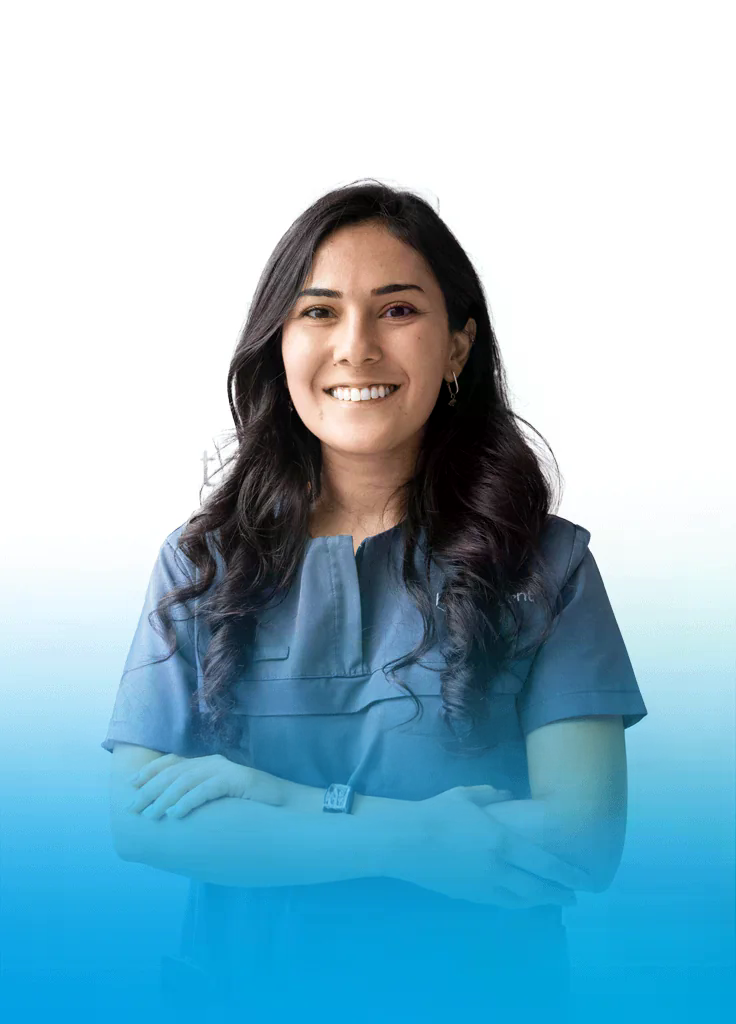
This content has been evaluated in accordance with Hospitadent Medical Publication Board standards for medical accuracy, currency and patient information.
Our Awards
See All ›2019 – 2020
Health Tourism Champion
Since its founding, Hospitadent has provided oral and dental care to patients travelling from every continent for health tourism. In the Service Exporters' Association research of 2019 and 2020, we ranked first in the Dental Health Services category. Within the same report we placed 15th among all healthcare institutions in 2019 and moved up to 10th in 2020. With uncompromising customer satisfaction, Hospitadent remains the healthcare institution that treats the highest number of international oral and dental patients.
2013
TEMOS International Quality Certificate
Guided by dedicated international departments, Hospitadent welcomes patients from abroad without any language barriers, offering assistance with accommodation, city and Bosphorus tours, concierge guidance, treatment logistics and medication support to keep satisfaction at its peak. With the goal of carrying the same quality standards to both Turkish and foreign patients, we received the TEMOS "International Quality in Dental Care" certificate in 2013—an accreditation granted by the organization that evaluates and certifies worldwide patient service quality based on the "Made in Germany" quality seal.
2020
Turquality Brand Support Program
For 16 years, the Turquality Brand Support Program has helped Turkish products build and promote their image abroad. Dental Group Hospitadent earned the right to join this initiative, taking an important step on its branding journey. Being the first dental healthcare group in a program that includes only five hospitals from the healthcare sector proves not only the quality image we project, but also the high standards we uphold.
2018
Stevie Awards – Most Innovative Customer Service
The Stevie Awards, recognized worldwide for honoring outstanding organizations and leaders, is the only international business awards program. In 2018, Hospitadent became the first hospital in Turkey to win a Stevie Award by receiving the "Most Innovative Customer Service of the Year" prize. Signature experiences such as Smiling Center, Digital Smile Design and Dental SPA played a decisive role in earning this accolade.
2019 – 2020
Service Exporters Association Award
Serving dental tourists from all over the world since its foundation, Hospitadent was honored by the Service Exporters' Association in the Champions of Service Exports program, which celebrates the rising value of Turkey's service industries. Thanks to its contribution to the national economy, Hospitadent received a certificate of achievement and ranked 15th among general healthcare institutions in 2019 and 10th in 2020, continuing to lead oral and dental treatments with an unwavering focus on patient satisfaction.
2021
Great Place To Work® Certified
Based on the employee experience and satisfaction survey completed by our teams, GPTW Turkey evaluated Hospitadent and awarded us the "Great Place To Work® Certified" distinction. As the first and only dental hospital holding this leading workplace culture certificate, Hospitadent continues its journey toward many more achievements.