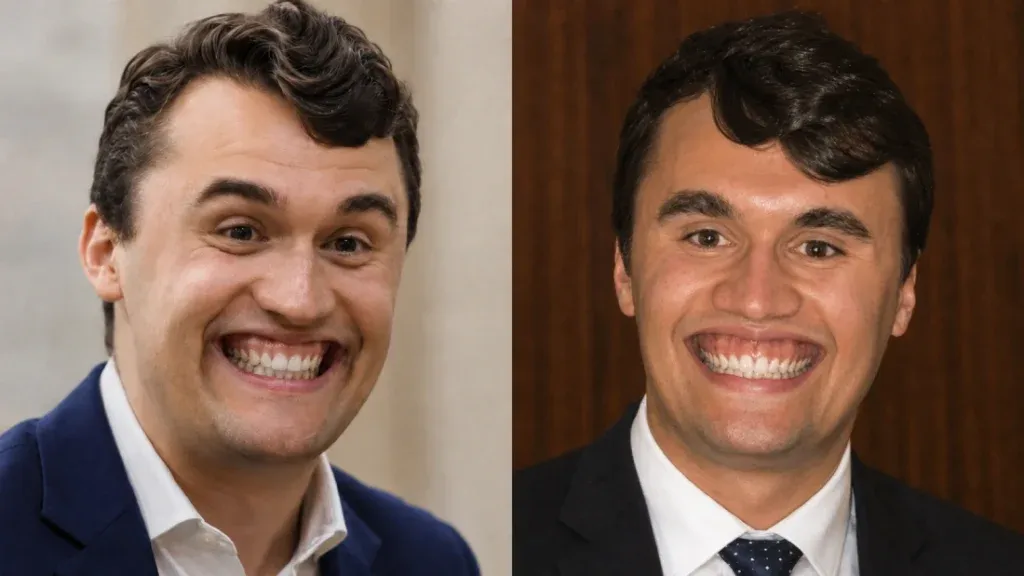
The charlie kirk smile meme has become one of the most recognizable viral phenomena across social media platforms, sparking endless commentary, digital art, and video edits. Beyond the humor and pop culture fixation, however, this online trend highlights a fascinating intersection between facial aesthetics, perception, and clinical dental science. What the internet quickly labels as an unusual expression is often a classic example of what dentists refer to as excessive gingival display—commonly known as a gummy smile. By examining the anatomy behind distinct facial features, we can better understand why certain smiles capture viral attention and how modern cosmetic dentistry can transform even the most complex dental proportions into a balanced, harmonious smile.
Why Did the Charlie Kirk Smile Become a Global Internet Meme?
In the fast-paced ecosystem of digital media, viral moments are often driven by unique, highly expressive facial features captured during intense public debates, interviews, or live broadcasts. The charlie kirk smile became a subject of internet fascination as clips from public appearances began circulating on platforms like TikTok, YouTube, X, and Reddit. Viewers quickly noticed the distinct contrast between facial muscle movements, lip position, and tooth exposure during candid moments—spurring broader discussions online about facial aesthetics, tooth visibility, and even popular cosmetic options like teeth whitening.
As the content spread, the internet did what it does best: it transformed candid video frames into meme templates. Content creators produced a vast array of media, ranging from a looping charlie kirk smile gif to short video edits and commentary videos. Online communities frequently searched for specific clips, such as the charlie kirk smile video or footage from public debates like the charlie kirk jubilee smile, analyzing every micro-expression and freeze-frame moment.
The meme quickly crossed over into digital art and animation. Online animators and parodists created exaggerated representations, including the viral charlie kirk smile meatcanyon animation, which hyper-focused on facial proportions for surreal comedic effect. Similarly, references to popular animated shows emerged, leading to searches for smiling friends charlie kirk and charlie kirk smiling friends, where creators aligned the political commentator's facial expressions with surreal cartoon aesthetics. Other viral comparisons likened the expression to anime creatures, generating trends around the charlie kirk smiling titan phrase.
Artists and casual creators alike joined in by posting content categorized as charlie kirk smile art, charlie kirk smile caricature, and charlie kirk drawing smile. Whether users were sharing a stylized charlie kirk smile drawing, discussing a charlie kirk face smile in online forums, or looking up a viral charlie kirk smile photo, the visual phenomenon expanded far beyond political commentary into pure internet lore. Even common typos like charlie krik smile or variations such as charlie kirks smile, charlie's smile, and the general kirk smile gained search traction as users sought to understand or parody the distinct expression.
What Is a Gummy Smile in Clinical Terms? (Excessive Gingival Display)
While social media users often label distinct facial expressions with colorful phrases—referring to a charlie kirk creepy smile, a charlie kirk weird smile, a charlie kirk scary smile, or even an overly dramatic charlie evil smile—dentists evaluate these features through objective anatomical criteria. In clinical dentistry, a smile that displays a larger portion of gum tissue than average is diagnosed as Excessive Gingival Display (EGD).
Under ideal aesthetic conditions, a balanced smile shows approximately 1 to 2 millimeters of gum tissue above the upper central incisors when a person smiles naturally. When the amount of exposed gum tissue exceeds 3 to 4 millimeters, the smile is clinically classified as a gummy smile.
Evaluating Excessive Gingival Display requires assessing the relationship between three fundamental anatomical components:
- The Maxilla (Upper Jawbone): The structural height, angle, and position of the upper jaw.
- The Gingival Tissue (Gums): The thickness, volume, and positioning of the gum margins relative to the teeth.
- The Perioral Musculature and Lips: The length of the upper lip and the strength/hyperactivity of the muscles that elevate the lip during smiling.
When these components are slightly out of proportion, the visual result is an increased display of pink gum tissue. This explains why certain expressions in media clips, such as a charlie kirk smile jubilee appearance or a candid charlie kirk meme smile, draw immediate visual attention.
The 5 Underlying Anatomical Causes of Excessive Gum Exposure
|
Etiology / Cause |
Primary Anatomical Structure |
Clinical Visual Characteristics |
Primary Treatment Approach |
|
Altered Passive Eruption |
Gingival tissue margin covering crown enamel |
Short, square tooth appearance; excess gum covering normal crown length |
Laser Gum Contouring (Gingivectomy) |
|
Hyperactive Upper Lip |
Levator labii superioris lip elevation muscles |
Lip elevates excessively (>8mm) during active facial expressions |
Lip Repositioning Surgery or Botox Injections |
|
Vertical Maxillary Excess |
Upper maxilla bone structure |
Overgrowth of upper jawbone; gum display visible even at rest |
Orthognathic Surgery or Lip Repositioning |
|
Short Upper Lip Anatomy |
Perioral soft tissue & philtrum length |
Insufficient philtrum length to cover upper gingiva at rest |
Soft Tissue Therapy & Lip Repositioning |
|
Dentoalveolar Extrusion |
Dental arch positioning & tooth alignment |
Deep bite, downward tooth drift bringing bone and tissue lower |
Orthodontic Intrusion (Braces / Aligners) |
A gummy smile is rarely caused by a single factor. Dental specialists evaluate five primary anatomical causes when diagnosing Excessive Gingival Display—often as part of a comprehensive evaluation for targeted gum treatment:
- Altered (Delayed) Passive Eruption: During normal child development, as teeth erupt through the jaw, the gum tissue gradually retracts to expose the full natural length of the tooth crown. In cases of altered passive eruption, this secondary retraction does not occur fully. As a result, excessive gum tissue covers a significant portion of the enamel, making the teeth appear short or square while exposing a large band of pink tissue.
- Hypermobile or Hyperactive Upper Lip: The lip levator muscles (specifically the levator labii superioris) control how high the upper lip lifts when a person smiles or speaks animatedly. If these muscles are hyperactive, the upper lip lifts significantly higher than average—sometimes rising 8 to 10 millimeters or more—exposing normal teeth along with an extensive area of upper gum tissue.
- Vertical Maxillary Excess (VME): Vertical maxillary excess is an anatomical condition characterized by an overgrowth of the upper jawbone in a vertical direction. Because the bone itself is longer than average, both the teeth and the surrounding gum tissue sit lower relative to the lip line, causing extensive gum exposure regardless of lip mobility.
- Short or Thin Upper Lip Anatomy: If the anatomical length of the upper lip from the base of the nose to the bottom of the lip border is shorter than average, it cannot fully cover the upper gingiva at rest or during gentle expressions. When smiling, even minimal muscle contraction reveals the gums.
- Dentoalveolar Extrusion & Malocclusion: When the upper front teeth erupt too far downward (often in combination with an overbite or deep bite), the surrounding bone and gum tissue travel downward with the teeth. This structural misalignment creates an uneven smile line with excessive gum prominence.
Internet Perception vs. Dental Science: Why Do Certain Smiles Look Different?
|
Feature Evaluated |
Viral Internet Perception |
Clinical Dental Reality |
|
Excess Gum Exposure |
Labeled as "creepy", "weird", or "scary" expressions |
Diagnosed as Excessive Gingival Display (EGD) due to soft tissue or bone structure |
|
Intense Facial Expressions |
Interpreted as aggressive or exaggerated meme frames |
Dynamic muscle contraction of hyperactive lip levators during passionate speech |
|
Tooth Size & Proportions |
Perceived as unusually small or unevenly spaced teeth |
Crown enamel partially covered by un-retracted gingival tissue (Altered Passive Eruption) |
|
Dark Corner Shadows |
Framed as artificial or unnatural mouth shape |
Normal buccal corridors resulting from a narrow upper dental arch |
The internet often reacts dramatically to unconventional facial features. Terms like charlie kirk bad smile, charlie kirk ugly smile, charlie kirk crazy smile, or creepy charlie kirk smile frequently surface in comment sections and search trends. Some viral memes even coined unusual descriptors like little human being smile or charlie kirk little human being smile to mock animated facial movements.
However, dental science views these variations not as flaws, but as natural structural differences in facial architecture. What the public perceives as an unusual expression is almost always a combination of specific anatomical factors:
- Buccal Corridors: The dark spaces visible at the corners of the mouth when smiling. Narrow dental arches create dark side voids that highlight the front teeth and gums more prominently.
- Lip Dynamics during Speech: Public speakers and debaters often exhibit pronounced facial expressions. When someone speaks emphatically, their facial muscles contract dynamically, accentuating tooth exposure in ways that static photos do not capture.
- Lighting and Camera Angles: High-definition camera lenses, harsh stage lighting, and extreme close-ups—such as those seen in a charlie kirk smiling meme or a high-contrast charlie kirk smiling frame—magnify natural facial asymmetry.
- Teeth-to-Gum Proportional Ratio: When smaller clinical crowns are framed by prominent gum tissue, the visual focus shifts from the white enamel to the pink gingiva. This phenomenon lies at the heart of the gummy smile meme charlie kirk teeth search trends.
Can Cosmetic Dentistry Fix a Gummy Smile? (Surgical vs. Non-Surgical Options)
|
Treatment Procedure |
Category |
Primary Target Area |
Expected Healing Time |
Longevity of Results |
|
Laser Gum Contouring |
Non-Invasive / Laser |
Excess Gingival Tissue |
3 - 7 Days |
Permanent |
|
Crown Lengthening |
Minor Surgical |
Gingiva & Alveolar Bone |
7 - 14 Days |
Permanent |
|
Lip Repositioning |
Minor Surgical |
Upper Lip Mucosa / Vestibule |
1 - 2 Weeks |
Permanent |
|
Botox Injections |
Non-Surgical Injectable |
Hyperactive Lip Muscles |
None (Immediate) |
3 - 6 Months |
|
Orthodontic Intrusion |
Non-Surgical Dental |
Teeth & Alveolar Process |
12 - 24 Months |
Long-Term (with retention) |
|
Porcelain Veneers |
Aesthetic Restoration |
Tooth Proportion & Color |
1 - 2 Weeks |
10 - 15+ Years |
For individuals who experience excessive gingival display and desire a more balanced appearance, modern cosmetic dentistry offers highly effective, predictable solutions. Treatment plans are tailored specifically to the underlying cause of the condition, ranging from simple non-surgical procedures to comprehensive multidisciplinary treatments.
Before recommending any procedure, specialists conduct a complete digital diagnostic evaluation. Patients interested in transforming their smile can explore personalized options through advanced smile design and smile aesthetics protocols, which evaluate facial symmetry, lip lines, and dental proportions in three dimensions.
Laser Gum Contouring (Crown Lengthening) & Lip Repositioning
When excessive gum exposure is caused by altered passive eruption or localized tissue overgrowth, minor periodontal procedures yield immediate, transformative results:
- Laser Gum Contouring (Gingivectomy): Utilizing advanced dental lasers, periodontists precisely trim away excess gum tissue to reveal the natural length of the teeth underneath. Laser technology minimizes bleeding, reduces discomfort, and promotes rapid healing.
- Crown Lengthening: In cases where the underlying bone structure sits too high on the tooth root, laser contouring is combined with a minor procedure to reshape a millimeter of surrounding bone. This ensures the newly established gum line remains stable over time without regrowing back over the teeth.
- Lip Repositioning Surgery: If excessive display is driven by a hyperactive upper lip, surgical lip repositioning offers a permanent solution. A shallow incision is made inside the upper lip (on the inner mucosal lining) to restrict how high the lip can pull upward when smiling. This safe, outpatient procedure effectively lowers the smile line by 3 to 5 millimeters without altering natural facial expressions.
- Combining Porcelain Veneers with Pink Aesthetics at Hospitadent
In modern aesthetic dentistry, we never evaluate teeth in isolation. A truly captivating smile relies on what we call the 'Pink and White Harmony.' When patients present with excessive gingival display, our first goal is to determine the exact etiology—whether it is dental, skeletal, or muscular. With modern laser technology and digital smile planning, we can modify gum contours with millimeter precision and restore natural tooth proportions painlessly and predictably.
Achieving a flawless smile often requires addressing both the gums (pink aesthetics) and the teeth (white aesthetics). At Hospitadent, treatments are designed to harmonize these two critical elements.
By combining laser gum contouring with custom porcelain veneers or crowns, cosmetic dentists create optimal tooth proportions, correct shape irregularities, and enhance tooth shade. Using state-of-the-art technology such as digital dentistry smile design, clinicians can digitally preview the patient's new smile before treatment even begins, ensuring perfect harmony between the lips, gums, and teeth.
For patients seeking world-class cosmetic transformations, full-mouth restorations and pink aesthetic corrections are widely accessible. Many international patients choose to undergo a full Hollywood smile in Turkey at Hospitadent, benefiting from expert periodontists, master dental ceramists, and cutting-edge digital dental technology all under one roof.
Doctor Profile
This content has been evaluated in accordance with Hospitadent Medical Publication Board standards for medical accuracy, currency and patient information.
Our Awards
See All ›2019 – 2020
Health Tourism Champion
Since its founding, Hospitadent has provided oral and dental care to patients travelling from every continent for health tourism. In the Service Exporters' Association research of 2019 and 2020, we ranked first in the Dental Health Services category. Within the same report we placed 15th among all healthcare institutions in 2019 and moved up to 10th in 2020. With uncompromising customer satisfaction, Hospitadent remains the healthcare institution that treats the highest number of international oral and dental patients.
2013
TEMOS International Quality Certificate
Guided by dedicated international departments, Hospitadent welcomes patients from abroad without any language barriers, offering assistance with accommodation, city and Bosphorus tours, concierge guidance, treatment logistics and medication support to keep satisfaction at its peak. With the goal of carrying the same quality standards to both Turkish and foreign patients, we received the TEMOS "International Quality in Dental Care" certificate in 2013—an accreditation granted by the organization that evaluates and certifies worldwide patient service quality based on the "Made in Germany" quality seal.
2020
Turquality Brand Support Program
For 16 years, the Turquality Brand Support Program has helped Turkish products build and promote their image abroad. Dental Group Hospitadent earned the right to join this initiative, taking an important step on its branding journey. Being the first dental healthcare group in a program that includes only five hospitals from the healthcare sector proves not only the quality image we project, but also the high standards we uphold.
2018
Stevie Awards – Most Innovative Customer Service
The Stevie Awards, recognized worldwide for honoring outstanding organizations and leaders, is the only international business awards program. In 2018, Hospitadent became the first hospital in Turkey to win a Stevie Award by receiving the "Most Innovative Customer Service of the Year" prize. Signature experiences such as Smiling Center, Digital Smile Design and Dental SPA played a decisive role in earning this accolade.
2019 – 2020
Service Exporters Association Award
Serving dental tourists from all over the world since its foundation, Hospitadent was honored by the Service Exporters' Association in the Champions of Service Exports program, which celebrates the rising value of Turkey's service industries. Thanks to its contribution to the national economy, Hospitadent received a certificate of achievement and ranked 15th among general healthcare institutions in 2019 and 10th in 2020, continuing to lead oral and dental treatments with an unwavering focus on patient satisfaction.
2021
Great Place To Work® Certified
Based on the employee experience and satisfaction survey completed by our teams, GPTW Turkey evaluated Hospitadent and awarded us the "Great Place To Work® Certified" distinction. As the first and only dental hospital holding this leading workplace culture certificate, Hospitadent continues its journey toward many more achievements.