Dental health is a fundamental component of overall well-being, yet many individuals tend to ignore dental discomfort or physical changes in their teeth until severe complications arise. A non-vital tooth, commonly referred to as a dead tooth, occurs when the internal tissue—specifically the nerve fibers and blood vessels residing within the pulp chamber—ceases to function due to trauma or deep decay. Patients often wonder how long can a dead tooth stay in your mouth before it triggers dangerous infections or structural collapse. While a dead tooth may occasionally remain quiet and painless for several weeks or even months, keeping an untreated non-vital tooth in your oral cavity is an ongoing health risk that can lead to abscesses, jawbone loss, and systemic health issues.
Understanding the lifespan, behavior, and risks of a non-vital tooth is essential for making informed decisions about your oral care. In this comprehensive guide, we will explore what happens when a tooth dies, how long it can realistically remain untreated, the complications associated with delay, expert clinical perspectives, treatment solutions, and why seeking world-class treatment in premier destinations like Istanbul, Turkey, is becoming the preferred choice for international patients.
What Is a Dead Tooth and How Does It Occur?
To understand how long a dead tooth can remain in your jaw, it is necessary to examine the anatomical structure of a healthy tooth. A living tooth is composed of three primary layers:
- Enamel: The hard, calcified outer surface that shields the tooth from physical wear and bacterial invasion.
- Dentin: The resilient middle layer containing microscopic tubules that support the enamel and surround the inner pulp.
- Pulp: The innermost center of the tooth housing vital nerves, blood vessels, and connective tissue that nourish the tooth and provide sensory feedback.
When the pulp becomes severely damaged, compromised, or infected, the blood flow to the tooth is restricted or completely cut off. Without blood supply, the cellular components inside the tooth die, resulting in a non-vital or dead tooth. Learning about dental tissue biology and asking are teeth bones helps clarify why non-vital dental enamel cannot regenerate itself like broken skeletal bone.
Primary Causes of Tooth Vitality Loss
A tooth does not die without a root cause. The progression toward tissue necrosis typically stems from one of several conditions:
- Unmanaged Dental Caries: When a cavity breaks through enamel and dentin without being restored, bacteria penetrate deep into the pulp chamber. This triggers an inflammatory response known as pulpitis, which eventually starves the tissue of blood supply.
- Physical Trauma: A sudden impact during sports, an accident, or a fall can disrupt the delicate blood vessels at the root apex. Even if the tooth does not crack or break, the internal nerve may die over time.
- Microtrauma and Chronic Bruxism: Long-term teeth grinding or clenching creates repetitive mechanical stress that can slowly compromise the vascular network within the tooth pulp.
- Severe Gum Disease (Periodontitis): Advanced periodontal disease damages the supporting bone and soft tissues around the root, allowing bacteria to enter the tooth through deep periodontal pockets.
Symptoms and Warning Signs of a Dead Tooth
Determining whether a tooth is dead requires professional diagnostic evaluation, but several clear symptoms often indicate that a tooth is losing or has lost its vitality:
Discoloration
One of the most noticeable physical signs of a dead tooth is a gradual change in color. As the red blood cells inside the pulp break down, they release iron and other compounds that stain the porous dentin from the inside. The tooth may transition from a normal white or ivory shade to yellow, gray, light brown, or dark black.
Changes in Pain Perception
Pain associated with a dead tooth can be unpredictable and counterintuitive:
- Acute Pain: In the early stages of pulp necrosis, intense, throbbing pain occurs as pressure builds up inside the enclosed pulp chamber.
- Absence of Pain: Once the nerve tissue completely dies, temperature sensitivity (to hot or cold) usually disappears entirely. Many patients mistakenly assume that because the pain has stopped, the problem has resolved itself. However, the absence of sensation simply means the nerve can no longer transmit pain signals, while bacterial infection continues to flourish.
- Dull Pressure and Tenderness: Even after the internal nerve dies, chewing or biting down on the tooth may cause deep tenderness because the surrounding periodontal ligament becomes inflamed.
Swelling, Abscesses, and Bad Odors
As bacteria multiply within the dead chamber, metabolic byproducts and pus seek an exit route. This often results in a localized swelling on the gums, a sinus tract (pimple-like bump on the gum line), or chronic bad breath caused by leaking bacterial discharge. Furthermore, protruding front teeth that are vulnerable to accidental trauma often benefit from orthodontic correction; exploring a tailored buck teeth treatment helps align the smile and shield anterior teeth from future impacts.
How Long Can a Dead Tooth Stay in Your Mouth?
When addressing the central question—how long can a dead tooth stay in your mouth—the answer depends on whether the tooth receives appropriate medical intervention or is left entirely untreated.
Scenarios and Timelines
|
Condition / Scenario |
Realistic Timeline |
What Is Happening Inside |
|
Untreated with Active Symptoms |
Days to a few weeks |
Rapid bacterial proliferation, sharp pain, localized pus accumulation, risk of immediate acute abscess. |
|
Untreated Asymptomatic (Silent) |
Months to years |
Slow bone resorption at the root tip, chronic low-grade infection, silent destruction of surrounding tissue. |
|
Treated via Root Canal Therapy |
Decades to a lifetime |
Infection eliminated, tooth disinfected and sealed, structural integrity restored with a crown. |
|
Extracted and Replaced |
Permanent solution |
Source of infection completely removed, replaced by a bridge or dental implant. |
If a tooth is completely dead and left untreated, it can physically stay in your mouth for several months or even years before it crumbles, falls out, or causes an emergency medical crisis. However, from a medical and dental standpoint, an untreated dead tooth should never remain in the mouth longer than necessary once diagnosed.The reason a dead tooth can linger for extended periods is that the outer structural shell (enamel and dentin) remains hard, while the jawbone and periodontal fibers continue to anchor the root. However, behind this stationary appearance, the dead tooth acts as a reservoir for anaerobic bacteria, continuously releasing toxins into the surrounding tissue.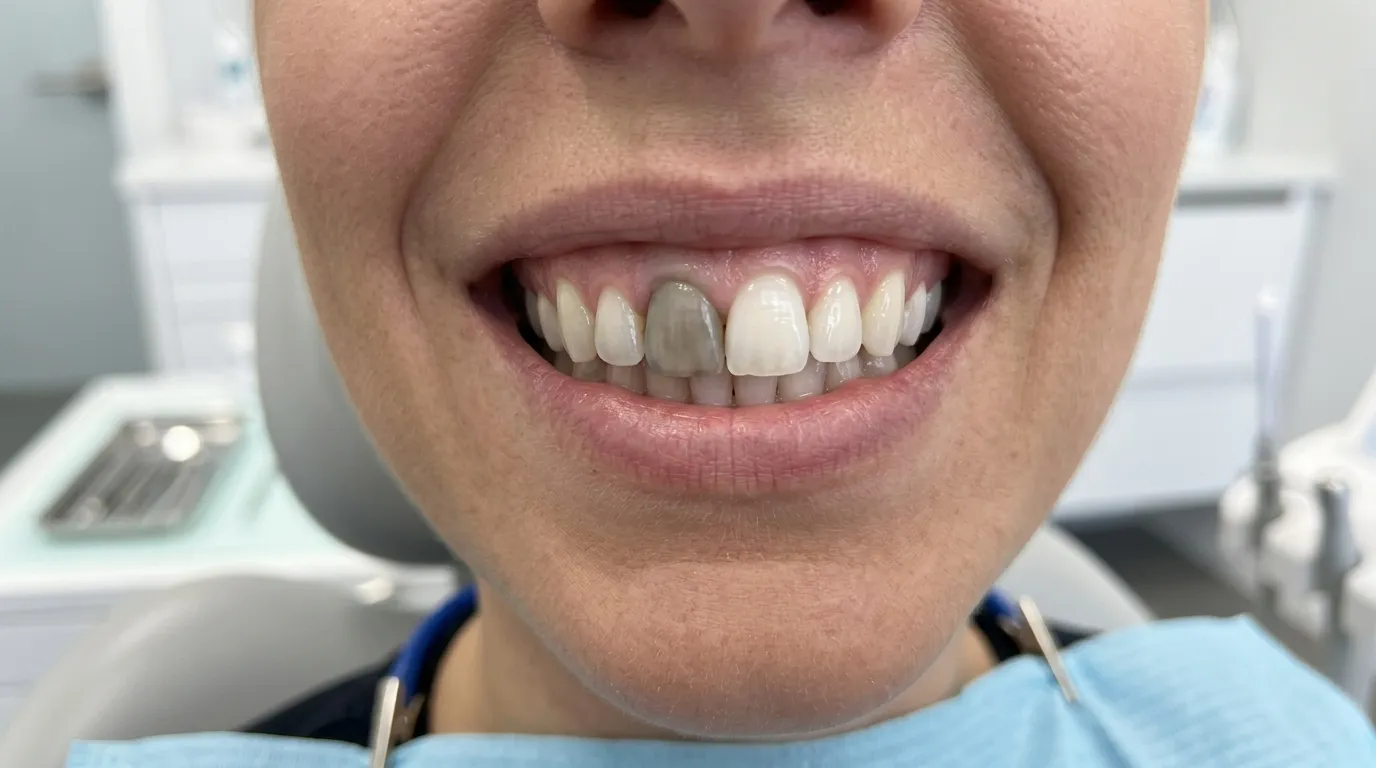
Risks and Complications of Leaving a Dead Tooth Untreated
Retaining a dead tooth without professional treatment creates a dangerous, unpredictable environment in the oral cavity. Some of the most significant complications include:
- Periapical Abscess Formation: Bacteria travel down the root canal and exit through the apical foramen into the jawbone, producing a painful, pus-filled pocket.
- Progressive Jawbone Loss: The body’s immune system attempts to wall off the bacterial infection by reabsorbing surrounding bone, leading to localized jawbone degradation.
- Loss of Adjacent Teeth: Bone loss around the dead tooth can undermine the stability of neighboring teeth, causing them to loosen or shift out of alignment.
- Cellulitis and Facial Space Infections: Infection can escape the bone boundaries and spread into the soft tissues of the face, neck, and throat, causing facial swelling that can compromise airways.
- Systemic Health Threats: In rare but severe cases, bacteria entering the bloodstream from a chronic dental infection can contribute to systemic health issues, including cardiovascular strain or sepsis.Treatment Solutions for a Dead Tooth
When a dentist diagnoses a dead tooth, watching and waiting is not an acceptable option. Treatment must be initiated to remove the necrotic material and prevent further destruction. There are two definitive procedures available:
1. Root Canal Treatment (Endodontic Therapy)
Root canal therapy is the preferred treatment when the structural integrity of the tooth can still be saved. During this procedure:
- The dentist creates an opening in the crown of the tooth.
- Special endodontic instruments clear out the dead pulp, clean the root canals, and disinfect the internal space.
- The empty canals are filled and sealed with a biocompatible material called gutta-percha.
- A permanent restoration, such as a custom dental crown, is placed over the tooth to restore strength, function, and aesthetics.
2. Tooth Extraction
If the tooth is severely fractured, extensively decayed below the gum line, or lacking adequate bone support, root canal treatment may not be viable. In such cases, a professional tooth extraction is required to eliminate the source of infection completely. Following extraction, the gap can be restored using a dental implant, bridge, or partial denture to preserve proper bite alignment and function.
Comparative Treatment Overview
To better understand the differences between available courses of action, consider the comparative analysis below:
|
Feature / Criteria |
Root Canal Treatment |
Tooth Extraction |
Leaving Untreated |
|
Natural Tooth Preserved? |
Yes |
No |
Yes (Temporarily) |
|
Infection Elimination |
High (Cleans internal pulp) |
Complete (Removes entire tooth) |
None (Infection spreads) |
|
Procedure Discomfort |
Minimal (Performed under local anesthesia) |
Minimal during procedure; mild recovery soreness |
Unpredictable, severe pain episodes |
|
Long-Term Success Rate |
High (90–95% success) |
High (Requires replacement) |
0% (Eventual tooth loss/complications) |
|
Impact on Jawbone |
Maintains bone integrity |
Bone resorbs unless implant is placed |
Progressive bone erosion around root |
|
Overall Health Risk |
Very Low |
Very Low |
High |
Maintaining Comprehensive Oral Hygiene and Prevention
Preventing tooth necrosis requires a proactive approach to oral health. Even if you have already addressed a non-vital tooth, keeping the rest of your dentition healthy relies on routine maintenance and professional care.
Key Preventative Strategies
- Daily Brushing and Flossing: Brush twice daily with fluoridated toothpaste and clean interdental spaces daily to prevent cavity-causing plaque build-up.
- Enamel Reinforcement: Consistent exposure to fluoride strengthens enamel against acid attacks. Patients at high risk for decay can benefit from professional fluoride varnish treatments administered during routine checkups.
- Regular Professional Cleanings: Plaque that hardens into tartar cannot be removed by home brushing alone. Receiving routine scaling ensures that gum disease and deep decay are caught before they reach the pulp.
- Managing Halitosis and Bacterial Overgrowth: Persistent foul breath is often an early indicator of deep decay, gum pockets, or bacterial accumulation around compromised teeth. Seeking dedicated bad breath treatment allows practitioners to identify underlying infections before they lead to pulp necrosis.
- Wear Protective Mouthguards: If you participate in contact sports or suffer from nocturnal teeth grinding (bruxism), wearing a custom nightguard or athletic mouthguard protects the nerve tissue from traumatic damage.
World-Class Dental Care in Turkey and Istanbul
For patients facing complex dental procedures such as endodontic therapy, surgical extractions, or complete smile restorations, access to affordable, high-quality care is paramount. Over the past decade, Turkey has established itself as a global leader in medical and dental tourism, attracting hundreds of thousands of international patients each year. At the heart of this medical renaissance is Istanbul—a breathtaking metropolis that seamlessly bridges Europe and Asia.
Istanbul is home to state-of-the-art dental clinics equipped with advanced modern technologies, including 3D CBCT digital imaging, CAD/CAM restoration systems, and painless laser endodontic equipment. Patients travelling to Istanbul experience exceptional clinical standards, internationally accredited specialists, and remarkably short waiting times, all at a fraction of the cost found in Western Europe or North America. Beyond the clinical excellence, undergoing dental treatment in Istanbul allows patients to recover while exploring centuries of rich history, world-renowned architecture, vibrant bazaars, and legendary Turkish hospitality. Whether you require a single root canal or a comprehensive mouth rehabilitation, Turkey provides an unmatched combination of clinical precision, luxury care, and unforgettable cultural experiences. Knowing how long can a dead tooth stay in your mouth highlights the critical importance of early dental intervention. While a non-vital tooth might physically remain anchored in your jaw for months or years without immediate excruciating pain, it acts as a persistent reservoir for harmful bacteria that threaten your jawbone and systemic health. Prompt diagnostic evaluation—followed by either root canal therapy or extraction—is essential to safeguard your smile. By prioritizing daily preventive care, regular dental checkups, and considering premier global dental destinations like Istanbul for your care, you can maintain a healthy, vibrant, and pain-free smile for years to come.