For millions of individuals living with severe tooth loss or struggling with ill-fitting traditional false teeth, learning how to get a new set of teeth that feel natural, stable, and comfortable is a life-changing priority. Traditional removable restorations often slip, shift, and cause painful pressure spots on the gums, making daily tasks like chewing and speaking frustrating. Modern restorative dentistry offers a highly reliable solution: a snap in denture supported by titanium implants. By combining the stability of dental implants for dentures with the convenience of removable prosthetics, patients can regain up to 80% to 90% of their natural chewing efficiency. If you have been wondering what snap dentures are, how they function, and whether they represent affordable implants and dentures options for your lifestyle, this comprehensive guide will break down everything you need to know.
What Are Snap-In Dentures and How Do They Work?
To understand why snap-in prosthetics have revolutionized implant dentistry, it helps to contrast them with conventional removable options. While minor tooth decay or localized structure damage can usually be resolved early with a standard dental filling, widespread tooth loss requires more advanced structural replacement. A traditional acrylic denture sits directly on the gum tissue, relying strictly on suction, muscle coordination, or messy adhesives to stay in place. Over time, because the underlying jawbone lacks root stimulation, bone resorption occurs, causing the jawbone to shrink and making old prosthetics loose and unstable.
A snap denture—also known as an implant-retained overdenture or snap-on denture—anchors directly to dental implants surgically placed inside the jawbone. Instead of cementing a permanent bridge onto the posts, special attachment mechanisms allow the prosthetic to snap firmly onto the underlying implants and snap off easily for daily hygiene.
The Mechanics of Snap-On Systems
The core mechanism behind a snap on implant setup involves two main components:
- The Implant Abutments: Small titanium posts are surgically positioned in the jawbone. Special locator attachments or ball abutments are screwed into these posts, protruding slightly above the gumline.
- The Female Receptacles: Embedded within the underside of the acrylic or porcelain matrix of the prosthetic are female matrix caps containing nylon micro-inserts or specialized denture clips.
When you place the prosthetic into your mouth and apply light pressure, these clips engage with the locator posts, producing an audible "snap" sound that indicates the device is fully seated and locked into position.
In some specialized clinical cases, magnetic dentures are utilized. Rather than mechanical clips, magnetic attachments use biocompatible rare-earth magnets embedded in both the implant post and the base of the denture to secure the appliance. While less common today than precision mechanical locators, magnetic systems offer an alternative for patients with limited manual dexterity who struggle to align standard snap fittings. Types of Implant-Supported Denture Solutions
Depending on your degree of bone loss, aesthetic goals, and budgetary constraints, several configurations of complete denture implants and partial implant dentures are available.
1. Upper Dentures with Implants
Upper traditional dentures typically cover the entire hard palate to create a vacuum seal. While effective for suction, covering the palate impairs temperature perception and alters taste. An upper denture with implant configuration typically utilizes four to six implants. Because the implants provide direct mechanical retention, the palatal coverage can be removed, creating a comfortable "horseshoe" shape that leaves the roof of the mouth open.
2. Lower Arch Snap-On Overdentures
The lower jaw suffers from less surface area and constant movement from the tongue, making lower traditional prosthetics notoriously unstable. A lower full denture implants solution usually requires as few as two to four implants. Connecting a lower prosthetic to two implants completely eliminates slippage, allowing patients to eat firm foods without fear of displacement.
3. Partial Implant Dentures
|
Feature / Criteria |
Traditional Removable Dentures |
Snap-In Implant Dentures |
Fixed Implant Bridges (All-on-4 / Hybrid) |
|
Retention Method |
Suction, tissue surface, adhesives |
Locators, denture clips, or magnets on implants |
Screw-retained permanently to implants |
|
Palatal Coverage (Upper) |
Full acrylic plate covering palate |
Open horseshoe palate design |
No palatal coverage |
|
Chewing Efficiency |
~20% to 30% of natural teeth |
~70% to 85% of natural teeth |
~90% to 95% of natural teeth |
|
Bone Retention |
Progressive bone loss continues |
Preserves bone around implants |
Preserves maximum jawbone mass |
|
Removability |
Removable by patient |
Removable by patient for cleaning |
Removable only by dentist DDS |
|
Nighttime Care |
Must take dentures out overnight |
Must take dentures out overnight |
Cleaned in mouth like natural teeth |
|
Initial Cost |
Lowest initial expense |
Moderate, highly cost-effective |
Higher initial investment |
When a patient retains several healthy natural teeth but misses a multi-tooth span in an area lacking posterior support, partial implant dentures can be constructed. Instead of hooking metal clasps onto remaining delicate natural teeth, the partial snaps onto strategically placed mini or standard implants, protecting surrounding natural tooth structure.
In cases where single missing teeth or smaller gaps exist adjacent to full arch work, individual restorations like a high-strength dental crown or full ceramic options like E-max crowns are integrated into the holistic treatment plan to restore full dental aesthetics and function.
The Step-by-Step Clinical Procedure
Transforming your smile with modern dental denture implants involves careful planning, surgical precision, and prosthetic craftsmanship. Here is what to expect during your treatment journey.
Step 1: Comprehensive Consultation & Diagnostics
Your journey begins with a thorough evaluation by a qualified dentist for snap-in dentures or a prosthodontist. A 3D Cone Beam Computed Tomography (CBCT) scan is performed to analyze bone density, jaw structure, nerve pathways, and sinus locations. This digital assessment determines whether you need bone grafting prior to receiving surgical dentures.
Step 2: Implant Surgery
Under local anesthesia or conscious sedation, the surgeon places titanium posts into predetermined points in the jawbone. If you are replacing severely broken down natural teeth, extractions and implant placement can often be combined in a single appointment.
Step 3: Healing and Osseointegration
Over a period of three to six months, a biological process called osseointegration takes place. The surrounding bone tissue fuses directly with the surface of the titanium posts, creating a permanent structural root. During this period, patients are supplied with temporary prosthetic solutions or modified existing plates so they are never left without teeth.
Step 4: Attachment Placement and Final Impressions
Once integration is complete, minor healing caps are replaced with locator abutments. The dental team takes precision digital impressions of your arches and implant coordinates. These blueprints are sent to a high-end dental laboratory where master technicians craft your custom snap arch prosthetic. For maximum durability and realistic aesthetics, high-grade materials like zirconium crowns or reinforced PMMA options may be incorporated into individual teeth units within the full prosthetic base.
Step 5: Final Delivery and Adjustment
During your final fitting, the prosthetic is snapped into place. The clinician evaluates your bite (occlusion), facial profile, speech patterns, and aesthetics. You will be instructed on how to seat and remove the prosthetic smoothly using your fingers.
Cost Considerations and Affordability Factors
Understanding clip in dentures cost and total treatment pricing requires looking at all variables involved in full-mouth reconstruction.
Key Factors Influencing Overall Cost:
- Number of Implants Required: A 2-implant lower overdenture is significantly less expensive than a 6-implant upper open-palate prosthetic.
- Pre-Surgical Treatments: Bone grafting, sinus lifts, or complex tooth extractions increase overall procedural costs.
- Material Selection: Standard acrylic bases with composite teeth cost less than milled zirconia or titanium-reinforced frameworks.
- Provider Expertise: Specialist fees (Prosthodontists or Oral Surgeons) reflect advanced surgical training and diagnostic technology.
Daily Care and Maintenance Guide for Snap-In Prosthetics
Proper care extends the lifespan of both your titanium implants and the prosthetic itself, protecting your investment for decades.
Morning and Nightly Cleaning Steps:
- Taking Your Dentures Out safely: Always snap the prosthetic off using balanced upward or downward pressure with your thumbs or fingers. Never bite down to snap the appliance into place, as this can crack the acrylic matrix or damage internal denture clips.
- Brushing the Prosthetic: Clean your prosthetic twice daily using a soft-brilled denture brush and non-abrasive denture cleanser or mild hand soap. Avoid regular toothpaste, which contains microscopic abrasives that scratch acrylic surfaces.
- Cleaning the Abutments Inside Your Mouth: Use a ultra-soft manual toothbrush or specialized end-tuft brush to gently remove plaque from around the titanium locators protruding from your gums. Plaque accumulation around locator posts can lead to peri-implantitis (gum inflammation around implants).
- Overnight Storage: Place your prosthetic in a container with plain room-temperature water or an approved soaking solution overnight. Keeping the material moist prevents warping.
- Periodic Insert Replacement: The internal nylon matrix caps gradually wear down from daily snapping dynamics. Plan to visit your dentist every 12 to 18 months to have fresh retention rings installed, restoring that satisfying, tight snap feel.

Advantages and Disadvantages Summary
Understanding both the benefits and limitations of this treatment ensures realistic expectations before starting your procedure.
Advantages:
- Enhanced Chewing Power: Eat apples, steaks, and crunchy vegetables with confidence.
- No Messy Adhesives: Eliminates the need for creams, powders, or strips.
- Palateless Comfort: Upper restorations leave the roof of the mouth open for better speech clarity and enhanced taste.
- Jawbone Preservation: Titanium implants provide root stimulation that halts facial collapse caused by bone loss.
- Facial Aesthetics: Re-establishes correct facial height, smoothing out wrinkles around the mouth.
- Easy Hygiene Access: Prosthetic removes effortlessly for total cleaning of both the device and oral tissue.
Disadvantages:
Clinical Commentary from Senior Prosthodontic Specialist: *"When treating edentulous patients, our primary medical goal beyond restoring aesthetics is preserving remaining alveolar bone structure. Traditional full plates apply continuous compressive force on gum tissue, accelerating jawbone resorption year after year. A snap-on overdenture changes this dynamic entirely. By transmitting masticatory forces through titanium implants directly into the jawbone, we stimulate the surrounding bone tissue, slowing down bone loss significantly. Furthermore, for elderly patients or individuals with dexterity challenges who find cleaning fixed hybrid restorations difficult, removable snap arches offer the ideal balance: firm mechanical stability during chewing, combined with straightforward access for daily oral hygiene outside the mouth. For patients seeking a durable, stable, and highly functional result without the extreme financial investment of a fully fixed bridge, snap-retained overdentures represent one of the highest satisfaction treatments in modern restorative dentistry."
- Requires Minor Surgery: Implants require minor oral surgery and a few months of healing time.
- Periodic Component Replacement: Nylon retention caps wear out over time and require quick in-office swaps.
- Slight Bulk Compared to Natural Teeth: Acrylic base remains thicker than natural crowns or fixed bridge spans.
- Nighttime Removal Recommended: Must be taken out at night to allow gum tissues to rest.
Doctor Profile
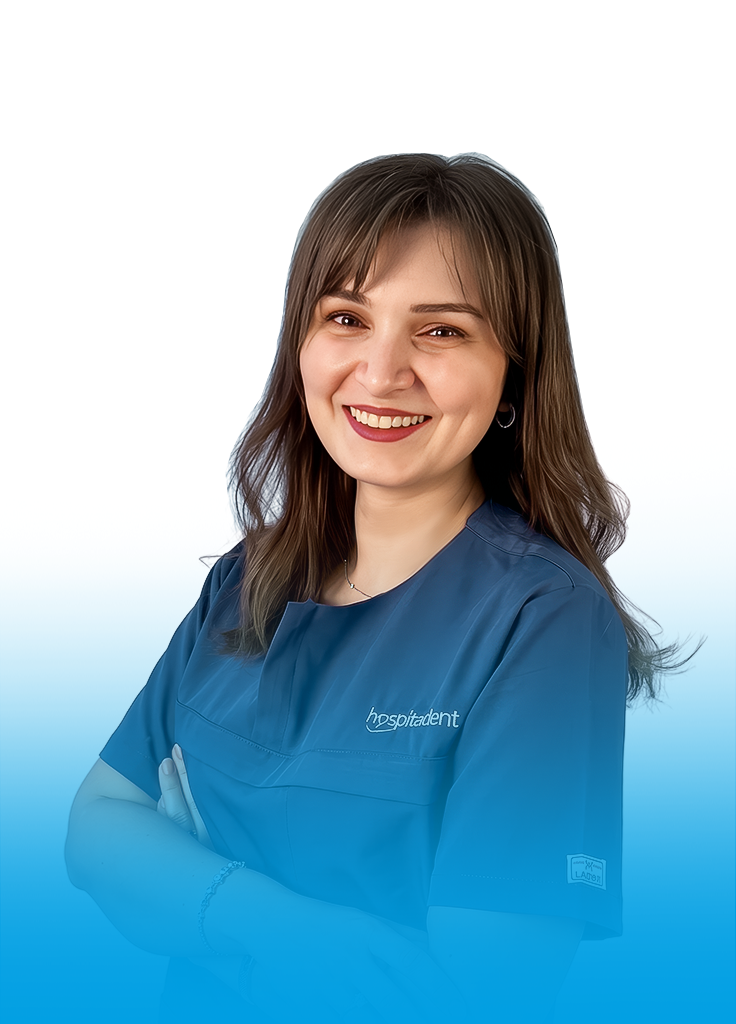
Author and Medical Review
Dr. Melike KENTKURANOral and Maxillofacial Surgery Specialist
View ProfileThis content has been evaluated in accordance with Hospitadent Medical Publication Board standards for medical accuracy, currency and patient information.
Our Awards
See All ›2019 – 2020
Health Tourism Champion
Since its founding, Hospitadent has provided oral and dental care to patients travelling from every continent for health tourism. In the Service Exporters' Association research of 2019 and 2020, we ranked first in the Dental Health Services category. Within the same report we placed 15th among all healthcare institutions in 2019 and moved up to 10th in 2020. With uncompromising customer satisfaction, Hospitadent remains the healthcare institution that treats the highest number of international oral and dental patients.
2013
TEMOS International Quality Certificate
Guided by dedicated international departments, Hospitadent welcomes patients from abroad without any language barriers, offering assistance with accommodation, city and Bosphorus tours, concierge guidance, treatment logistics and medication support to keep satisfaction at its peak. With the goal of carrying the same quality standards to both Turkish and foreign patients, we received the TEMOS "International Quality in Dental Care" certificate in 2013—an accreditation granted by the organization that evaluates and certifies worldwide patient service quality based on the "Made in Germany" quality seal.
2020
Turquality Brand Support Program
For 16 years, the Turquality Brand Support Program has helped Turkish products build and promote their image abroad. Dental Group Hospitadent earned the right to join this initiative, taking an important step on its branding journey. Being the first dental healthcare group in a program that includes only five hospitals from the healthcare sector proves not only the quality image we project, but also the high standards we uphold.
2018
Stevie Awards – Most Innovative Customer Service
The Stevie Awards, recognized worldwide for honoring outstanding organizations and leaders, is the only international business awards program. In 2018, Hospitadent became the first hospital in Turkey to win a Stevie Award by receiving the "Most Innovative Customer Service of the Year" prize. Signature experiences such as Smiling Center, Digital Smile Design and Dental SPA played a decisive role in earning this accolade.
2019 – 2020
Service Exporters Association Award
Serving dental tourists from all over the world since its foundation, Hospitadent was honored by the Service Exporters' Association in the Champions of Service Exports program, which celebrates the rising value of Turkey's service industries. Thanks to its contribution to the national economy, Hospitadent received a certificate of achievement and ranked 15th among general healthcare institutions in 2019 and 10th in 2020, continuing to lead oral and dental treatments with an unwavering focus on patient satisfaction.
2021
Great Place To Work® Certified
Based on the employee experience and satisfaction survey completed by our teams, GPTW Turkey evaluated Hospitadent and awarded us the "Great Place To Work® Certified" distinction. As the first and only dental hospital holding this leading workplace culture certificate, Hospitadent continues its journey toward many more achievements.