Living with tooth loss affects far more than just the appearance of your smile. It impacts how you speak, how efficiently you chew food, and how your jaw joint functions over time. A modern dental prosthesis provides a scientifically backed, functional, and highly esthetic method to restore lost teeth, supporting both your oral health and your overall quality of life. Whether you are dealing with a single missing tooth or complete edentulism, today’s prosthodontic solutions offer natural-looking and long-lasting alternatives tailored to every patient's anatomical needs.
Introduction: Tooth Loss and the Role of Prosthodontics
Tooth loss is a widespread dental condition caused by tooth decay, periodontal disease, trauma, or age-related wear. While many people view missing teeth primarily as a cosmetic issue, the biological and structural consequences extend deep into the jawbone and surrounding facial tissues.
Prosthodontics is the specialized branch of dentistry dedicated to the design, manufacture, and fitting of artificial replacements for missing teeth and oral structures. Through advanced materials and digital technologies, prosthodontics aims to rebuild the stomatognathic system—restoring proper chewing dynamics, speech clarity, facial esthetics, and jaw stability.
The Impact of Missing Teeth on Oral and Jaw Health
Many patients delay replacing a missing back tooth because it is not visible when they smile. However, rear molars bear the vast majority of our chewing force. Leaving a molar gap open forces front teeth to absorb forces they were never designed to handle, leading to premature tooth wear, enamel fractures, and long-term joint pain. Replacing even a single missing tooth promptly preserves the entire arch.
When a tooth is extracted or lost, the surrounding dental architecture immediately begins to shift. While early decay or structural damage can often be restored using a dental filling, allowing a tooth to reach the point of extraction disrupts the entire system. Teeth are designed to work together in balance; when one link in the chain is broken, several negative cascade effects take place:
- Bone Resorption (Jawbone Loss): The alveolar bone that supports teeth requires functional stimulation from chewing forces to maintain its density and volume. When a tooth is missing, the bone in that specific area undergoes atrophy. Over time, bone loss can weaken neighboring support structures and alter your facial profile, causing a prematurely aged appearance characterized by sunken cheeks and a collapsed lower face height.
- Dental Tilting and Drift: Neighboring teeth tend to tilt, drift, or shift into the vacant gap. Opposite teeth in the opposing jaw may also super-erupt (extrude downward or upward into the space), disrupting bite alignment (occlusion).
- Masticatory Inefficiency and Digestive Strain: Incomplete dentition prevents proper breakdown of food during chewing. This can force individuals to alter their diet, often avoiding nutrient-rich fiber or tough proteins, leading to gastrointestinal discomfort and potential nutritional deficiencies.
- Temporomandibular Joint (TMJ) Dysfunction: An uneven bite caused by missing teeth redistributes chewing pressure abnormally across the jaw joints. This imbalance can trigger TMJ pain, tension headaches, neck stiffness, and clicking or popping sensations in the jaw.
- Speech Alterations: Front teeth play a critical role in phonetics, enabling clear pronunciation of sounds such as "s," "z," "th," and "f." Tooth loss can cause unintended lisping or slurred speech.
Who is a Prosthodontist?
A prosthodontist is a registered dental specialist who has completed years of additional rigorous clinical training beyond a standard dental degree. Prosthodontists specialize in complex restorative procedures, including full-mouth reconstructions, dental implants, complex crowns, bridges, and removable dentures.
While general dentists perform basic dental crowns and filling procedures, prosthodontists are recognized as the primary architects of complex oral rehabilitation. They possess deep expertise in jaw biomechanics, facial esthetics, material sciences, and digital smile design. Patients facing severe tooth loss, congenital dental defects, extensive jaw trauma, or failed previous dental work benefit immensely from the specialized diagnostic and clinical care of a prosthodontist.
Types of Dental Prostheses and Their Applications
Modern prosthodontics categorizes prosthetic devices into three primary groups based on how they are attached in the mouth: fixed prostheses, removable dentures, and implant-supported systems. Each category serves specific clinical needs, anatomical conditions, and patient budgets.
Fixed Dental Prostheses: Crowns and Bridges
|
Feature / Property |
Zirconia Crowns & Bridges |
Porcelain-Fused-to-Metal (PFM) Crowns |
|
Esthetics & Translucency |
Superior natural translucency; matches original tooth enamel closely without dark undertones. |
Good initial appearance, but the underlying metal base can create a dark gray line at the gumline over time. |
|
Material Composition |
Monolithic or layered Zirconium Oxide (high-tech ceramic). |
Porcelain ceramic fused over a metal alloy superstructure (cobalt-chromium or precious metals). |
|
Flexural Strength |
Exceptionally high (up to 1200+ MPa); highly resistant to chipping, cracking, and heavy chewing. |
High structural strength from the metal core, but the outer porcelain veneer can chip under extreme force. |
|
Biocompatibility |
Highly tissue-friendly, non-allergenic, and resistant to plaque accumulation. |
Generally well-tolerated, though metal sensitivities or localized gum reactions can occur in rare cases. |
|
Gingival Health |
Excellent tissue response; smooth margins prevent gum inflammation and recession. |
May cause mild gum irritation or dark discoloration if the gum tissue recedes slightly over time. |
|
Primary Indication |
Ideal for both front teeth (high esthetics) and molars (heavy grinding force). |
Traditional choice for posterior bridges where metal reinforcement is desired at lower cost points. |
Fixed prostheses are cemented or bonded permanently onto existing natural teeth or implants. They cannot be removed by the patient and offer the highest degree of comfort and natural feel.
- Single Dental Crowns: A crown (or cap) covers a heavily damaged, cracked, or root-canal-treated tooth. It fully encapsulates the remaining natural tooth structure above the gumline, restoring its original shape, strength, and appearance.
- Fixed Dental Bridges: A bridge spans the gap created by one or more missing teeth. It consists of artificial replacement teeth (pontics) held in place by crowns cemented onto the adjacent natural anchor teeth (abutments). Bridges provide a durable, non-removable solution when dental implants are not feasible due to medical conditions or localized bone limitations.
Removable Dentures: Complete and Partial Dentures
Removable prostheses are designed for patients who have lost multiple teeth or an entire arch, and who may not be suitable candidates for fixed implants due to systemic health issues, extensive bone loss, or financial preferences.
- Complete Dentures (Full Dentures): Indicated when all teeth in either the upper or lower arch are missing. They rest directly on the gum tissue and underlying alveolar bone ridge. Upper dentures utilize suction created across the palate for retention, whereas lower dentures rely on gravity, muscle control, and natural anatomical ridge contours.
- Partial Dentures: Used when several natural teeth remain in the arch. These prostheses consist of replacement teeth attached to a pink acrylic base, which is reinforced by a metal or flexible frame.
- Cast Metal Framework Partials: Utilize precise metal clasps that wrap securely around adjacent natural teeth for stability.
- Precision Attachment Partials: Utilize hidden interlocking attachments connected to crowned natural teeth, eliminating visible metal wire clasps for superior esthetics.
- Flexible Partials (Valplast/Nylon): Lightweight, metal-free options that flex naturally with jaw movement, offering comfort and low visibility.
Implant-Supported Prostheses: Hybrid and Overdenture Systems
|
Criteria |
Fixed Bridges (Tooth-Supported) |
Traditional Removable Dentures |
Implant-Supported Fixed Hybrids |
|
Stability & Retention |
Very High (Cemented) |
Moderate to Low (Relies on suction/clasps) |
Maximum (Screwed into implants) |
|
Chewing Efficiency |
~85–90% of natural teeth |
~20–30% of natural teeth |
~95–100% of natural teeth |
|
Impact on Jawbone |
Does not stop bone loss under missing tooth area |
Allows gradual bone resorption under pressure |
Stimulates bone growth; stops resorption |
|
Longevity |
10–15+ years with good care |
5–7 years (requires relining/refitting) |
20+ years to lifetime (with proper care) |
|
Palatal Coverage (Upper) |
None |
Full coverage of hard palate |
Minimal to none |
|
Daily Maintenance |
Flossing with threaders, standard brushing |
Daily soaking, removing after meals |
Standard brushing, water flosser, specialist checkups |
Implant-supported prostheses combine the structural support of titanium or zirconia dental implants with modern prosthetic engineering, offering unprecedented stability, retention, and bone preservation.
- Implant-Supported Fixed Bridges & Hybrids (All-on-4 / All-on-6):
- Four to six strategically placed dental implants support a complete arch of fixed teeth.
- The prosthesis is securely screwed into the implants by the prosthodontist and remains fixed permanently in the mouth.
- Eliminates bulky palatal coverage, allowing full taste sensation and natural tongue movement.
- Prevents ongoing jawbone loss by transmitting chewing forces directly into the bone.
- Implant-Retained Overdentures:
- Removable dentures that snap onto two to four dental implants via specialized attachments (such as Locator studs or custom metal bars).
- Provides high stability during chewing and speaking while remaining easy to snap off for daily cleaning and oral hygiene.
What Is the Treatment Process for Dental Prostheses?
Creating a precise, comfortable, and long-lasting prosthetic appliance involves a combination of biological preparation, advanced digital modeling, and meticulous laboratory artistry.
Comprehensive Examination, Impressions, and Digital Planning
The journey toward a restored smile begins with a detailed diagnostic evaluation:
- Clinical Examination & Radiographic Imaging: The prosthodontist evaluates soft tissue health, remaining tooth structures, occlusion (bite), and jaw joints. Panoramic X-rays and 3D Cone Beam Computed Tomography (CBCT) scans are performed to analyze bone density, anatomical nerve pathways, and sinus locations.
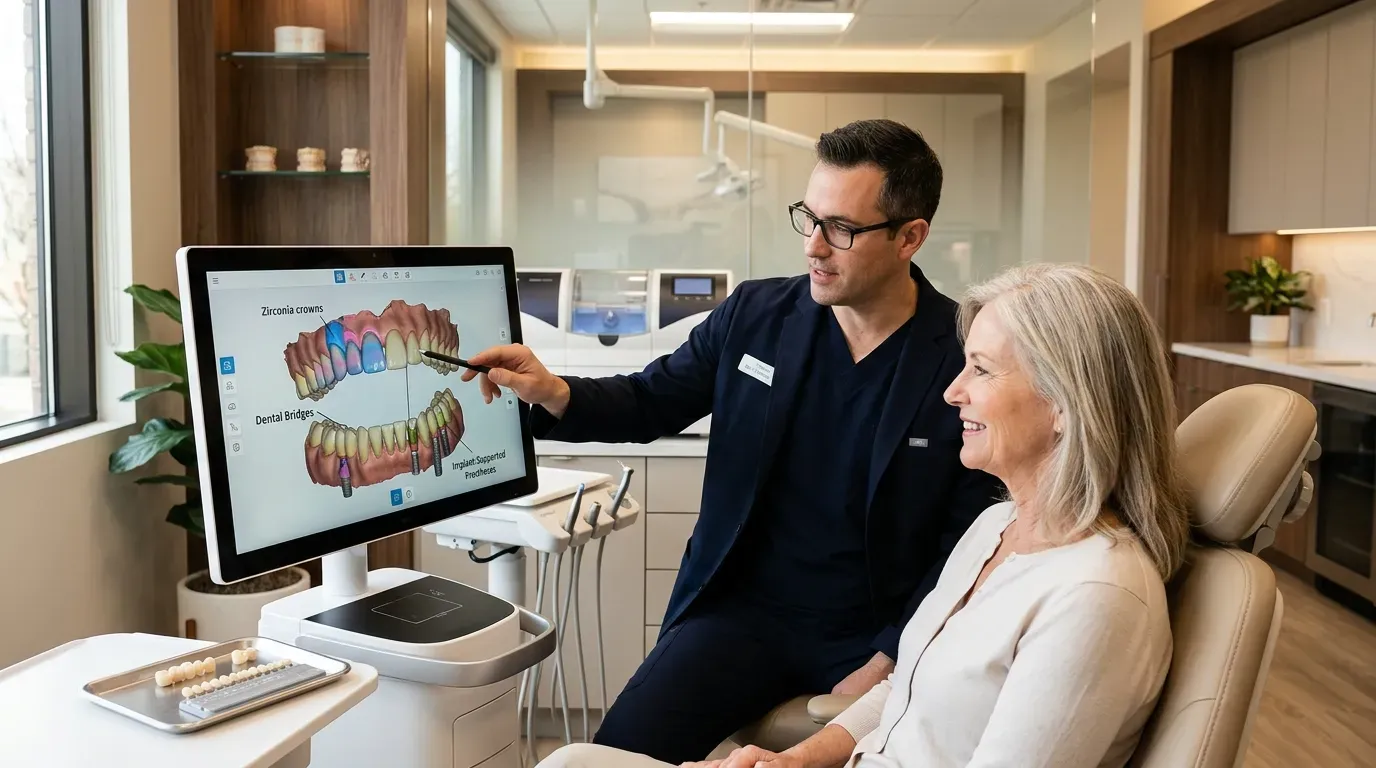
- Digital Intraoral Scanning: Traditional impression trays filled with viscous putty are increasingly replaced by high-precision intraoral optical scanners. These devices capture thousands of 3D images per second to create an accurate virtual model of your teeth and gums.
- Digital Smile Design (DSD) & CAD/CAM Workflow: Using Computer-Aided Design (CAD) software, the specialist plans the shape, size, proportion, and alignment of the new teeth. This allows patients to view digital simulations or try on temporary mock-ups before treatment begins.
 Fitting Stages and Adjustments
Once diagnostic planning is complete, the clinical treatment progresses through structured phases:
- Tooth Preparation & Temporary Placement: For fixed crowns or bridges, natural abutment teeth are carefully reshaped under local anesthesia to accommodate the thickness of the restoration. High-quality temporary prostheses are placed immediately to protect prepped teeth and maintain function while the custom restoration is fabricated in the laboratory.
- Framework Try-In: For complex bridges, partial dentures, or implant hybrids, a preliminary try-in of the metal or zirconia framework is conducted to verify precise fit, margin adaptation, and structural integrity.
- Wax or Bisque Try-In: The prosthetic teeth are evaluated in a semi-finished state to assess esthetics, shade matching, lip support, speech articulation, and bite contacts (occlusion). Adjustments are easily made at this stage.
- Final Cementation or Delivery: The finished prosthesis is permanently cemented, screwed onto implants, or fitted securely in place. The clinician conducts precise micro-adjustments on biting points to ensure uniform force distribution across all teeth.
Care and Best Practices for Dental Prostheses
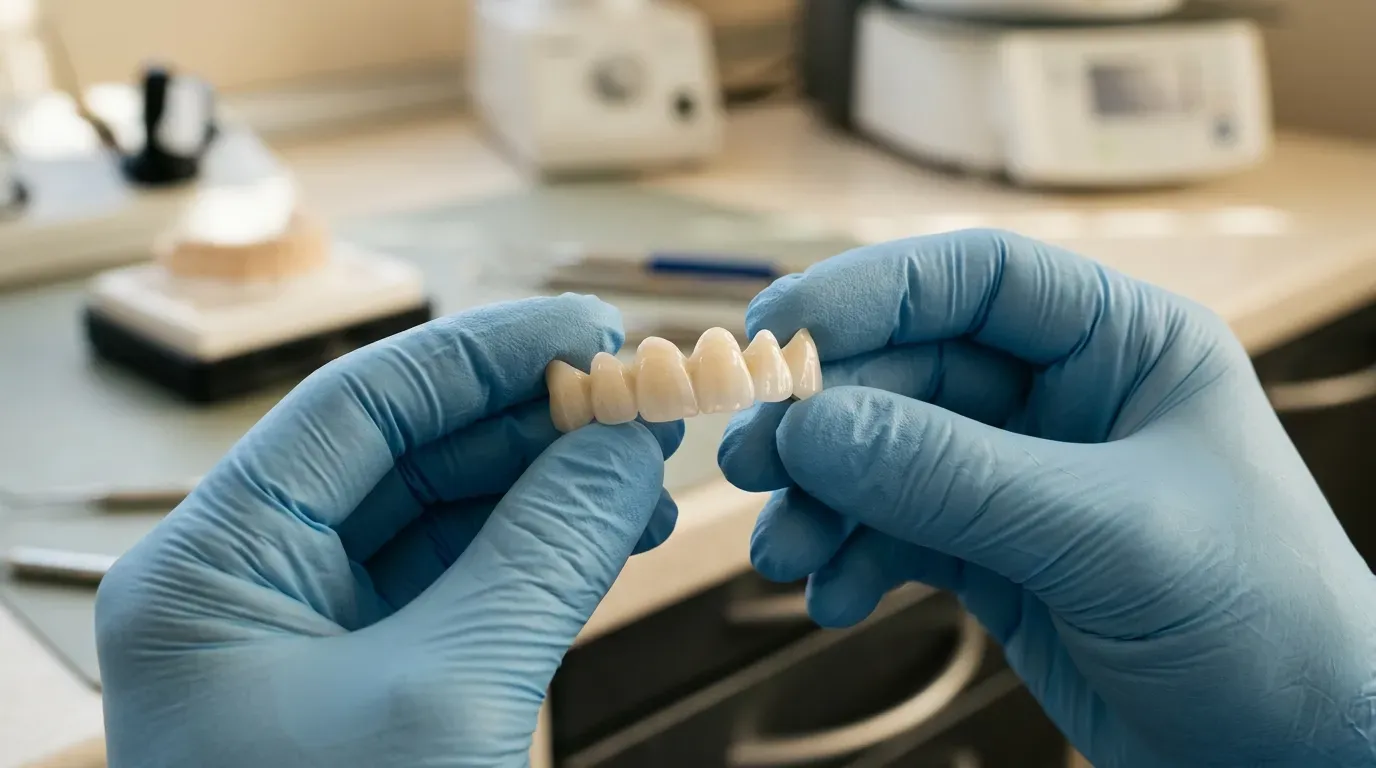
Proper home care and maintenance directly influence the lifespan of your prosthesis and the health of the supporting gums and natural teeth.
How to Properly Clean Your Dentures
Prosthetic materials require consistent hygiene practices to remain free from bacterial plaque, fungal infections (such as oral thrush), and unpleasant odors.
- Cleaning Removable Dentures:
- Rinse After Meals: Remove and rinse your dentures under tepid water after eating to dislodge trapped food particles.
- Brush Daily with a Soft Denture Brush: Clean all surfaces of the appliance using a soft-bristled brush and non-abrasive denture cleanser or mild soap. Never use standard abrasive toothpaste, as micro-fine scratches can form on acrylic, harboring stain-causing bacteria.
- Overnight Soaking: Soak dentures overnight in water or a specialized denture-cleansing solution to keep the acrylic hydrated and dimensionally stable, while giving your delicate mouth tissues time to rest and recover.
- Oral Cavity Hygiene: Brush your tongue, gums, and natural teeth gently with a soft toothbrush before reinserting your dentures each morning. Accumulation of volatile sulfur compounds beneath unwashed prostheses is a major cause of halitosis, often requiring professional bad breath treatment if bacteria buildup remains unaddressed.
- Maintaining Fixed Crowns, Bridges, and Implants:
- Floss Under Bridges: Use specialized super-floss or floss threaders daily to clean underneath the pontic (floating artificial tooth) where food debris and plaque accumulate.
- Utilize Water Flossers: Oral irrigators (water flossers) effectively flush away trapped particles around implant abutments and underneath fixed hybrid prostheses.
- Pre-Prosthetic Esthetic Planning: If you plan on lightening the color of your smile, complete any professional teeth whitening treatments on your natural teeth prior to finalizing crown shades, as ceramic and zirconia materials do not respond to bleaching gels after fabrication.
Daily Hygiene Protocol for Dentures & Fixed Bridges:
1. Morning Brush (Gums, Tongue & Natural Teeth)
2. Post-Meal Rinse (Remove food particles)
3. Nightly Soak/Floss (Non-abrasive cleanser for dentures; super-floss for bridges)
4. Annual Professional Inspection (Prosthodontist checkup)
The Adaptation Period: Managing Soreness and Discomfort in the First Few Days
Adapting to a new prosthetic device takes time, patience, and minor adjustments. It is completely normal to experience an initial adjustment phase as your cheek muscles, tongue, and soft tissues adapt.
- Handling Minor Soreness & Pressure Points: New removable dentures may press slightly against delicate gum tissue, causing localized sore spots. Schedule a follow-up appointment with your prosthodontist for precise micro-adjustments. Do not attempt to adjust or bend appliances yourself using home tools.
- Overcoming Speech Changes: You may notice slight lisping or excess salivation during the first few days. Reading aloud, speaking slowly, and repeating tricky words (especially those with "S" and "F" sounds) helps your tongue adapt rapidly.
- Eating Strategies for the First Weeks: Start with soft foods cut into small, manageable pieces (such as eggs, cooked vegetables, fish, and pasta). Chew evenly on both sides of the mouth simultaneously to keep removable prostheses balanced. Gradually reintroduce firmer foods as your muscle control improves.
Doctor Profile
Author and Medical Review
Dr. Jonathan CAN ATALAYProsthetic Dental Treatment Specialist
View ProfileThis content has been evaluated in accordance with Hospitadent Medical Publication Board standards for medical accuracy, currency and patient information.
Our Awards
See All ›2019 – 2020
Health Tourism Champion
Since its founding, Hospitadent has provided oral and dental care to patients travelling from every continent for health tourism. In the Service Exporters' Association research of 2019 and 2020, we ranked first in the Dental Health Services category. Within the same report we placed 15th among all healthcare institutions in 2019 and moved up to 10th in 2020. With uncompromising customer satisfaction, Hospitadent remains the healthcare institution that treats the highest number of international oral and dental patients.
2013
TEMOS International Quality Certificate
Guided by dedicated international departments, Hospitadent welcomes patients from abroad without any language barriers, offering assistance with accommodation, city and Bosphorus tours, concierge guidance, treatment logistics and medication support to keep satisfaction at its peak. With the goal of carrying the same quality standards to both Turkish and foreign patients, we received the TEMOS "International Quality in Dental Care" certificate in 2013—an accreditation granted by the organization that evaluates and certifies worldwide patient service quality based on the "Made in Germany" quality seal.
2020
Turquality Brand Support Program
For 16 years, the Turquality Brand Support Program has helped Turkish products build and promote their image abroad. Dental Group Hospitadent earned the right to join this initiative, taking an important step on its branding journey. Being the first dental healthcare group in a program that includes only five hospitals from the healthcare sector proves not only the quality image we project, but also the high standards we uphold.
2018
Stevie Awards – Most Innovative Customer Service
The Stevie Awards, recognized worldwide for honoring outstanding organizations and leaders, is the only international business awards program. In 2018, Hospitadent became the first hospital in Turkey to win a Stevie Award by receiving the "Most Innovative Customer Service of the Year" prize. Signature experiences such as Smiling Center, Digital Smile Design and Dental SPA played a decisive role in earning this accolade.
2019 – 2020
Service Exporters Association Award
Serving dental tourists from all over the world since its foundation, Hospitadent was honored by the Service Exporters' Association in the Champions of Service Exports program, which celebrates the rising value of Turkey's service industries. Thanks to its contribution to the national economy, Hospitadent received a certificate of achievement and ranked 15th among general healthcare institutions in 2019 and 10th in 2020, continuing to lead oral and dental treatments with an unwavering focus on patient satisfaction.
2021
Great Place To Work® Certified
Based on the employee experience and satisfaction survey completed by our teams, GPTW Turkey evaluated Hospitadent and awarded us the "Great Place To Work® Certified" distinction. As the first and only dental hospital holding this leading workplace culture certificate, Hospitadent continues its journey toward many more achievements.